
Reference sheet
The basic signs and what they are for, with a reference score.
Download Reference sheetPDF · 1 page · 131 KBAprendo-Kit
From game to paper: recognising, writing and using the basic signs of a score.
5 printable pages Two blocks of about 30 minutes Two games on the web
A reference sheet, two activity sheets and two guide pages. Click a sheet to enlarge it. The printable sheets are in Spanish.
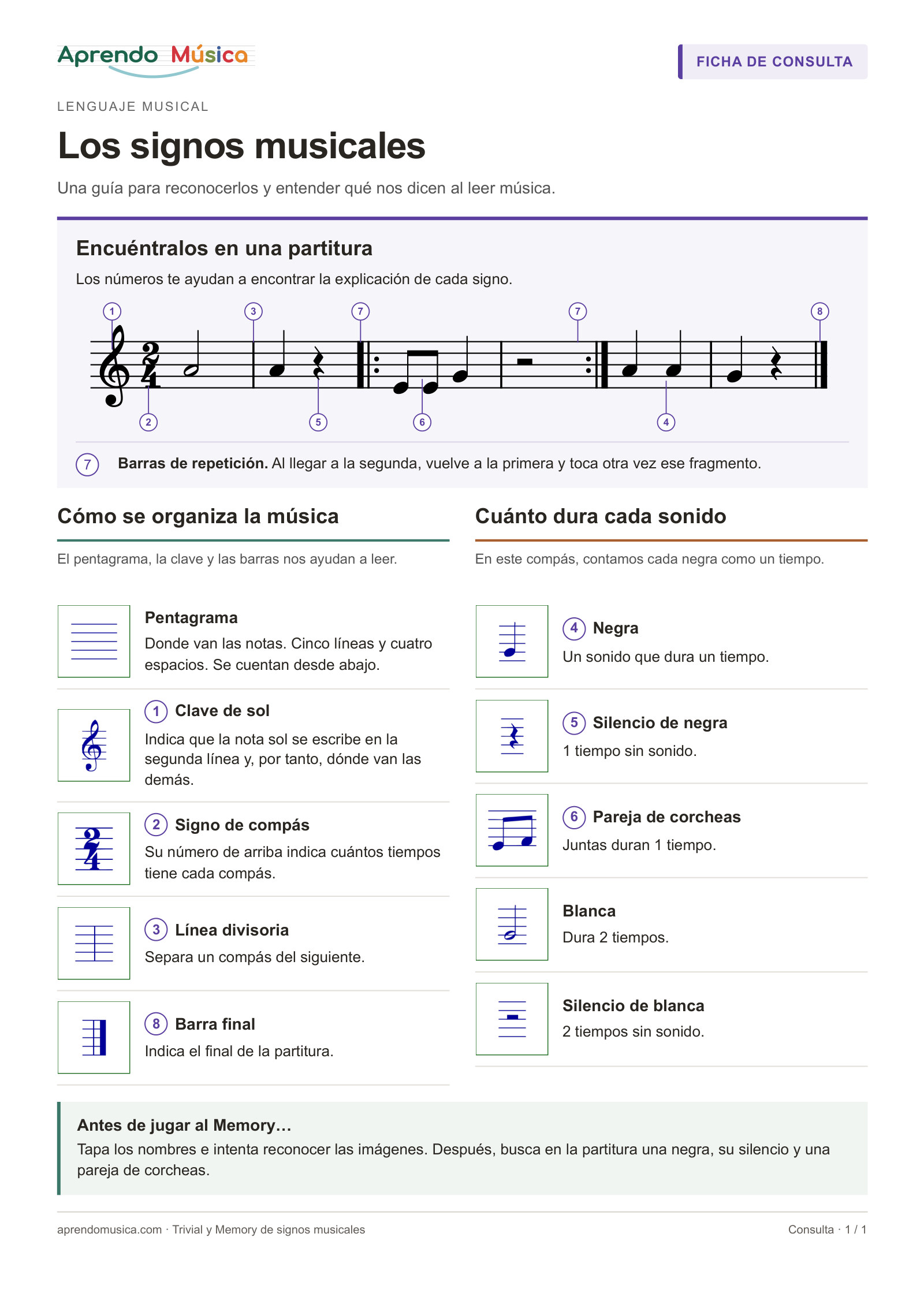
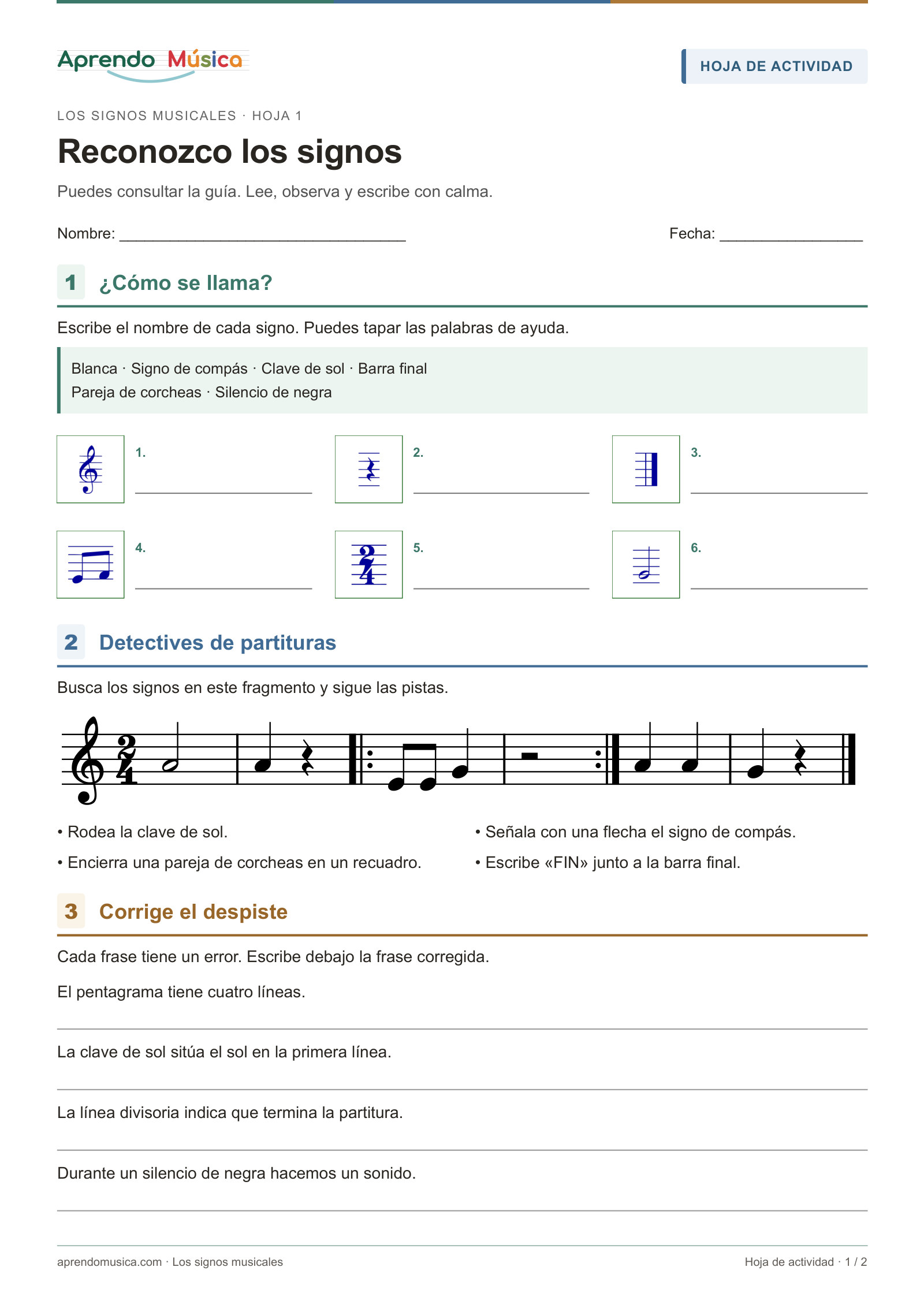
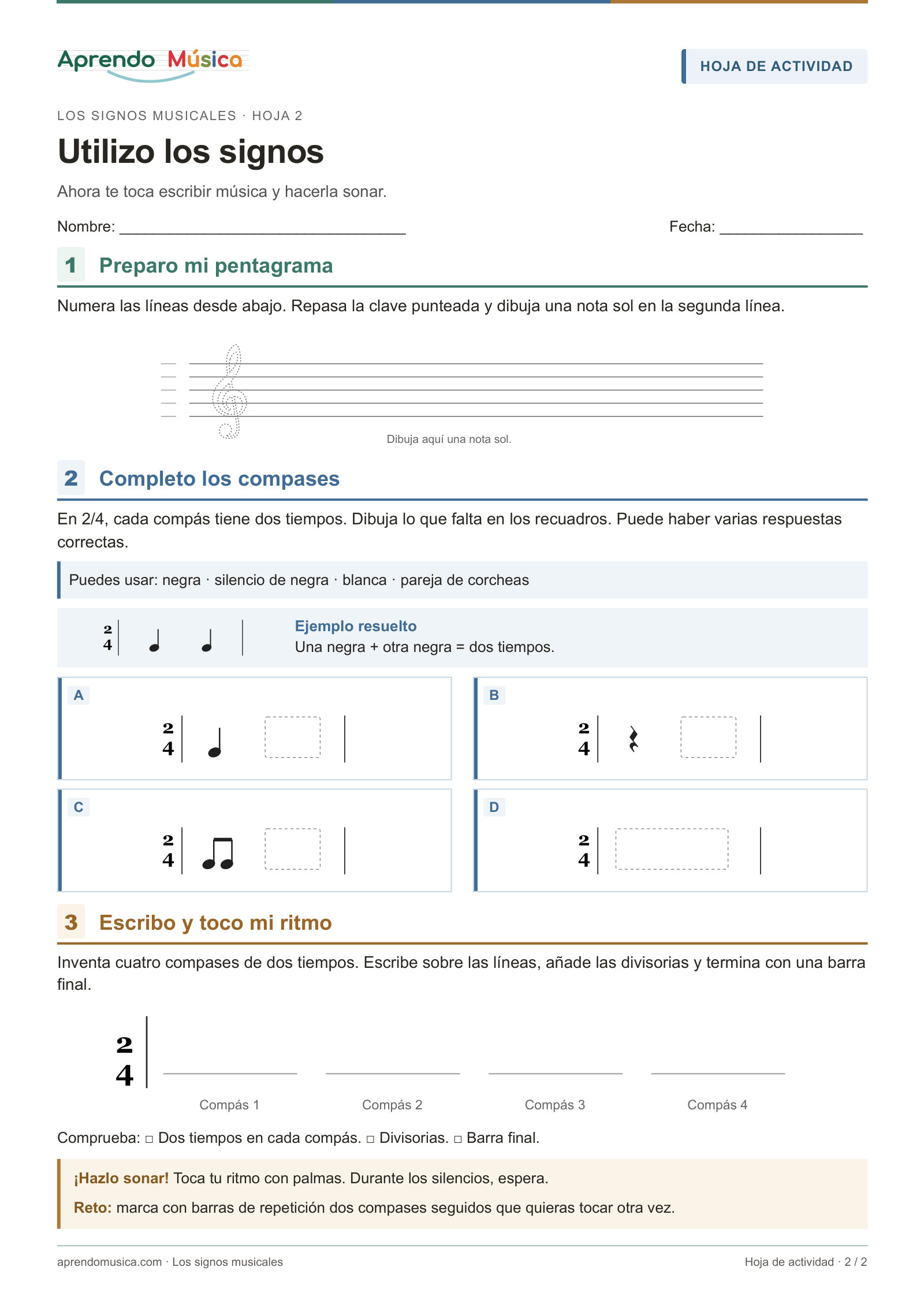
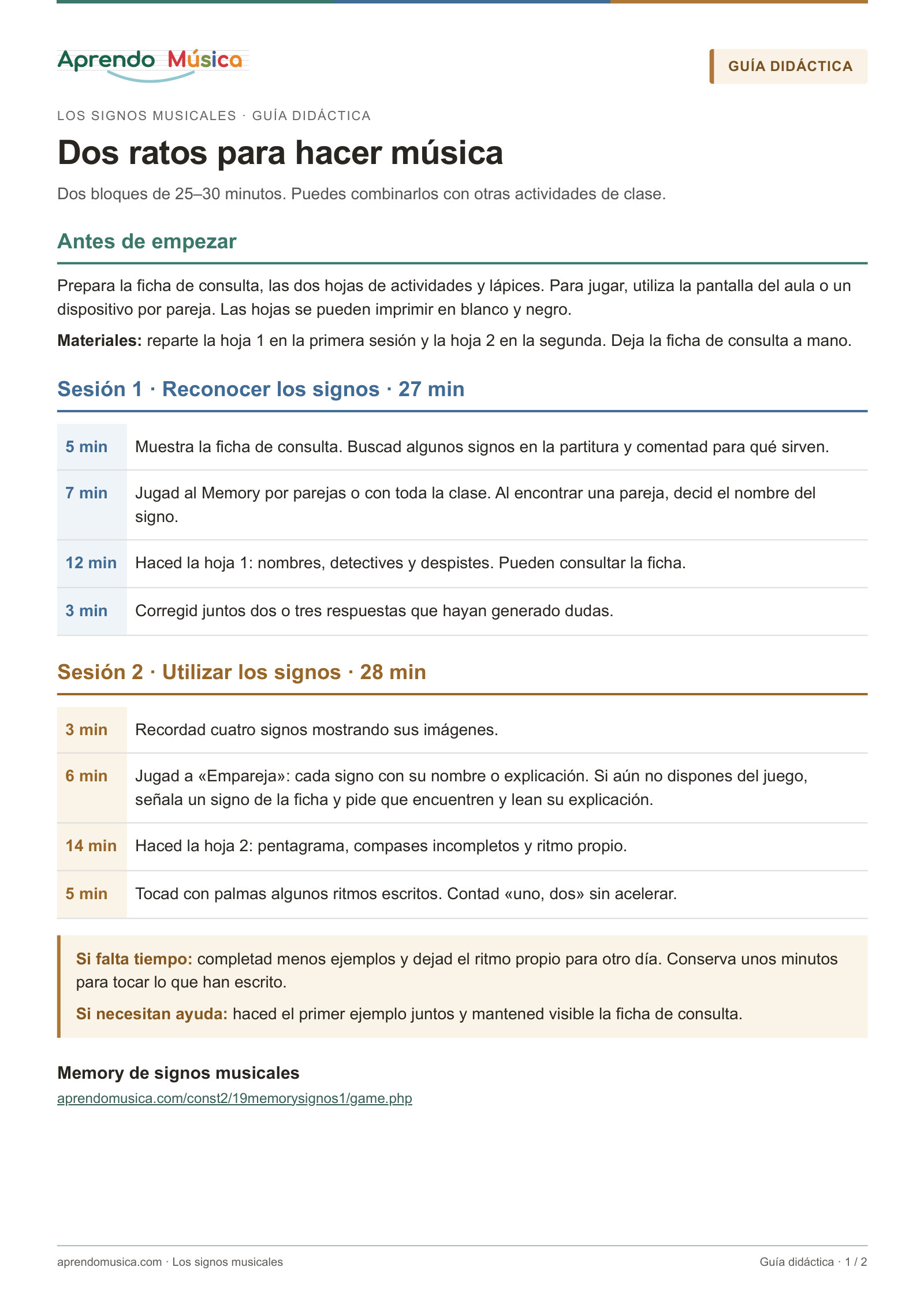
The printables can be used in black and white. Memory and Match-up are played on the web, on a computer or phone. The PDFs are in Spanish.
The basic signs and what they are for, with a reference score.
Download Reference sheetPDF · 1 page · 131 KBSix activities to recognise, locate, write and create your own rhythm.
Download Activity sheetsPDF · 2 pages · 162 KBTwo work blocks, solutions and examples to mark the open answers.
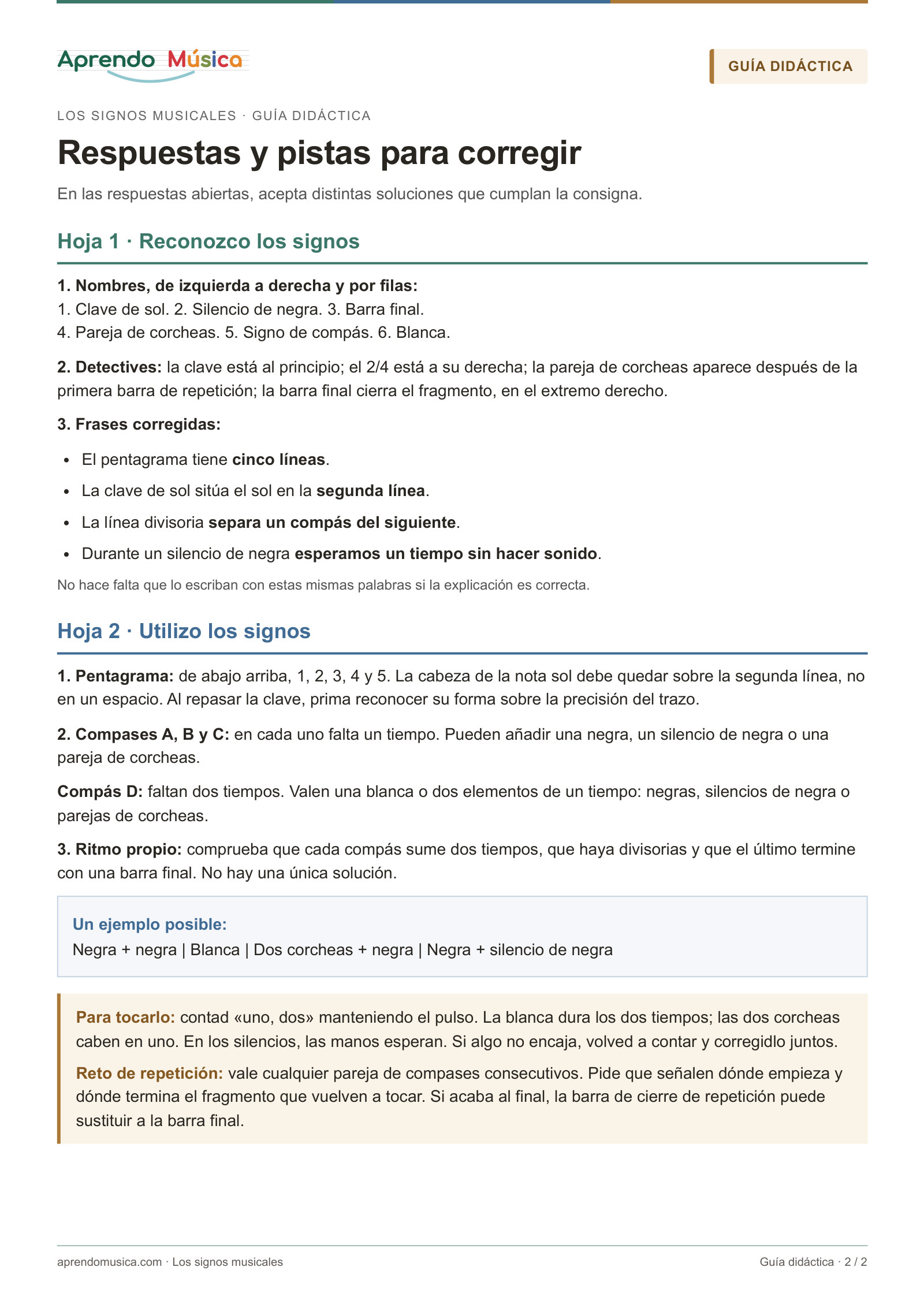
Download Teaching guidePDF · 2 pages · 97 KBGet pencils, the reference sheet and the activity sheets ready. For the games, use the classroom screen or one device per pair. You can combine these blocks with other activities.
If time is short, complete fewer examples and leave the own rhythm for another day. Keep a few minutes to play what they have written. The guide includes the solutions and examples of open answers.