
Levels overview
Aprendo Música's digital resources are organised following a sequence of content that divides the five blocks of basic music education —Rhythm, Notation, Music theory, Instruments, Music culture— into five levels over time. In turn, each activity works on different basic musical competences.
The following table describes this sequence of content and the related basic competences.
| Level | Rhythm | Notation | Music theory | Instruments | Music culture |
|---|---|---|---|---|---|
| 1Beginner 1 |
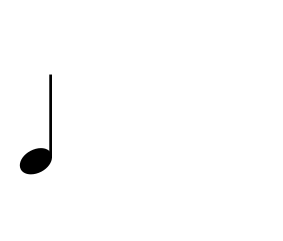

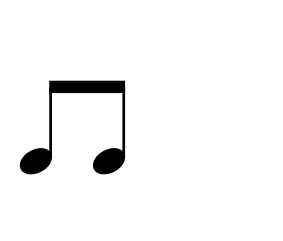
|
|
|
|
|
| 2Beginner 2 |
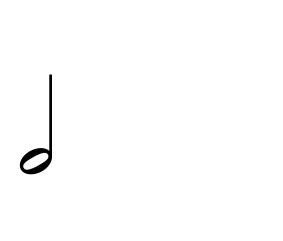

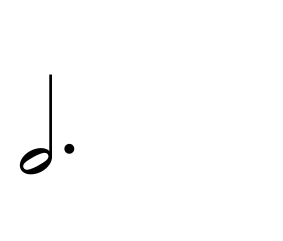
|
|
|
|
|
| 3Intermediate 1 |
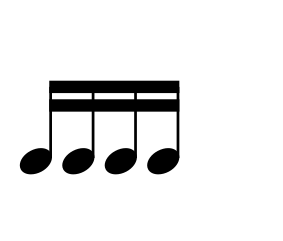

|
|
|
|
|
| 4Intermediate 2 |
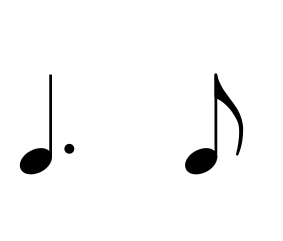
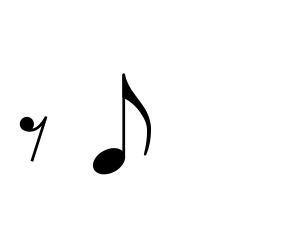
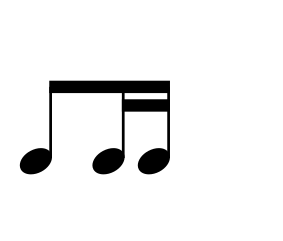
|
|
|
|
|
| 5Advanced 1 |


|
|
|
|
|
Formal documentation — not needed for day-to-day use
Skills
Each activity works on one or more skills, grouped into 4 groups and coded with decimal numbering — see the full curricular framework for how levels, content blocks, skills and operational objectives fit together.
1. Auditory perception and discrimination
This block applies to all activities where students must listen carefully to identify, tell apart or select elements of sound.
- 1.1. Discrimination of qualities
- Recognise by ear differences in pitch (low/high), intensity (loud/soft), duration (long/short) or timbre (instruments/voices).
- 1.2. Dictation and auditory memory
- Retain sound sequences of notes or rhythms in order to reproduce or complete them interactively.
- 1.3. Listening comprehension
- Identify basic musical structures (question-answer, repetitions or changes of section) by ear.
2. Reading, coding and musical language
Groups the skills of translating symbols. Used in games that connect eye, ear and the graphic representation of music.
- 2.1. Conventional graphic decoding
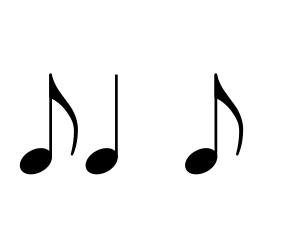
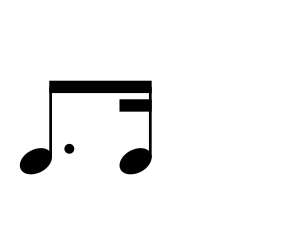
- Interactively read notes on the staff (clefs) and rhythmic figures (quarter notes, eighth notes, rests).
- 2.2. Audio-visual relationship
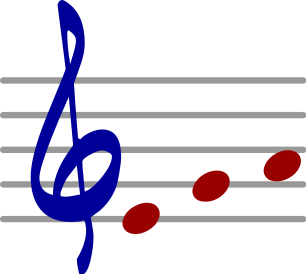
- Associate a purely sound stimulus with its written representation (matching the sound of a note with its position on the staff).
- 2.3. Acquiring music theory
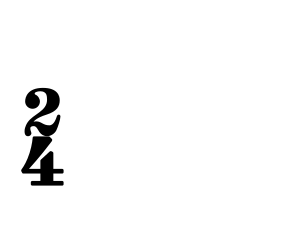
- Understand abstract concepts of musical language such as time signatures, bar lines, accidentals or scales.
3. Psychomotor coordination and performance
Assigned to activities that simulate the motor action of playing or that require keeping a precise pulse and tempo in front of the screen.
- 3.1. Digital instrument simulation
- Play melodies by pressing keyboards, chime bars or recorder positions on a virtual interface.
- 3.2. Rhythmic synchronisation
- Accurately follow the pulse and tempo of an interactive melody by clicking or tapping at exactly the right moment.
- 3.3. Eye-hand coordination
- Develop fine motor skills by responding quickly and physically to moving visual stimuli (falling-notes games).
4. Digital competence, cognition and gamification
Cross-curricular skills related to independent learning, problem solving and use of the game's technological environment.
- 4.1. Digital music literacy
- Navigate the game interface independently, correctly using buttons, menus and sound toolbars.
- 4.2. Self-assessment and resilience
- Analyse the immediate error feedback the game provides and correct one's strategy independently in order to pass the level.
- 4.3. Retention and semantic memory
- Solve trivia, matching (memory) or concept-sorting challenges about instruments, composers or musical terms.