
1Beginner 1

Activities included in the Beginner 1 level. They can be done in sequence, or as an introduction or reinforcement of classroom activities.

Rhythm Notation Music theory Instruments Music culture
  • The musical pulse
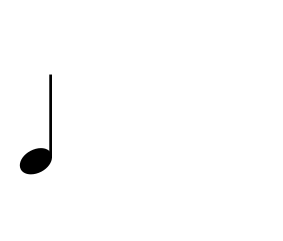
  • Quarter note and its rest
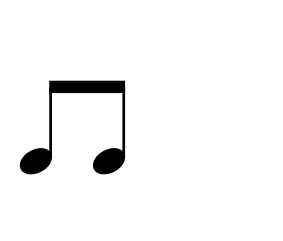
  • Pair of eighth notes
  • The musical accent
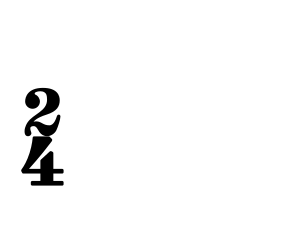
  • Time signature of 2
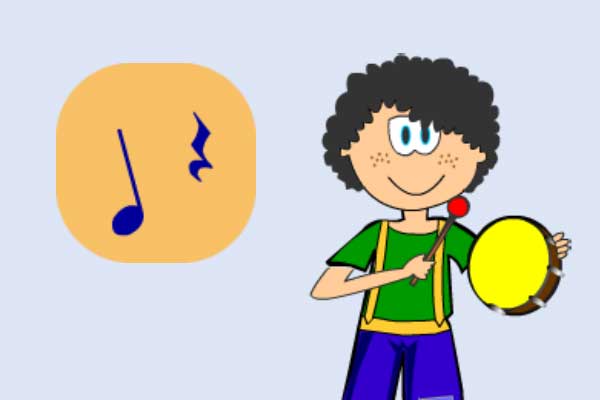
Quarter note Quarter rest Pair of eighth notes
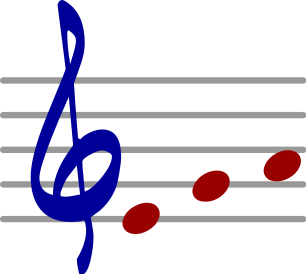
  • Reading, writing and aural recognition within the E-G-A range

E-G-A range

  • The pulse
  • The musical accent and the time signature
  • Qualities of sound: intensity, duration, pitch
  • The staff
  • The treble clef
  • The time signature symbol
  • Bar line and final bar line

2/4 time signature

  • Small percussion instruments
  • The most representative orchestral instruments of each family
  • Become familiar with works by representative composers from different periods and recognise them visually
Rhythm

Negra y silencio de negra

Objective · Mechanics
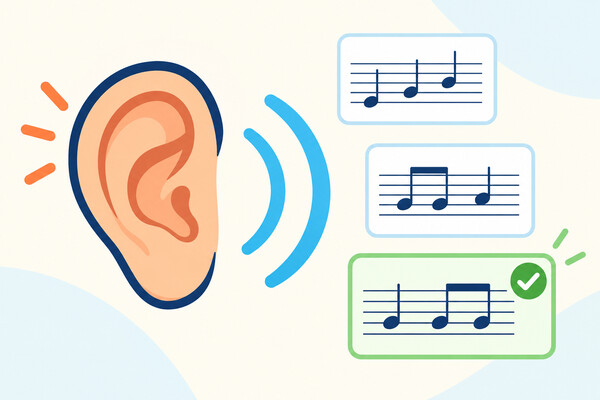
Un juego de dictado rítmico centrado en la figura negra y su silencio: escuchas un ritmo y tienes que identificarlo entre varias opciones de partitura. Perfecto para consolidar la relación entre el silencio y su duración, uno de los conceptos que más cuesta interiorizar al empezar a leer ritmos.
Teaching guide
Rhythm

Ritmos sencillos

Objective · Mechanics
Empieza por aquí. Práctica del ritmo más sencillo: el de negras y su silencio. En el juego se presentan esquemas de cuatro pulsos con solo estas dos figuras. En el primero escuchas y presionas el botón correspondiente. En el segundo has de averiguar cual de tres modelos sonoros es el que está representado. Muy fácil.
Rhythm

RhythmHop 1

Objective · Mechanics
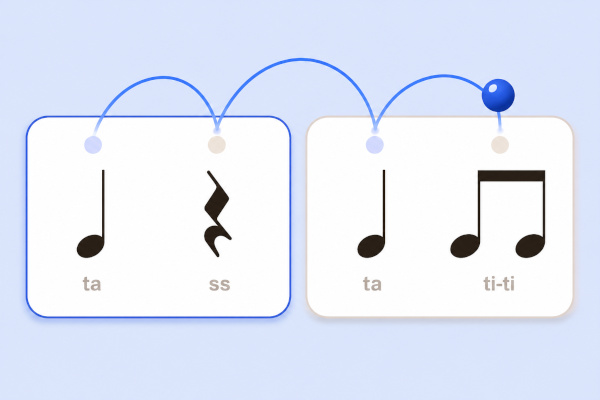
A game to build rhythm-reading fluency. Three cards are shown with rhythmic combinations of quarter notes, quarter rests and pairs of eighth notes. A metronome keeps a steady tempo while a blue ball jumps from beat to beat. You have to play the marked rhythm correctly on the tambourine, in rounds of ten cards in a row. The game has 8 difficulty levels (challenges), with the cards shown getting more complex and the tempo getting faster.
General

Up or down? · Challenge 1

Objective · Mechanics
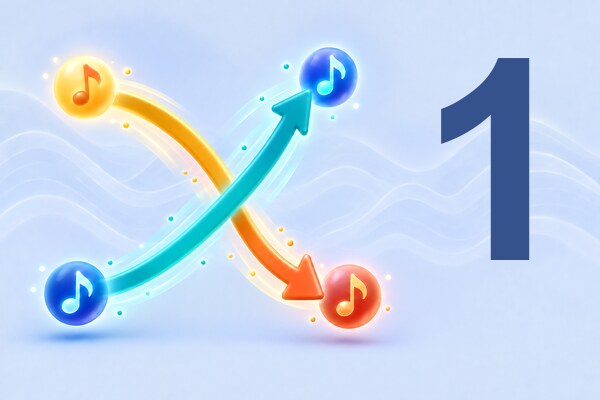
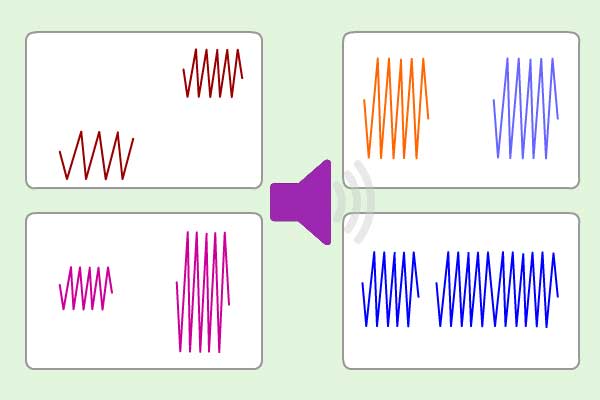
Identify continuous upward, downward or steady sound movement. Listen to ten examples, replay the audio and track your progress.
Rhythm

Dictado rítmico: negras y corcheas

Objective · Mechanics
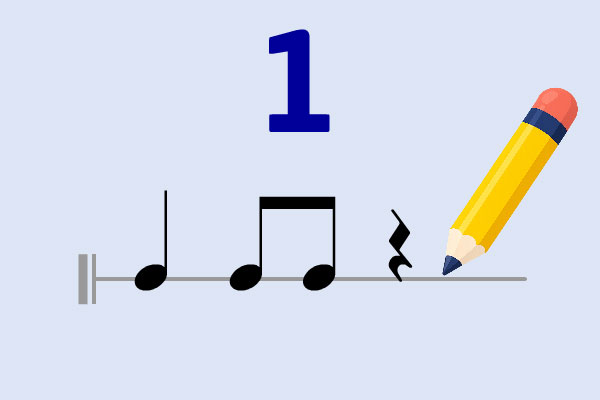
Dictado rítmico clásico y **primer nivel** de dificultad de dictados rítmicos. Frases de 4 compases en 2/4 utilizando las figuras de negra, silencio de negra y pareja de corcheas. Se escucha un esquema rítmico y hay que presionar los botones correspondientes al ritmo escuchado.
Notation

Líneas y espacios del pentagrama

Objective · Mechanics
Se presenta un pentagrama y se pide al usuario que pulse en sus líneas y espacios siguiendo las indicaciones dadas. El objetivo de la actividad es familiarizarse con el orden de las líneas y los espacios, paso previo a la colocación de las notas.
Notation

Learn the notes E - G - A

Objective · Mechanics
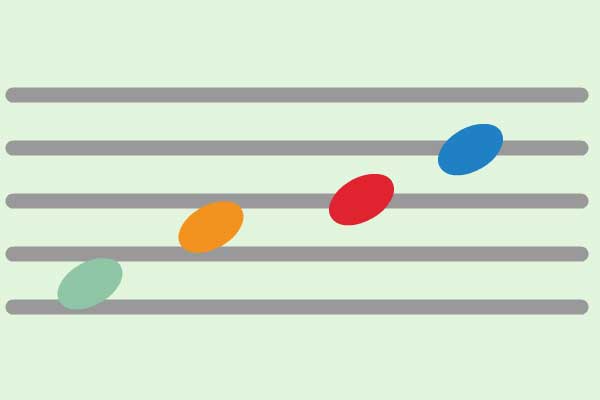
A game to practise placing the notes E, G and A on the staff: drag each note to the line or space where it belongs. An ideal first step to get familiar with the position of the notes before widening the range to more notes.
Teaching guide
Rhythm

Dictado rítmico fácil

Objective · Mechanics
Ejercicio de dictado rítmico sencillo, para descubrir gradualmente las nuevas células rítmicas, en este caso la pareja de corcheas. El juego sube progresivamente de dificultad y prepara para actividades de reconocimiento rítmico más difíciles
Music theory

Sound qualities

Objective · Mechanics
In this game you'll review the four qualities of sound: intensity, duration, pitch and timbre. After a short review of the concepts, there are three challenges of increasing difficulty in which a well-known tune plays twice, in two different ways, and you have to recognise what has changed. In the first the tunes differ in only one quality; in the second, in two; and in the third you have to find the only quality they have in common.
Teaching guide
General

Music Trivia level 1

Objective · Mechanics
A question-and-answer game about musical language, designed to review and consolidate knowledge in a fun way. Students answer multiple-choice questions about notes, rhythm, theory, instruments, listening and musical culture. This level reviews the Beginner 1 contents, with questions adapted to the basics of musical language. It is designed to be used in class as a review activity or informal assessment. The trivia format encourages motivation and participation, and can be used individually or in groups (up to 2 players).
Teaching guide
Music theory

Dibuja la clave de sol

Objective · Mechanics
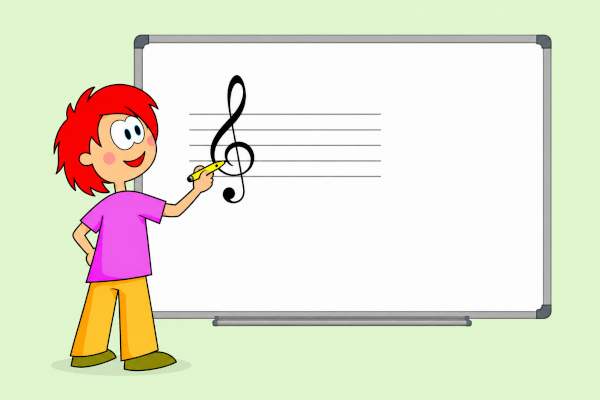
Un juego que enseña a dibujar la clave de Sol trazo a trazo, mostrando el recorrido correcto que hay que seguir. Pensado para quien empieza a familiarizarse con el pentagrama y quiere aprender a reconocer y reproducir este símbolo fundamental de la notación musical.
Teaching guide
Music culture

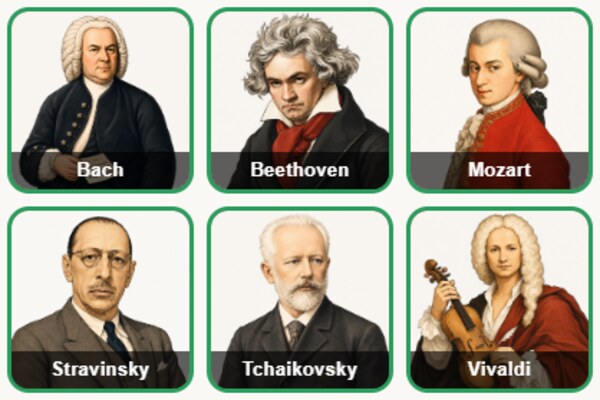
Memory: Great Composers

Objective · Mechanics
A memory (pairs) game to learn to recognise some of the great composers in the history of music, matching their portrait with their name. A fun way to get familiar with key figures of musical culture.
Music culture

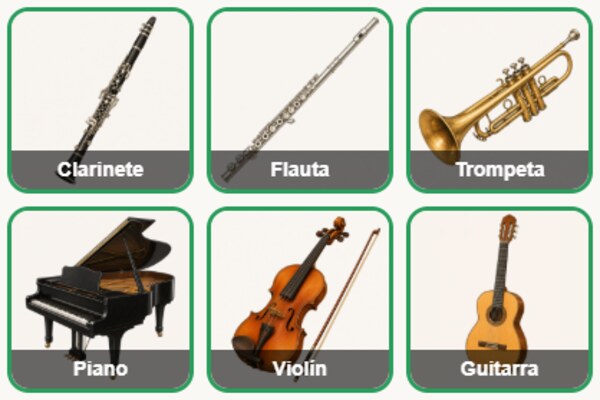
Memory: Musical Instruments I

Objective · Mechanics
A classic memory (pairs) game in which you have to find each musical instrument and match it with its name: clarinet, flute, trumpet, piano and many more. A fun way to learn to recognise instruments, also available in a mobile version.
General

Hearing acuity test

Objective · Mechanics
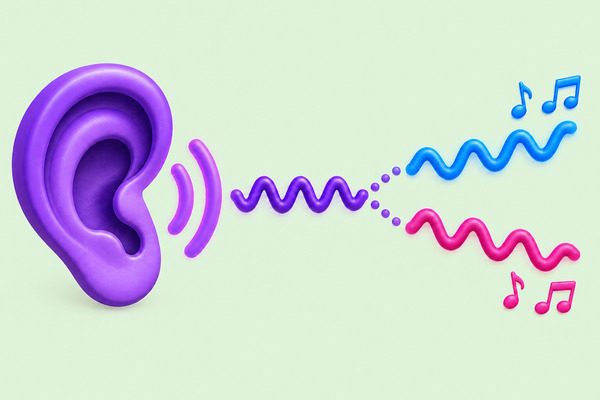
Hearing acuity test: two sounds play one after another and you have to decide whether the second one goes up or down. It starts with an octave and the distance shrinks (fifth, third, whole tone, semitone) down to fractions of a semitone measured in cents. A piano and a semitone bar show the notes that sounded, and at the end your precision level is shown. You can finish at any time and retake the test another day.
Teaching guide
General

Sound chimes 1: scale and 2 tones

Objective · Mechanics
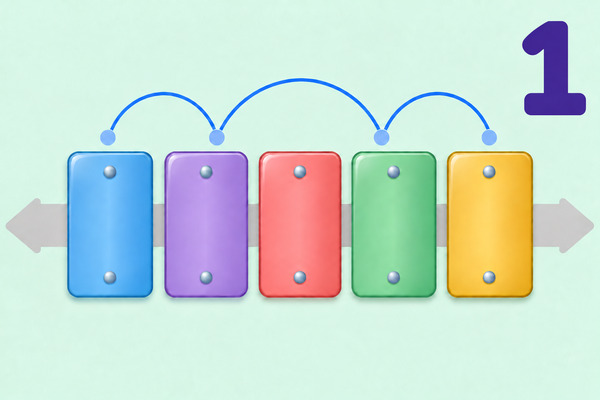
An ear-training game inspired by Willems' intratonal chime: five bars sound mixed up and you have to order them from low to high, guided only by your ear. It includes two levels: **Scale** (five notes of the scale, easier to tell apart) and **2 tones** (each bar is a semitone away from the next). Each level has three rounds and is passed by getting two out of three right. You can move each bar by dragging it, with arrows or with the keyboard, and listen to the correct order to learn by ear.
Teaching guide
Notation

Catch the notes · E, G, A

Objective · Mechanics
First stage of Catch the Notes: recognise and catch the notes E, G and A on the staff before they escape. The first step on the note-recognition ladder.
Teaching guide
Rhythm

Entrenamiento ritmico con blancas y negras

Objective · Mechanics
Un ejercicio interactivo para entrenar el ritmo con las figuras blanca y negra, tocando o marcando el pulso en el momento justo. Ideal para trabajar la coordinación y la precisión rítmica antes de pasar a ejercicios de dictado más complejos.
General

Clase de Música: El compás de 2

Objective · Mechanics
Unidad completa de **Clase de Música**, la versión de escritorio para el aula del método Aprende con Tempo, pensada para pizarra digital. Prueba piloto del futuro curso: ¡pruébala y cuéntanos en sugerencias! Incluye 10 actividades — carillón, acompañamiento con percusión, repaso de conceptos, colocación de líneas divisorias, conteo de compases, identificación de elementos, lectura de partitura, reconocimiento auditivo del compás, relación de parejas y memory — en torno al compás de 2, la línea divisoria y el signo de compás.
Teaching guide
Notation

Which one is playing? E G A

Objective · Mechanics
Recognise simple E, G and A melodies in two bars of 2/4. Five challenges of five rounds progress from quarter notes and rests to three pairs of eighth notes. After each answer, compare the two scores and listen again while a cursor follows the notes.