
2Beginner 2

Activities included in the Beginner 2 level. They can be done in sequence, or as an introduction or reinforcement of classroom activities.

Rhythm Notation Music theory Instruments Music culture
  • Time signature of 3
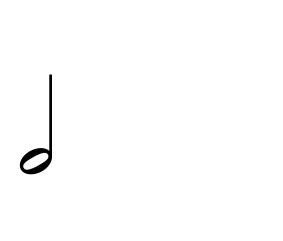
  • Half note and its rest
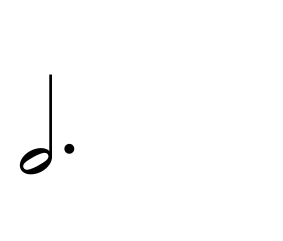
  • Dotted half note
Half note Half rest Dotted half note
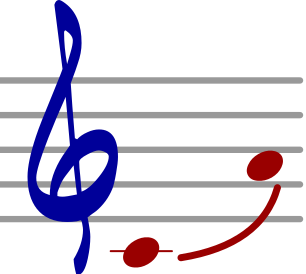
  • New notes: F, D, C
  • Reading, writing and aural recognition within the C-A hexachord range

C-A range

  • Time signature of 2 vs. time signature of 3
  • Repeat sign
  • The upbeat (anacrusis)
  • Families of small percussion instruments: wood, metal and membrane
  • Orchestral instrument families, family by family
  • Identify the most representative composers of each musical period, and get to know and associate some of their best-known works through active listening.
Rhythm

Descubre el compás

Objective · Mechanics
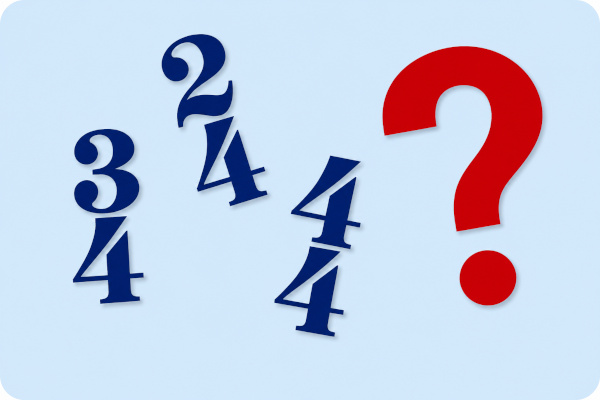
La actividad presenta diferentes combinaciones de figuras rítmicas en un solo compás. Según la combinación presentada, debe contestarse si es un compás de 2/4, 3/4 o 4/4. La actividad tiene dos niveles, según la complejidad de las células rítmicas que aparecen.
Music theory

Sound qualities

Objective · Mechanics
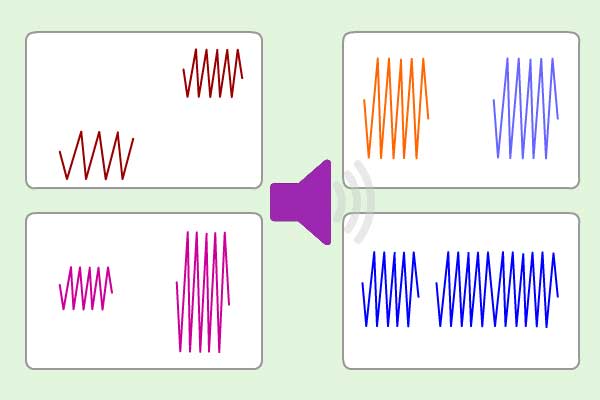
In this game you'll review the four qualities of sound: intensity, duration, pitch and timbre. After a short review of the concepts, there are three challenges of increasing difficulty in which a well-known tune plays twice, in two different ways, and you have to recognise what has changed. In the first the tunes differ in only one quality; in the second, in two; and in the third you have to find the only quality they have in common.
Teaching guide
General

Music Trivia level 2

Objective · Mechanics
Second instalment of Music Trivia, with harder questions for students with intermediate knowledge of musical language. It covers wider contents: notes and rests, time signatures, orchestral instruments and general musical culture. Suitable for the middle and upper primary years or the start of secondary school. Like level 1, it can be used in class as a review activity, assessment or competition between groups. The trivia format keeps motivation high and lets students review a lot of content in an enjoyable way.
Music culture

Memory: Great Composers

Objective · Mechanics
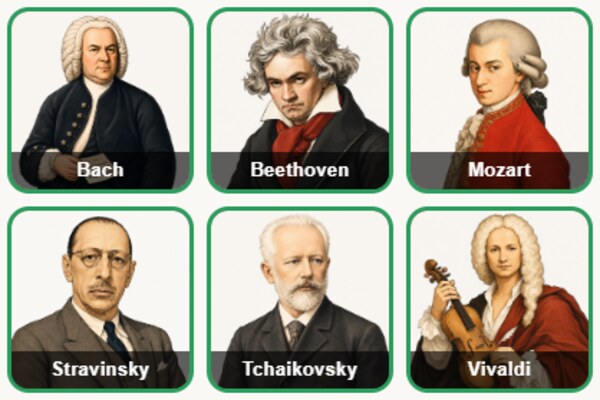
A memory (pairs) game to learn to recognise some of the great composers in the history of music, matching their portrait with their name. A fun way to get familiar with key figures of musical culture.
Notation

Memory: the notes from C to A

Objective · Mechanics
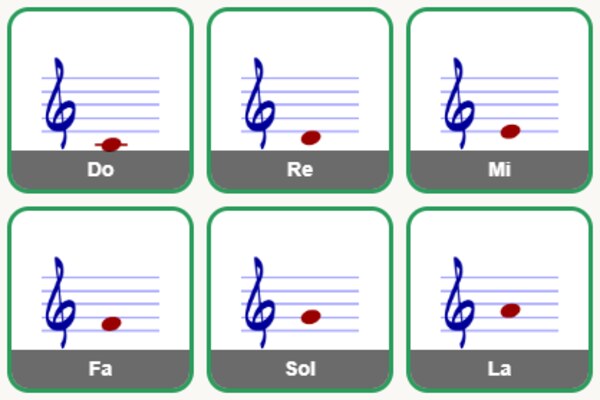
A memory game to practise the notes C, D, E, F, G and A. Match each note with its name. You can also play with a friend, taking turns on the same device.
Music culture

Memory: Musical Instruments I

Objective · Mechanics
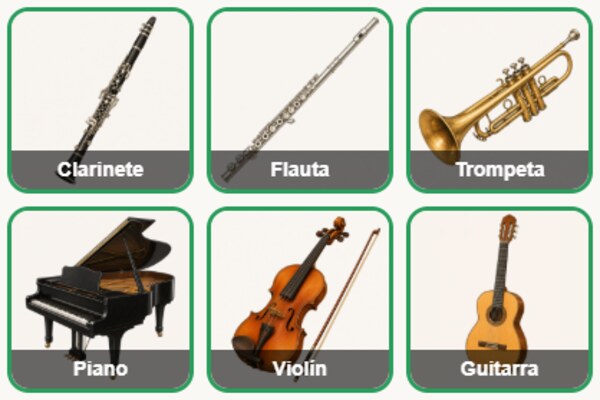
A classic memory (pairs) game in which you have to find each musical instrument and match it with its name: clarinet, flute, trumpet, piano and many more. A fun way to learn to recognise instruments, also available in a mobile version.
Music theory

Memory: Musical Symbols

Objective · Mechanics
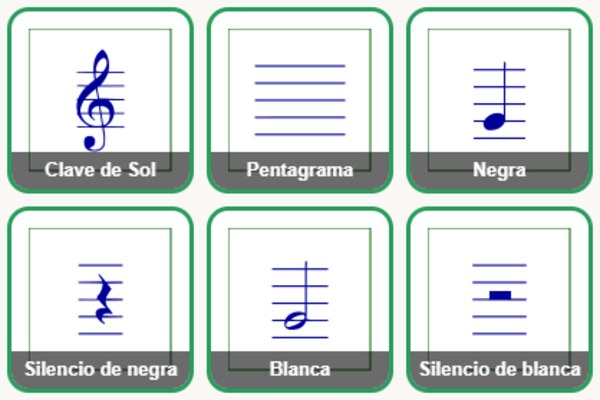
A memory (pairs) game focused on basic musical symbols: clefs, note values, rests and other symbols of musical notation. Matching each symbol with its name helps you memorise them in a visual and fun way.
Notation

Learn the notes from C to A

Objective · Mechanics
A game to practise placing the notes C, D, E, G, A and C on the staff by dragging each note to the line or space where it belongs. An intermediate step on the way to the full C major scale.
Teaching guide
General

Up or down? · Challenge 2

Objective · Mechanics
Identify upward, downward or steady movement in a series of notes. Listen to ten examples, replay the audio and track your progress.
General

Up or down? · Challenge 3

Objective · Mechanics
Compare two sounds: is the second higher, lower or the same? Listen to ten examples, replay the audio and track your progress.
General

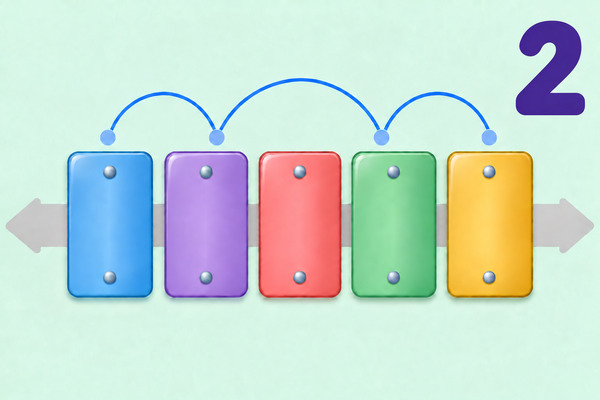
Sound chimes 2: tone and semitone

Objective · Mechanics
Second part of the sound chimes game, inspired by Willems' intratonal chime: five bars sound mixed up and you have to place them in order from low to high, guided only by your ear. Here the bars are closer together than in the first chime: **1 tone** and **1 semitone** between the first and last, for those who already master wide gaps and want to fine-tune their ear. Each level has three rounds and is passed by getting two out of three right. You can move each bar by dragging it, with arrows or with the keyboard, and listen to the correct order to learn by ear.
Teaching guide
Notation

Catch the notes · C to A

Objective · Mechanics
Second stage of Catch the Notes: extends the range to C, D, E, G, A and high C. Follows the 3-note stage on the recognition ladder.
Teaching guide
Music theory

Match: Musical symbols

Objective · Mechanics
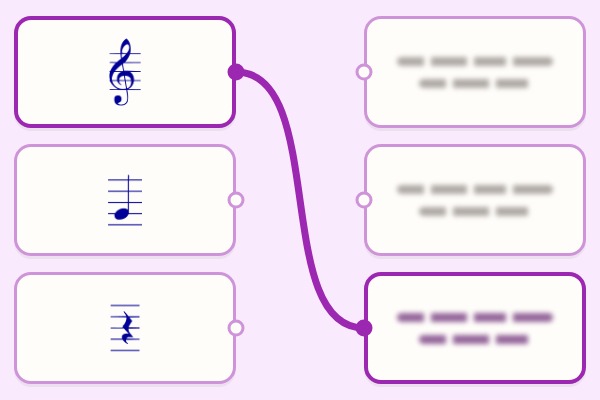
Match images, names and explanations for the 11 concepts from the Aprendo-Kit study card on musical symbols: staff, treble clef, 2/4 time signature, bar line, final barline, repeat signs, quarter note, quarter rest, pair of eighth notes, half note and half rest. Complete 15 pairs per round, with four pairs visible on desktop and three on mobile. Answers can be retried, and the result shows how many pairs you got right on the first try.
Teaching guide