
Explore 16 traditional Latin American instruments through their pictures, names and musical traditions.
This guide expands the infographic and suggests a classroom sequence: observe, compare, play the memory game and explain what you have learned.
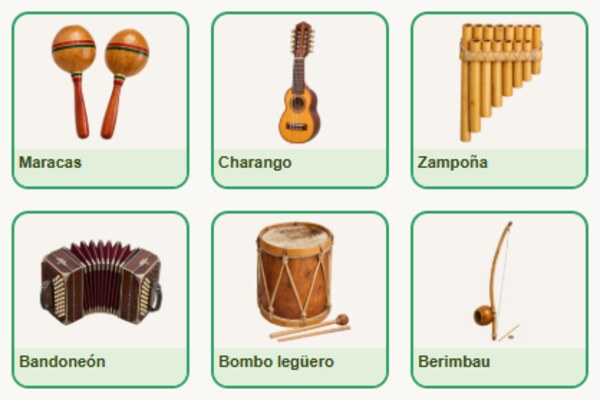
A journey through different musical traditions
Latin American music brings together Indigenous, African and European contributions that have developed differently in each region. This collection includes flutes with pre-Hispanic roots, instruments linked to Afro-American cultures and local adaptations of European instruments.
Traditional describes an instrument’s place in a community and its musical practices. The German-born bandoneon belongs here alongside Indigenous instruments such as the quena: its role in tango has made it a landmark of Río de la Plata music.
The regions shown highlight places of use rather than exclusive boundaries. This collection aims for geographical and sonic variety; familiarity varies with the country and the pupils’ experience.
Learning aims
- Match the pictures and names of the 16 instruments, using details of their shape as clues.
- Distinguish strings, winds and percussion by identifying what vibrates to make the sound.
- Locate some traditions on a map and recognise that instruments are often shared between countries.
- Describe similarities and differences using musical vocabulary and listen to classmates’ explanations.
The 16 instruments: background for teachers
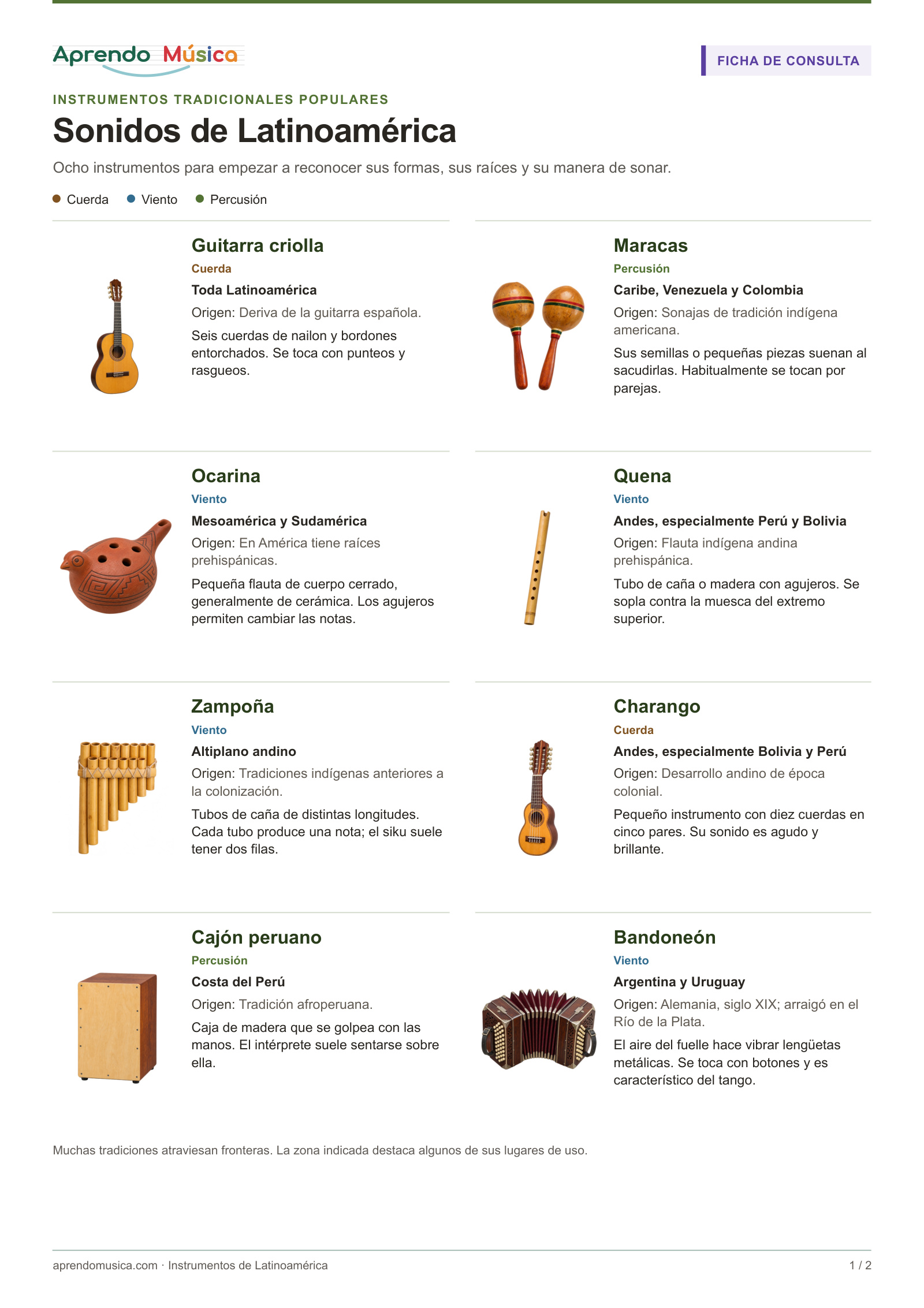
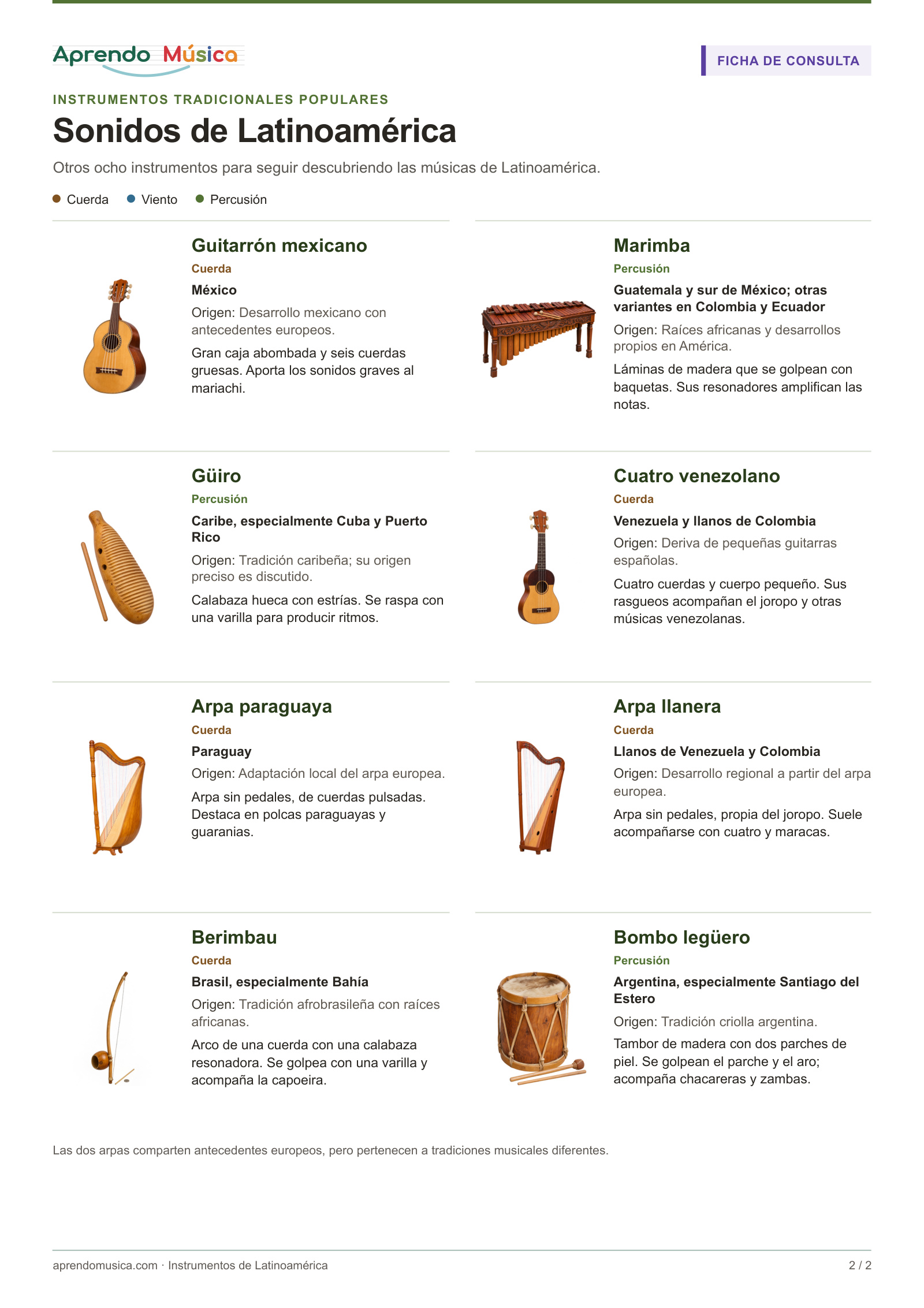
The entries follow the order of the two infographic pages. Region, origin and features give context to each picture; each instrument links to a source for further reading.
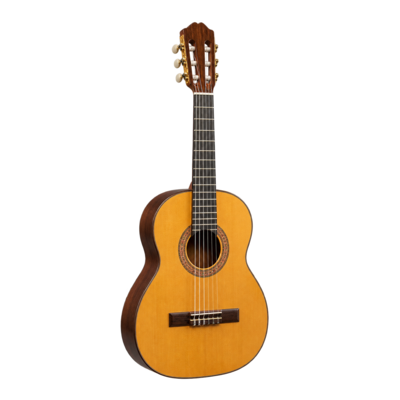
Classical guitar
Strings- Geographical area
- Across Latin America
- Origin
- Developed from the Spanish guitar.
Six strings, with nylon trebles and wound basses. Played with plucked notes and strumming.
The term criolla is used for this guitar in different parts of Latin America. Its role in accompanying singing makes it a useful starting point for comparing the cuatro, charango and guitarrón.
Source and further reading ↗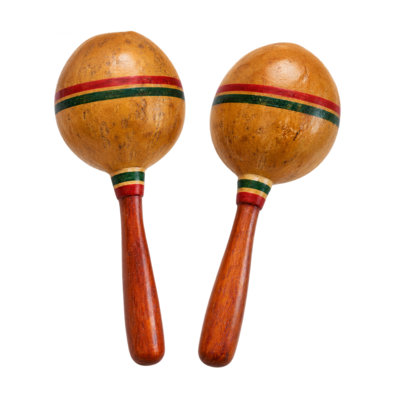
Maracas
Percussion- Geographical area
- Caribbean, Venezuela and Colombia
- Origin
- Rattles of Indigenous American tradition.
Seeds or small loose pieces sound when shaken. Usually played in pairs.
Used in joropo and various Caribbean musics. The loose pieces strike the container walls, showing that percussion instruments can sound when shaken.
Source and further reading ↗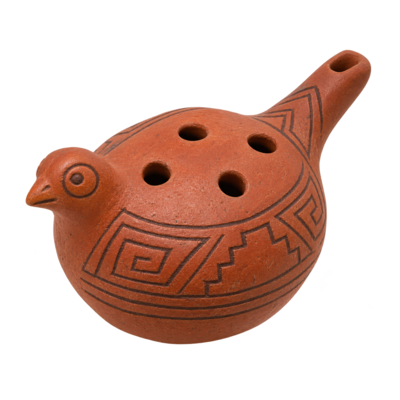
Ocarina
Winds- Geographical area
- Mesoamerica and South America
- Origin
- Pre-Hispanic roots in the Americas.
A small closed-body flute, usually ceramic. Finger holes change the notes.
Surviving examples come from different pre-Hispanic cultures and sometimes depict animals or people. Introduce it as a vessel flute rather than assigning all variants to one country.
Source and further reading ↗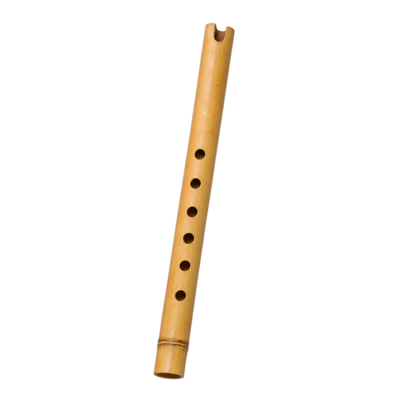
Quena
Winds- Geographical area
- Andes, especially Peru and Bolivia
- Origin
- A pre-Hispanic Indigenous Andean flute.
A cane or wooden tube with finger holes. Air is blown across a notch at the top.
Characteristic of Andean music. Its notch is a useful visual clue to distinguish it from a recorder, which has an air channel and a different mouthpiece.
Source and further reading ↗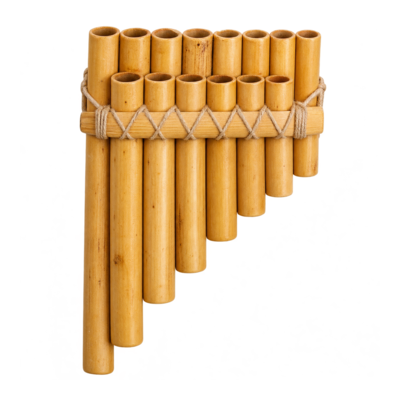
Zampoña (panpipes)
Winds- Geographical area
- Andean highlands
- Origin
- Indigenous traditions predating colonisation.
Cane tubes of different lengths, each producing one note. The siku often has two rows.
In many siku traditions, two players share the notes and complete a melody together. Discuss musical cooperation and compare its tubes with the quena’s single tube.
Source and further reading ↗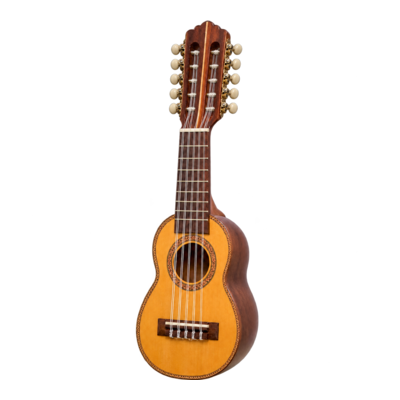
Charango
Strings- Geographical area
- Andes, especially Bolivia and Peru
- Origin
- An Andean development from the colonial period.
A small instrument with ten strings in five pairs, producing a bright, high sound.
It combines European string-instrument antecedents with Andean musical creativity. The wooden model shown has five double courses, a useful detail for comparison with guitar and cuatro.
Source and further reading ↗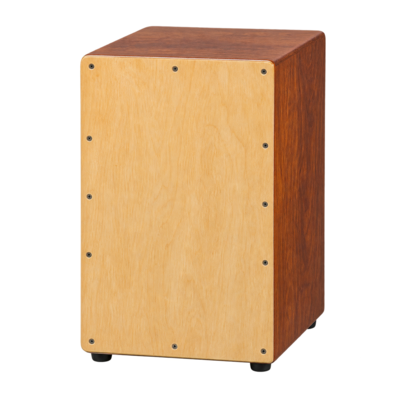
Peruvian cajón
Percussion- Geographical area
- Coastal Peru
- Origin
- Afro-Peruvian tradition.
A wooden box struck with the hands, usually with the player sitting on top.
Closely associated with Afro-Peruvian identity and Peru’s coastal music. Its wider use today, including flamenco, shows how instruments travel into other traditions.
Source and further reading ↗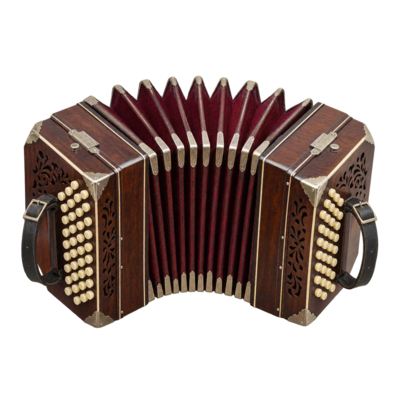
Bandoneon
Winds- Geographical area
- Argentina and Uruguay
- Origin
- Germany, nineteenth century; adopted in the Río de la Plata.
Air from the bellows vibrates metal reeds. Played with buttons and characteristic of tango.
Its adoption in Argentine and Uruguayan music made it emblematic of tango. Buttons and bellows are visual clues; air-driven vibrating reeds place it in the wind family.
Source and further reading ↗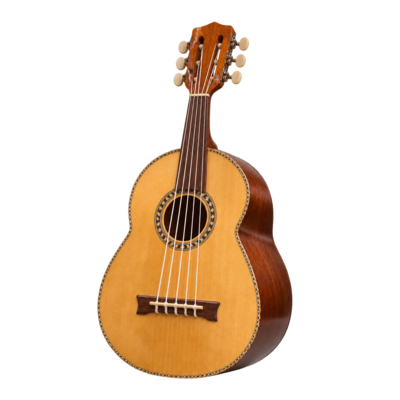
Mexican guitarrón
Strings- Geographical area
- Mexico
- Origin
- A Mexican development with European antecedents.
A deep rounded body and six thick strings supply the bass notes in mariachi.
Its role in a mariachi ensemble is that of a bass. Compare its body depth and string thickness with a classical guitar, as well as its overall size.
Source and further reading ↗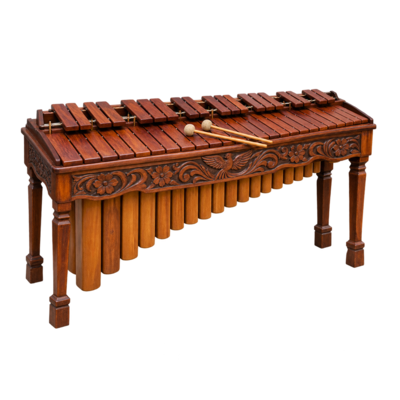
Marimba
Percussion- Geographical area
- Guatemala and southern Mexico; other variants in Colombia and Ecuador
- Origin
- African roots with local developments in the Americas.
Wooden bars struck with mallets. Resonators amplify the notes.
Guatemala and Chiapas have their own traditions alongside other marimbas in Colombia and Ecuador. Its tuned bars play melodies: percussion can have definite pitch.
Source and further reading ↗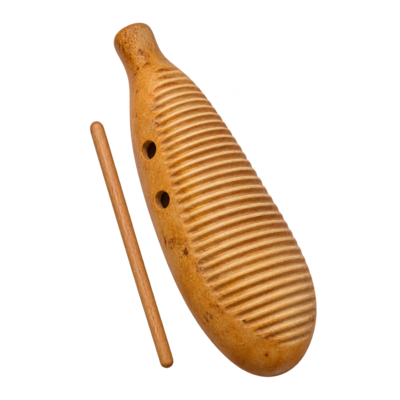
Güiro
Percussion- Geographical area
- Caribbean, especially Cuba and Puerto Rico
- Origin
- Caribbean tradition; its precise origins are disputed.
A hollow ridged gourd scraped with a stick to produce rhythms.
Scraping produces a dry rhythmic sound. The family has variants in different shapes and materials; this model is a gourd. Avoid assigning its precise origin definitively to one culture.
Source and further reading ↗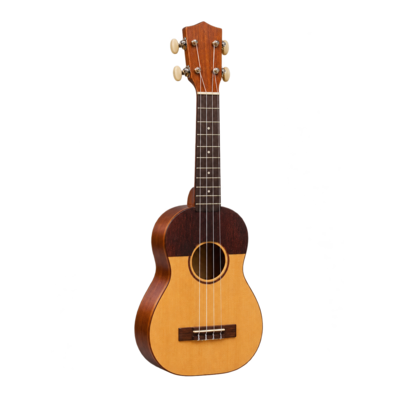
Venezuelan cuatro
Strings- Geographical area
- Venezuela and Colombia’s plains
- Origin
- Developed from small Spanish guitars.
Four strings and a small body. Strumming accompanies joropo and other Venezuelan musics.
Central to joropo alongside harp and maracas. The Venezuelan model has four single strings; distinguish it from the Puerto Rican cuatro, with a different shape and stringing.
Source and further reading ↗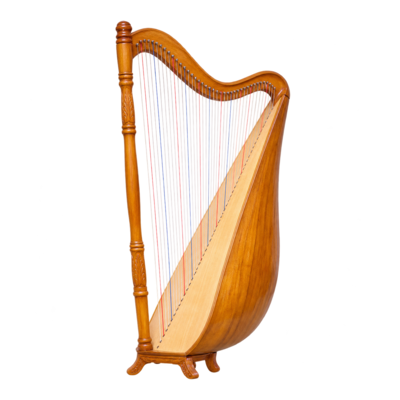
Paraguayan harp
Strings- Geographical area
- Paraguay
- Origin
- A local adaptation of the European harp.
A plucked harp without pedals, prominent in Paraguayan polkas and guaranias.
Its construction and playing developed distinctive features in Paraguay. Musical context helps distinguish it from a llanera harp even when their images look similar.
Source and further reading ↗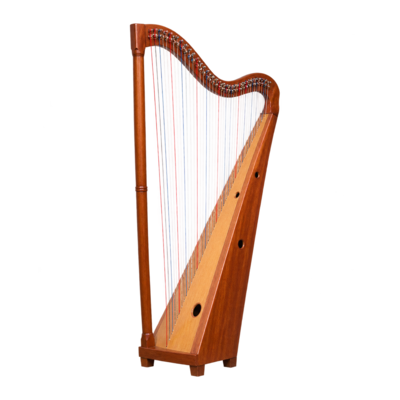
Llanera harp
Strings- Geographical area
- Plains of Venezuela and Colombia
- Origin
- A regional development of the European harp.
A harp without pedals associated with joropo, often accompanied by cuatro and maracas.
It belongs to the joropo traditions of Venezuela and Colombia. Although related to other Latin American harps through European antecedents, it has its own regional tradition.
Source and further reading ↗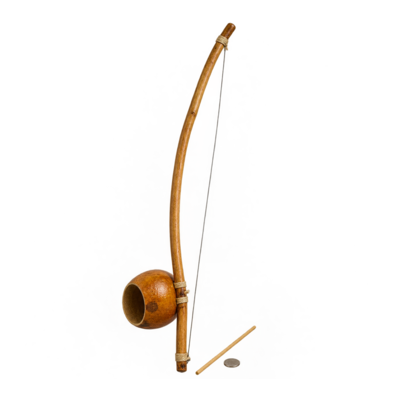
Berimbau
Strings- Geographical area
- Brazil, especially Bahia
- Origin
- Afro-Brazilian tradition with African roots.
A single-string musical bow with a gourd resonator, struck with a stick; accompanies capoeira.
A stone or coin helps modify the sound. Although struck to play it, it belongs to the string family because the string is the vibrating element.
Source and further reading ↗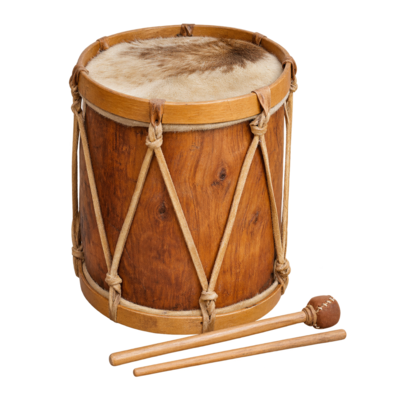
Bombo legüero
Percussion- Geographical area
- Argentina, especially Santiago del Estero
- Origin
- Argentine criollo tradition.
A wooden drum with two skin heads. The head and rim are struck; used in chacareras and zambas.
Characteristic of Argentine folk music. Head and rim strokes have different timbres; the image also shows the leather tension cords.
Source and further reading ↗Comparisons that help understanding
Paraguayan and llanera harps
These are regional variants of the same family. The main association here is Paraguay with Paraguayan polkas and guaranias, and the Venezuelan and Colombian plains with joropo. String counts vary between models and are not enough to distinguish them.
Quena, zampoña and ocarina
All three use air. The quena has one tube with finger holes and a notch; the zampoña combines several tubes, one per note; the ocarina has a closed vessel-shaped body. Compare the shape and how notes change, as well as learning the name.
Guitar, cuatro, charango and guitarrón
They share features of plucked string instruments but differ in stringing and musical role: six strings on the guitar and guitarrón, four single strings on the Venezuelan cuatro, and ten strings in five pairs on the charango. The images show common models, not every variant.
To classify an instrument, ask what vibrates. The berimbau has a vibrating string even though it is struck; the bandoneon uses reeds activated by air; maracas sound as the loose pieces strike their container. The hand movement is a clue but does not explain the family on its own.
How the memory game works
The game draws on all 16 instruments. Each round randomly selects six and prepares twelve cards: one picture and one name per instrument.
- Choose one or two players. In two-player mode, you can enter names or nicknames.
- Turn over two cards and look for an instrument and its matching name.
- Matched pairs stay visible with the picture and name. Mismatched cards turn face down again.
- Complete all six pairs. A new round chooses another random group from the collection of 16.
Two ways to play
- One player: Complete the board in as few attempts as possible. The game shows attempts and keeps your best score. Finishing in ten attempts or fewer triggers applause and confetti.
- Two players: Players share a device and take turns. A match keeps your turn; a mismatch passes it on. The player with most pairs wins, and a tie is possible.
The information button and The 16 instruments link open the full collection. My progress shows completed rounds, the last round and the best single-player score.
The game practises visual recognition, vocabulary and remembering positions. Attempts also depend on chance and spatial memory: use oral questions alongside the score to assess which instruments pupils have learned.
A 25–30 minute classroom activity
Use it in primary school or early secondary school, adjusting reading demands and questions. You need the infographic, a map and a device for projecting the game or playing in pairs.
Observe and recall 5 minutes
Show the first page and ask which instruments pupils recognise. Ask them to justify their answer with a detail from the image. Find some of the named countries on a map.
Compare and explore 7 minutes
Introduce the second page and choose two comparisons: the two harps, the three flutes or the guitar-like instruments. Each pair of pupils describes a similarity and a difference.
Play and name 10–12 minutes
Play in pairs or on the classroom screen. When finding a pair, say the instrument’s name and add a clue: its family, how it is played or a region where it is used. Keep the infographic available if needed.
Recall and explain 3–6 minutes
Hide the names on two or three pictures and ask pupils to identify them. Finish with an explanation question: Why is the berimbau a string instrument? What do the two harps share and how do they differ?
Adjusting the difficulty
- If reading is difficult, read the names together before playing and ask a partner to say them aloud when cards are turned over.
- Begin with oral work on a small group from the infographic. The game always selects six random pairs; it has no instrument selector.
- For an extension, describe an instrument without naming it and ask a classmate to identify it and explain their choice.
- In group play, agree on a short thinking pause before turning over the second card so everyone can participate.
What to look for
Check whether pupils recognise the pictures, name instruments, explain how they make sound and connect some with a tradition or region. Accept explanations in their own words and note which instruments need another look, alongside the game result.
A listening extension
Work on aural recognition afterwards using recordings selected by the teacher. Introduce the instrument and its context before listening; afterwards, ask pupils to describe its timbre and role in the ensemble. This memory game focuses on pictures and names.
The infographic: two reference pages
The PDF presents eight instruments per page with their picture, family, region, origin and features. The first page introduces an initial group of familiar instruments; the second extends the journey. Adapt this order to what your class already knows.
Download infographic (PDF in Spanish, 2 pages)
Print it, project it or keep it available during the game. The two harps have separate entries, and family labels make the material usable without relying on colour.
Sources for planning your lessons
Each entry links to its reference source: museum collections, universities or cultural organisations. Use these as starting points for historical and musical context. When selecting a recording, check the performers, where it comes from and the instrument’s role.