The interactive whiteboard in the music classroom: a practical guide
The interactive whiteboard (IWB) has been in Spanish classrooms for over a decade, but in music it is often used only to show a video or a PDF score. A University of Alicante study on its use in Primary concluded that making real use of it — with activities where the student manipulates the board, not just watches it — improves both academic results and class engagement [1]. This guide gathers three concrete ways to use it, with session examples ready to take to the classroom.
Wall chime: practise notes with the whole class at once
The Wall chime is a visual instrument — a row of coloured bars, one per note — designed to lead group reading and inner-singing exercises without each student needing their own instrument.
Session example (10 min)
Project the chime and explain which bar corresponds to each note.
Play a short sequence yourself (E–G–A) and ask them to sing it before repeating it on the board.
Split the class into two halves: one sings the sequence, the other confirms it by playing the right bar.
Add one more note in each round to raise the difficulty.
Rhythm dictation: listen, decide and confirm as a group
The Rhythm dictation generator plays a pattern and the group has to identify the figures. Projected on the board, it becomes a discussion activity before the individual answer — richer than filling in a worksheet in silence.
Session example (8–10 min)
Press "Listen" twice without anyone speaking yet.
In pairs, they discuss for 30 seconds which figures they heard.
One student from each pair comes up to mark the answer on the board.
Check the result together and adjust the level according to the hits.
Full screen: when the game becomes a team tournament
Working in pairs or teams on the same challenge is not just more fun: research on cooperative learning — backed by more than 1,200 empirical studies — shows that it improves performance compared with purely individual or competitive structures [5]. In music specifically, a study with musical games in the Primary classroom found that 90 % of students felt more motivated after working with this methodology [6].
The Premium option adds full-screen mode to any game on the site — designed exactly for this: no navigation bar or distractions around it, ideal for projecting a tournament.
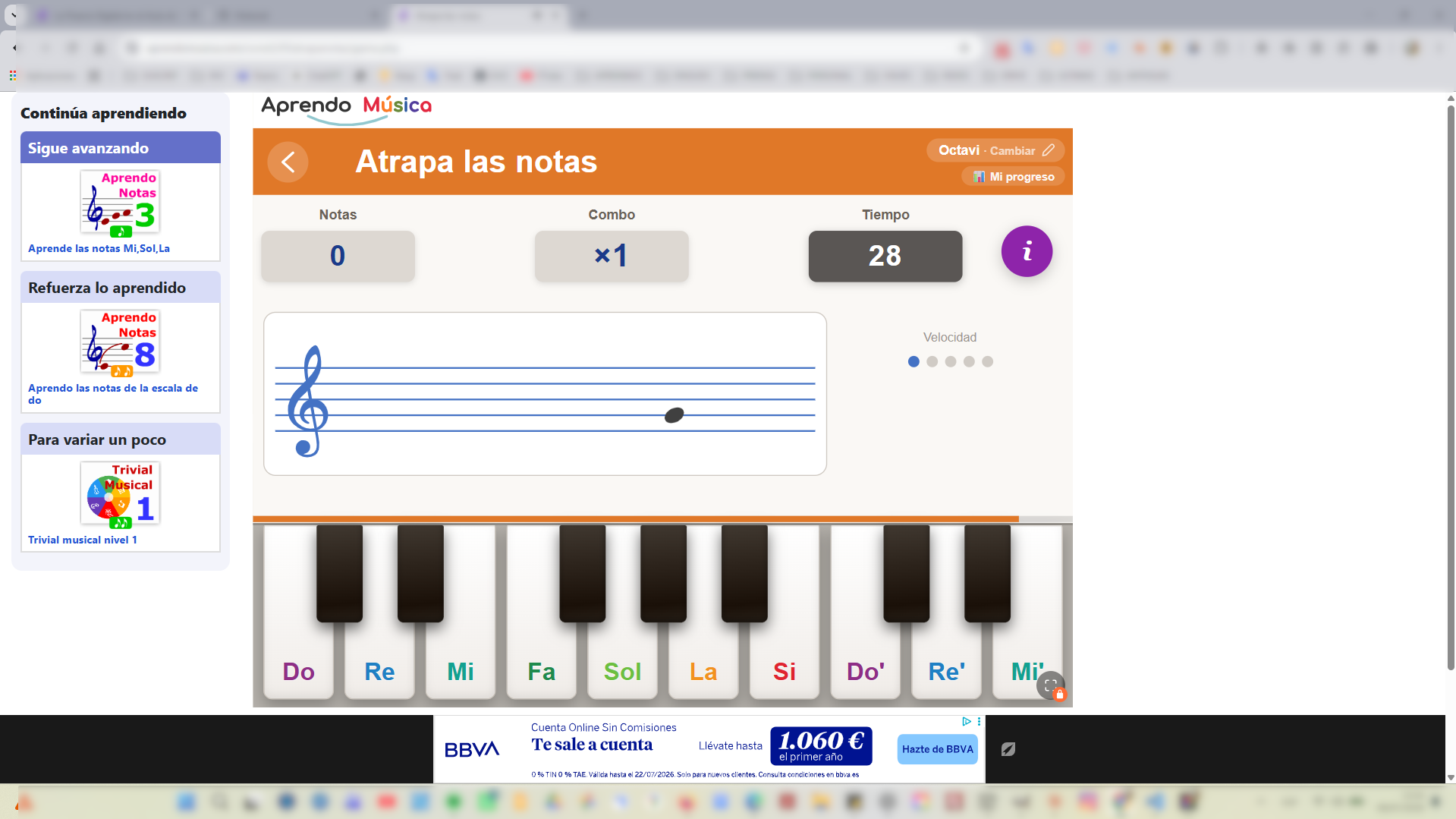
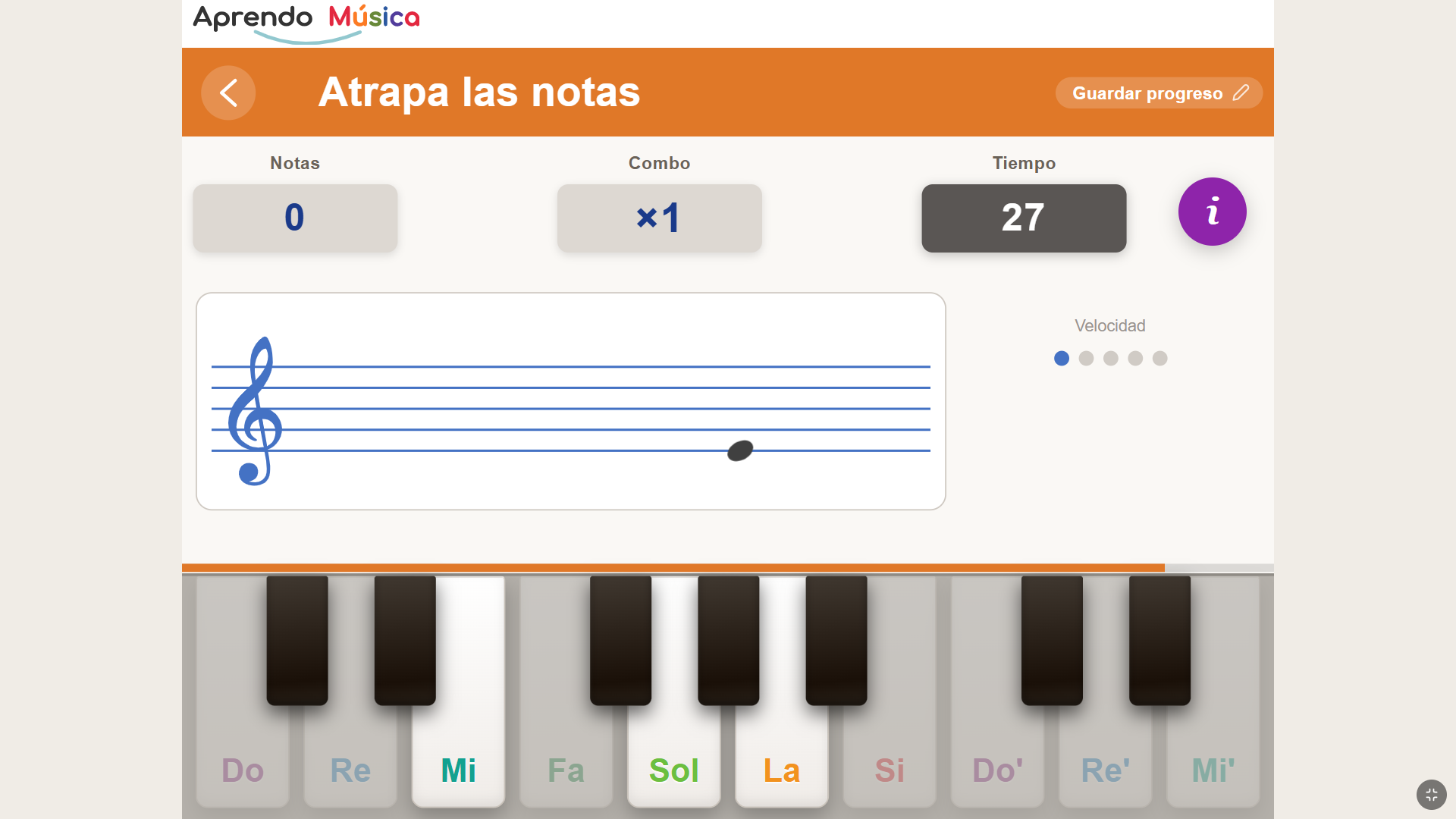
Atrapa las notas
Normal viewFull screen · Premium
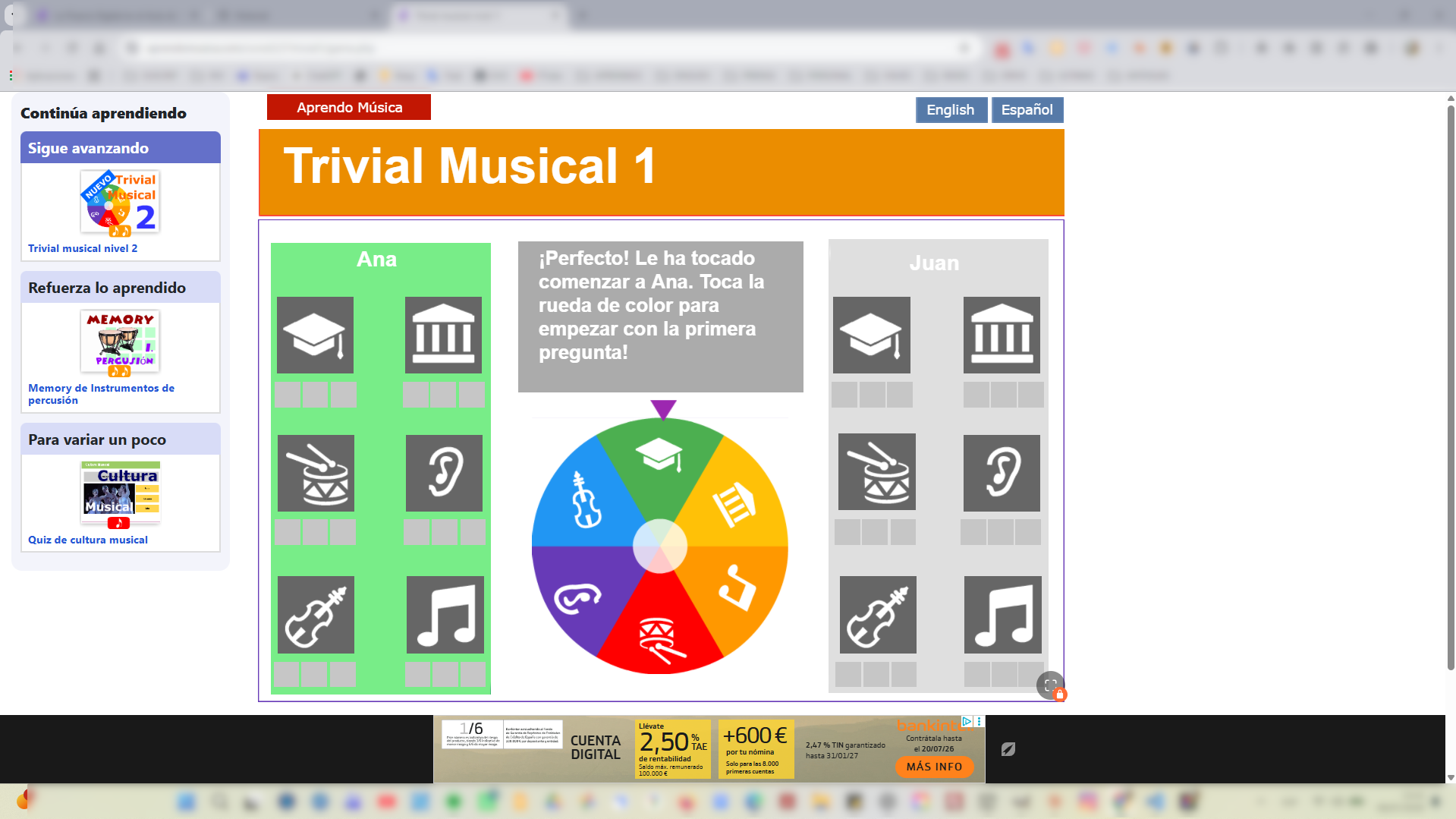
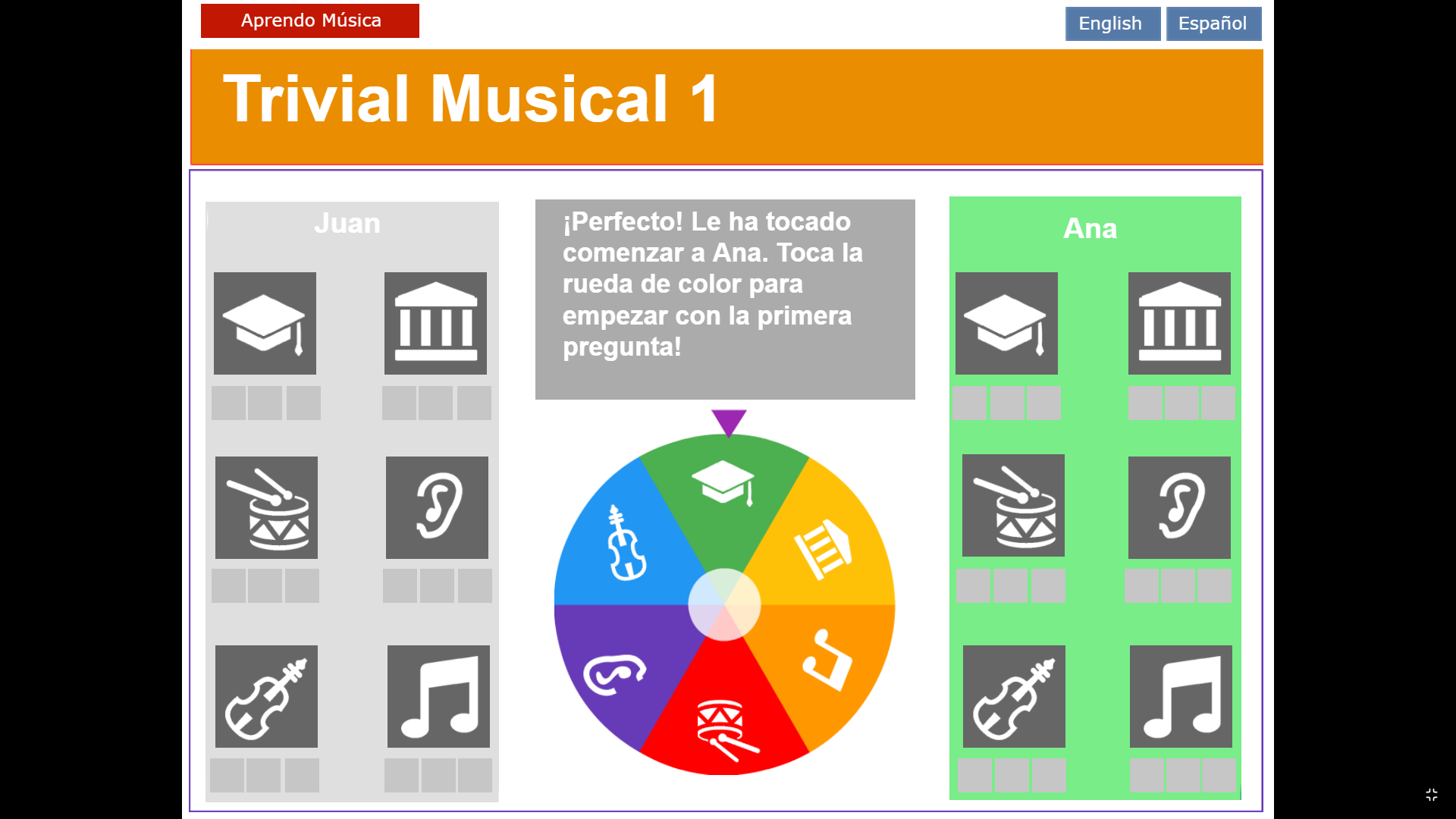
Trivial Musical
Normal viewFull screen · Premium
Session example — class tournament (15–20 min)
Split the class into two teams.
Project the Instruments memory game in full screen; each team plays in alternating rounds.
In case of a tie, break it with a Trivial Musical question.
The winning team chooses the background music for the rest of the class.
You don't need to use all three tools on the same day — a 10-minute activity already changes the dynamics of the class.
Always start with a demonstration of your own before handing over to the students.
Repeat the same activity for several weeks in a row: familiarity with the tool is what frees up attention for the musical content.
References
Universidad de Alicante. La pizarra digital en el aula de música de Educación Primaria: Evaluación de su eficacia como recurso educativo (tesis doctoral). RUA-UA / Dialnet.
Universidad de Valladolid. Uso e integración curricular de la pizarra digital interactiva (PDI) en el aula de música de Primaria: un estudio de casos en la provincia de Segovia. UVaDOC.
Interactive Whiteboard Integration into Music Teaching and Learning: Preschool Children as a Case Study. Procedia — Social and Behavioral Sciences, ScienceDirect. Link.
Technology in the Classroom: The Interactive Whiteboard (IWB) and the Effects on Music Education. ResearchGate. Link.
Johnson, D. W., Johnson, R. T., & Stanne, M. B. (2000). Cooperative Learning Methods: A Meta-Analysis. University of Minnesota. Cited in Redalyc.
Impacto del aprendizaje basado en juegos musicales en la motivación de estudiantes de Grado en Educación Primaria: un enfoque de investigación-acción. Revista de Estilos de Aprendizaje. Link.
Juegos y gamificación en las aulas de música de educación primaria. Edutec, Revista Electrónica de Tecnología Educativa. Link.