Activities designed to start out in music learning. Feel free to explore the games by topic.
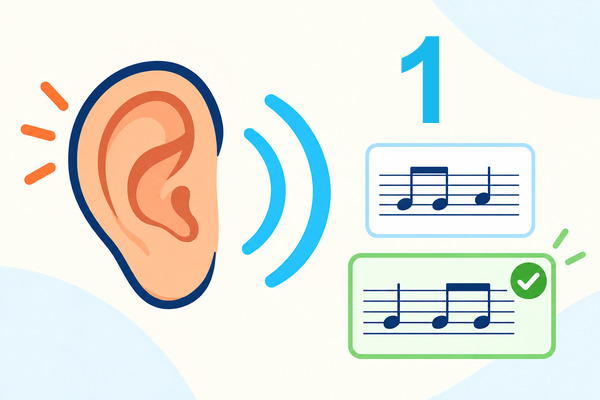
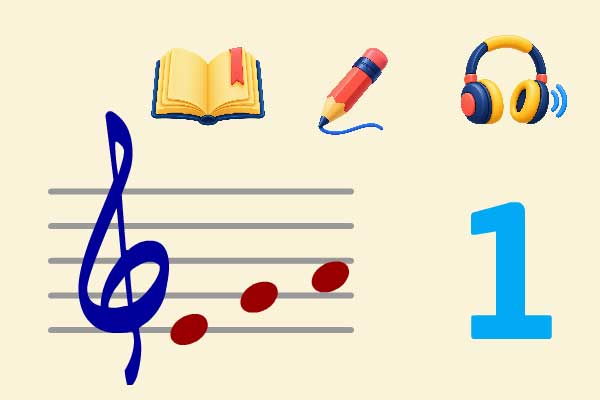
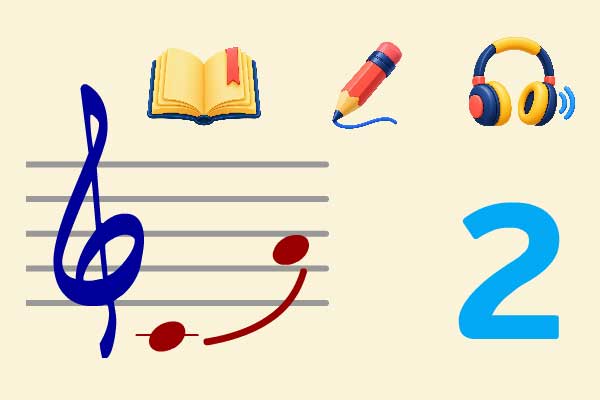
Recognise simple E, G and A melodies in two bars of 2/4. Five challenges of five rounds progress from quarter notes and rests to three pairs of eighth notes. After each answer, compare the two scores and listen again while a cursor follows the notes.
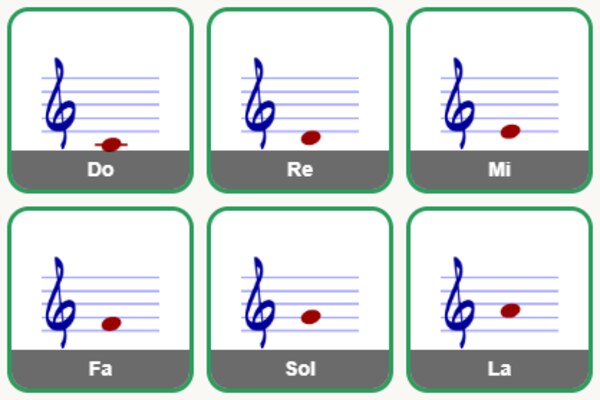
A memory game to practise the notes C, D, E, F, G and A. Match each note with its name. You can also play with a friend, taking turns on the same device.
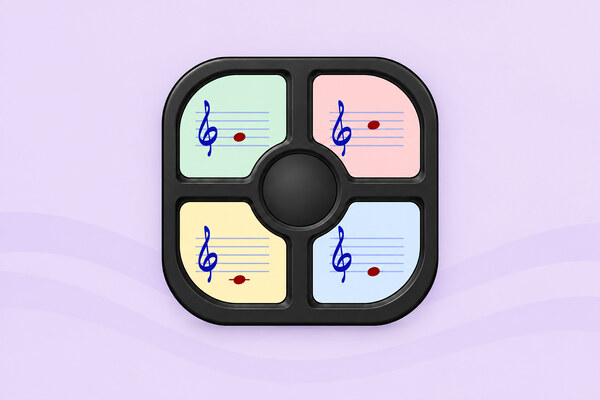
Listen and repeat on the note wheel
Musical Simon trains auditory memory and note reading on the staff using a wheel with the real structure of the game. Listen to the sequence as it plays and repeat it by tapping the notes on the wheel; each round adds one more note. Choose between three note groups and two speeds, play solo or take turns between two players, and earn a Bravo with more than 11 notes in a row.
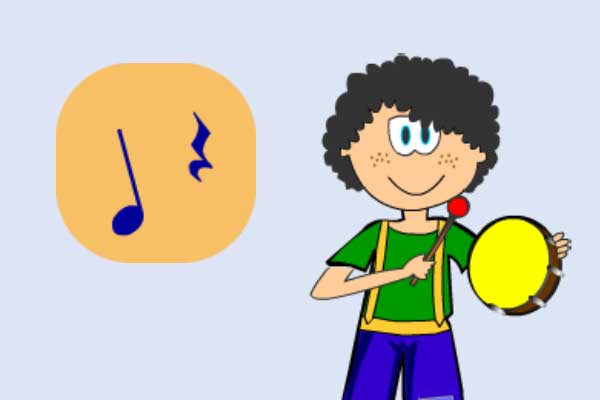
Un juego de dictado rítmico centrado en la figura negra y su silencio: escuchas un ritmo y tienes que identificarlo entre varias opciones de partitura. Perfecto para consolidar la relación entre el silencio y su duración, uno de los conceptos que más cuesta interiorizar al empezar a leer ritmos.
Empieza por aquí. Práctica del ritmo más sencillo: el de negras y su silencio. En el juego se presentan esquemas de cuatro pulsos con solo estas dos figuras. En el primero escuchas y presionas el botón correspondiente. En el segundo has de averiguar cual de tres modelos sonoros es el que está representado. Muy fácil.
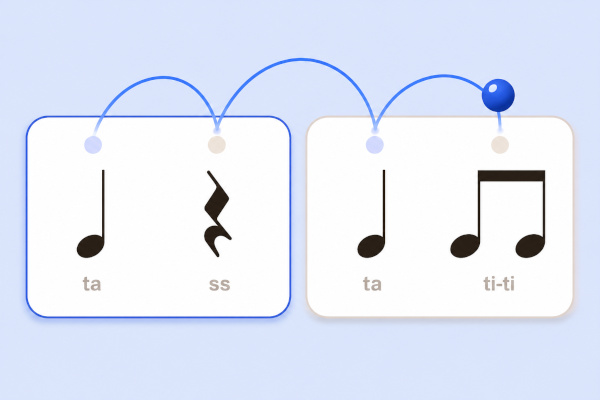
A game to build rhythm-reading fluency. Three cards are shown with rhythmic combinations of quarter notes, quarter rests and pairs of eighth notes. A metronome keeps a steady tempo while a blue ball jumps from beat to beat. You have to play the marked rhythm correctly on the tambourine, in rounds of ten cards in a row. The game has 8 difficulty levels (challenges), with the cards shown getting more complex and the tempo getting faster.
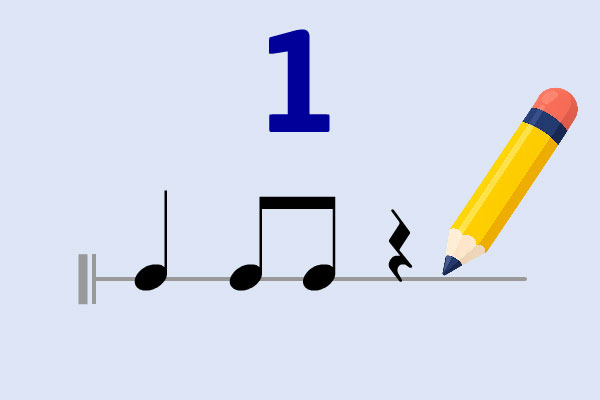
Dictado rítmico clásico y primer nivel de dificultad de dictados rítmicos. Frases de 4 compases en 2/4 utilizando las figuras de negra, silencio de negra y pareja de corcheas. Se escucha un esquema rítmico y hay que presionar los botones correspondientes al ritmo escuchado.
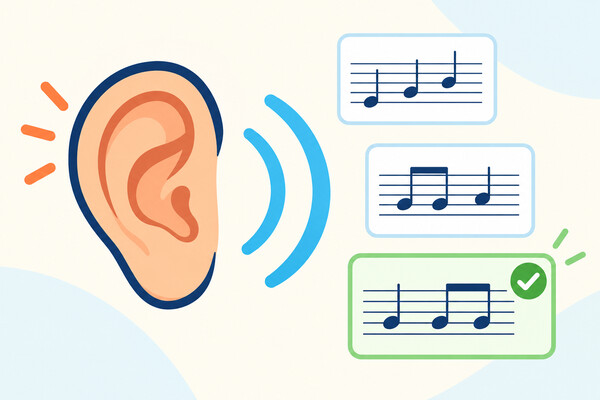
Ejercicio de dictado rítmico sencillo, para descubrir gradualmente las nuevas células rítmicas, en este caso la pareja de corcheas. El juego sube progresivamente de dificultad y prepara para actividades de reconocimiento rítmico más difíciles
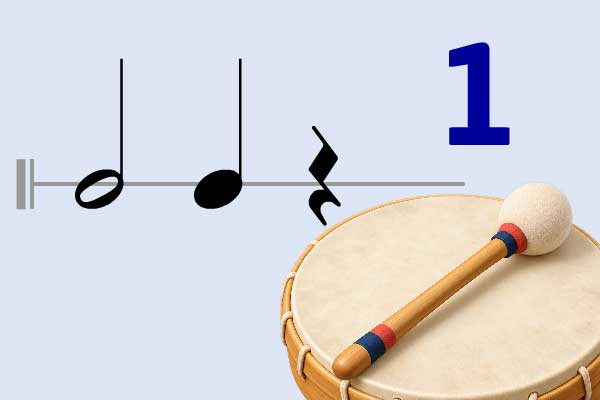
Un ejercicio interactivo para entrenar el ritmo con las figuras blanca y negra, tocando o marcando el pulso en el momento justo. Ideal para trabajar la coordinación y la precisión rítmica antes de pasar a ejercicios de dictado más complejos.
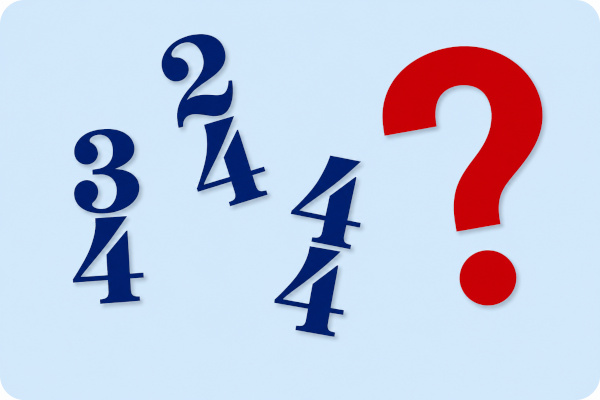
La actividad presenta diferentes combinaciones de figuras rítmicas en un solo compás. Según la combinación presentada, debe contestarse si es un compás de 2/4, 3/4 o 4/4. La actividad tiene dos niveles, según la complejidad de las células rítmicas que aparecen.
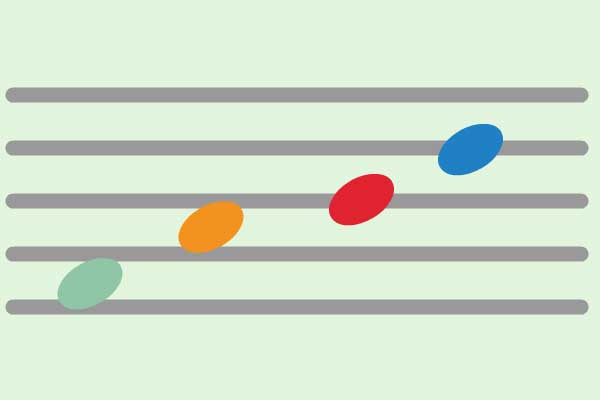
Se presenta un pentagrama y se pide al usuario que pulse en sus líneas y espacios siguiendo las indicaciones dadas. El objetivo de la actividad es familiarizarse con el orden de las líneas y los espacios, paso previo a la colocación de las notas.
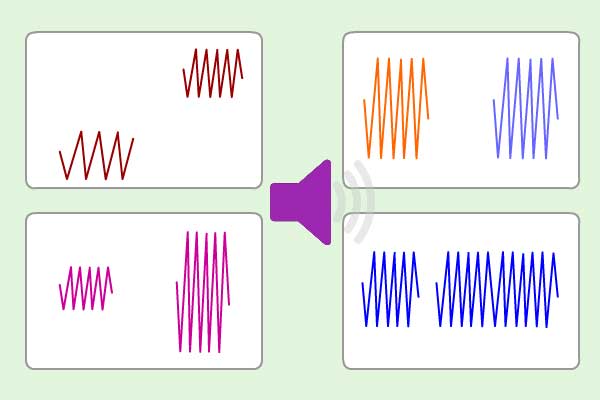
In this quiz you'll review the four qualities of sound: intensity, duration, pitch and timbre. There's a short review of the concepts, followed by three games of increasing difficulty where you have to spot the differences between two sounds. In the first level the sounds differ in only one quality, in the second in two, and finally you have to recognise sounds that only have one quality in common.
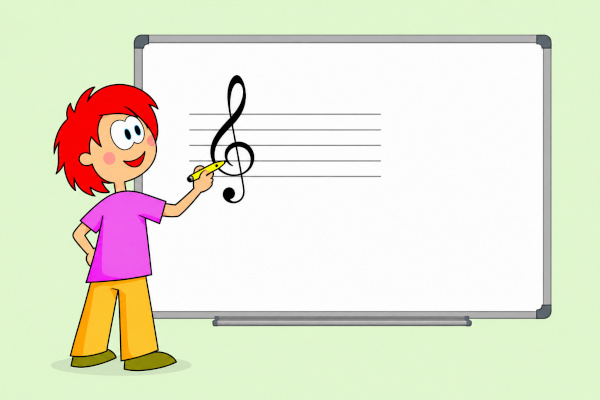
Un juego que enseña a dibujar la clave de Sol trazo a trazo, mostrando el recorrido correcto que hay que seguir. Pensado para quien empieza a familiarizarse con el pentagrama y quiere aprender a reconocer y reproducir este símbolo fundamental de la notación musical.
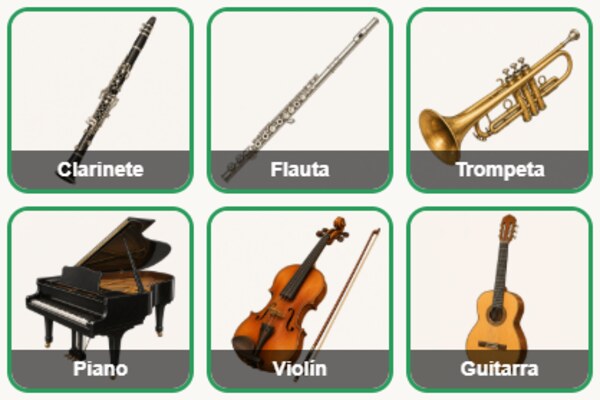
A classic memory (pairs) game in which you have to find each musical instrument and match it with its name: clarinet, flute, trumpet, piano and many more. A fun way to learn to recognise instruments, also available in a mobile version.
La actividad presenta diferentes combinaciones de figuras rítmicas en un solo compás. Según la combinación presentada, debe contestarse si es un compás de 2/4, 3/4 o 4/4. La actividad tiene dos niveles, según la complejidad de las células rítmicas que aparecen.
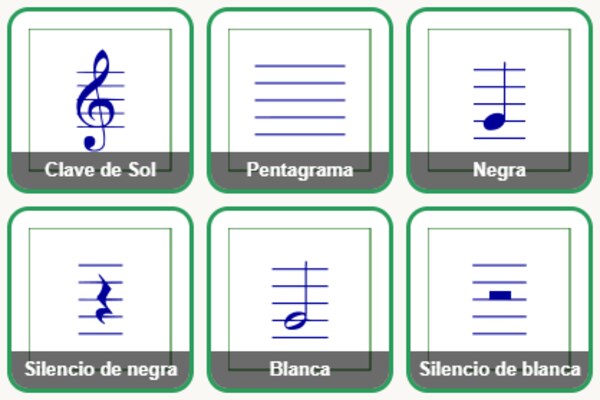
A memory (pairs) game focused on basic musical symbols: clefs, note values, rests and other symbols of musical notation. Matching each symbol with its name helps you memorise them in a visual and fun way.
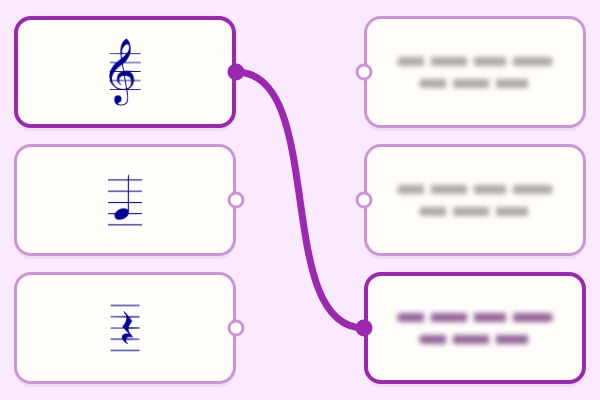
Match images, names and explanations for the 11 concepts from the Aprendo-Kit study card on musical symbols: staff, treble clef, 2/4 time signature, bar line, final barline, repeat signs, quarter note, quarter rest, pair of eighth notes, half note and half rest. Complete 15 pairs per round, with four pairs visible on desktop and three on mobile. Answers can be retried, and the result shows how many pairs you got right on the first try.
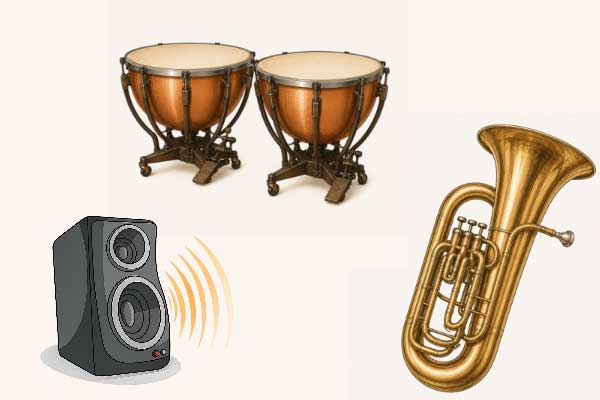
Un quiz de reconocimiento auditivo en el que hay que identificar de oído qué instrumento está sonando entre varias opciones. Una forma entretenida de entrenar el oído y de familiarizarse con el timbre característico de cada instrumento.
A classic memory (pairs) game in which you have to find each musical instrument and match it with its name: clarinet, flute, trumpet, piano and many more. A fun way to learn to recognise instruments, also available in a mobile version.
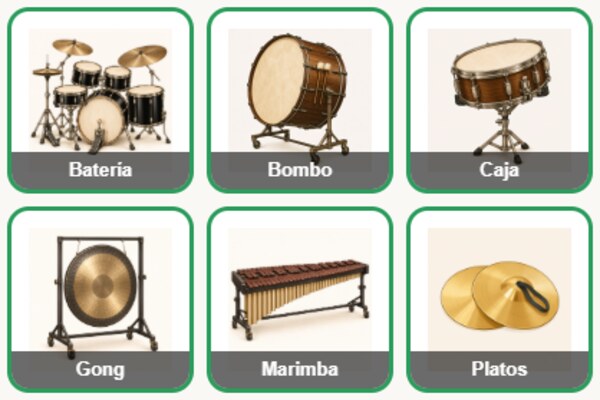
A classic memory (pairs) game focused on the best-known percussion instruments: drum kit, bass drum, snare drum, gong, marimba, cymbals, timpani and triangle. A fun way to learn to recognise them, also available in a mobile version.
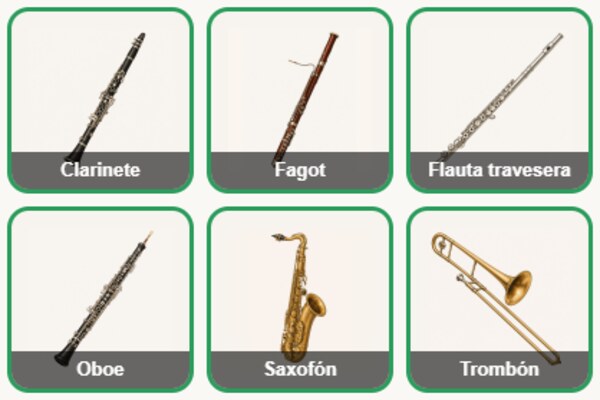
A classic memory (pairs) game focused on the best-known wind instruments: clarinet, bassoon, flute, oboe, saxophone, trombone, French horn, trumpet and tuba. A fun way to learn to recognise them, also available in a mobile version.
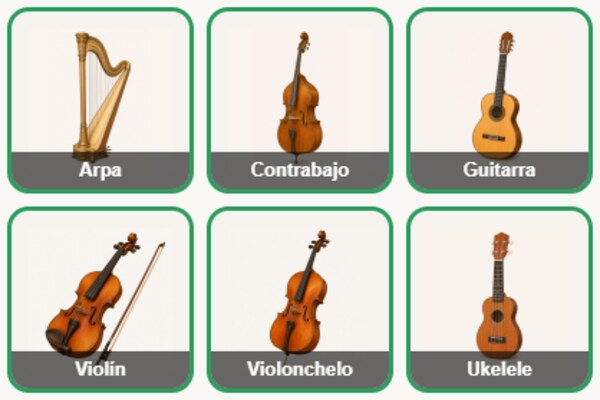
A classic memory (pairs) game focused on the best-known string instruments: harp, double bass, guitar, violin, cello, ukulele, electric guitar and piano. A fun way to learn to recognise them, also available in a mobile version.
Un quiz de reconocimiento auditivo en el que hay que identificar de oído qué instrumento está sonando entre varias opciones. Una forma entretenida de entrenar el oído y de familiarizarse con el timbre característico de cada instrumento.
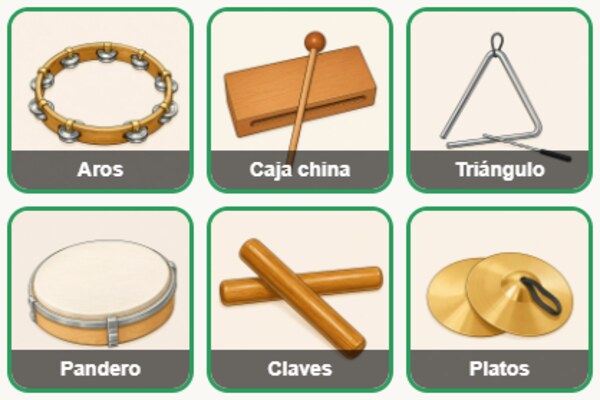
A classic memory (pairs) game focused on the small percussion instruments most commonly used in the classroom: jingle hoop, wood block, triangle, tambourine, claves, cymbals and maracas. A fun way to learn to recognise them, also available in a mobile version.
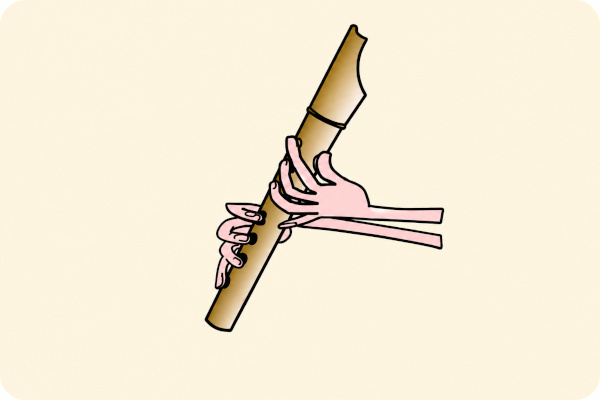
Este juego permite visualizar la digitación de la flauta dulce con dos posibilidades. En la primera solamente las notas de mayor uso en el ámbito escolar. En la segunda puede consultarse la digitación en toda la extensión del instrumento, incluyendo las alteraciones. Su uso principal es facilitar al alumno practicar las posiciones de una forma más gráfica que con los habituales esquemas, y asociar la representación de la nota en el pentagrama y su sonido con la posición de los dedos sobre el instrumento. Un botón permite saltar a la página de canciones para practicar directamente con la flauta dulce.
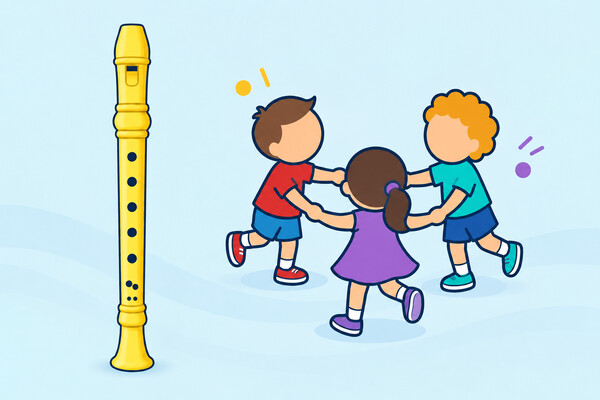
Aprende a tocar Antón Pirulero, la popular canción tradicional infantil, con la flauta dulce. El juego muestra la partitura y la posición de los dedos nota a nota, ideal para quien empieza a practicar canciones completas después de aprender las posiciones básicas.
A classic memory (pairs) game in which you have to find each musical instrument and match it with its name: clarinet, flute, trumpet, piano and many more. A fun way to learn to recognise instruments, also available in a mobile version.
A classic memory (pairs) game focused on the best-known percussion instruments: drum kit, bass drum, snare drum, gong, marimba, cymbals, timpani and triangle. A fun way to learn to recognise them, also available in a mobile version.
A classic memory (pairs) game focused on the best-known wind instruments: clarinet, bassoon, flute, oboe, saxophone, trombone, French horn, trumpet and tuba. A fun way to learn to recognise them, also available in a mobile version.
A classic memory (pairs) game focused on the best-known string instruments: harp, double bass, guitar, violin, cello, ukulele, electric guitar and piano. A fun way to learn to recognise them, also available in a mobile version.
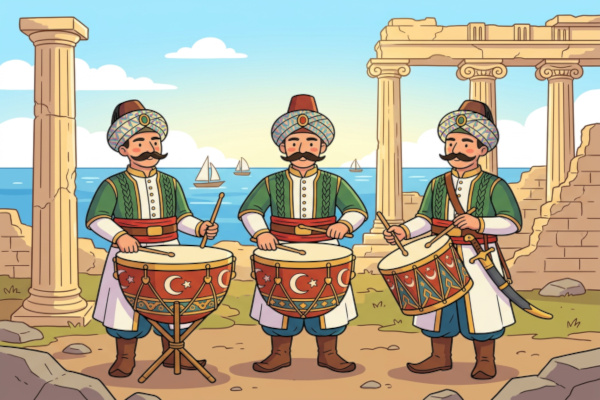
An interactive musicogram based on Beethoven's The Ruins of Athens, letting you follow the piece's structure visually as it plays. An engaging way to approach active listening and the understanding of musical form through a classical piece widely used in the classroom.

A musicogram based on the Triumphal March from Giuseppe Verdi's opera Aida, visually representing the piece's A-A'-B-A' structure as it plays. Ideal for working on active listening and the understanding of musical form with a very well-known piece, even outside the music classroom.
A classic memory (pairs) game focused on the small percussion instruments most commonly used in the classroom: jingle hoop, wood block, triangle, tambourine, claves, cymbals and maracas. A fun way to learn to recognise them, also available in a mobile version.
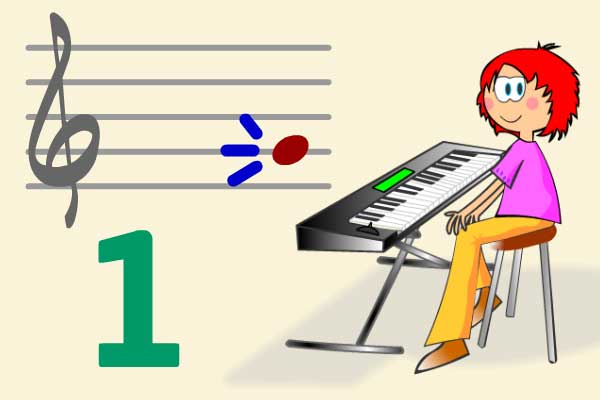
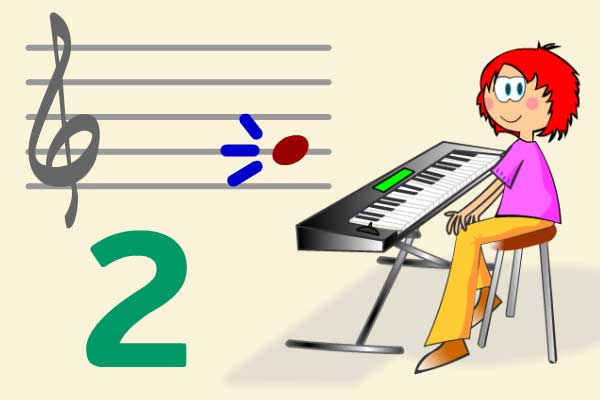
La versión más sencilla de Melody Maestro, centrada solo en las notas Sol y Mi. El teclado virtual muestra qué tecla pulsar en cada momento, siendo la puerta de entrada ideal para quien nunca ha tocado un teclado antes de pasar a canciones más completas.
This page is being translated into English. You'll find games not translated yet, marked with a label warning about it. If you'd still like to continue on the old page, it's available from the language selector, top right.