Activities to deepen and expand musical knowledge with games organised by topic.
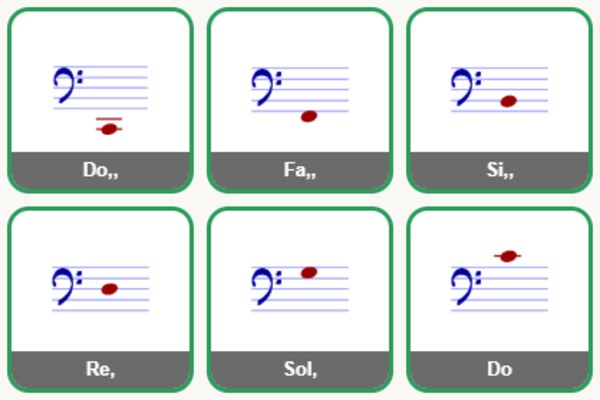
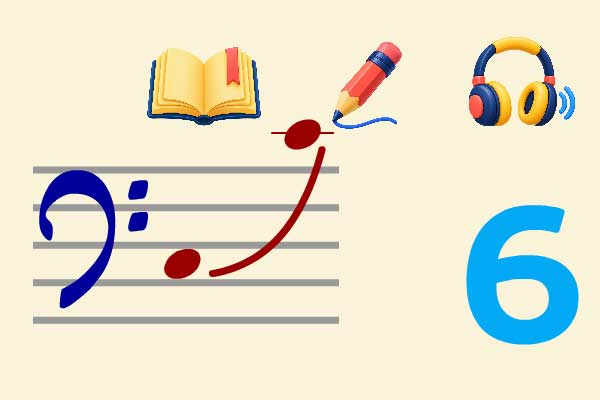
A memory (pairs) game that completes bass clef reading with all its notes. Matching each note with its name helps consolidate full reading of this clef, designed for those who already know its first notes.
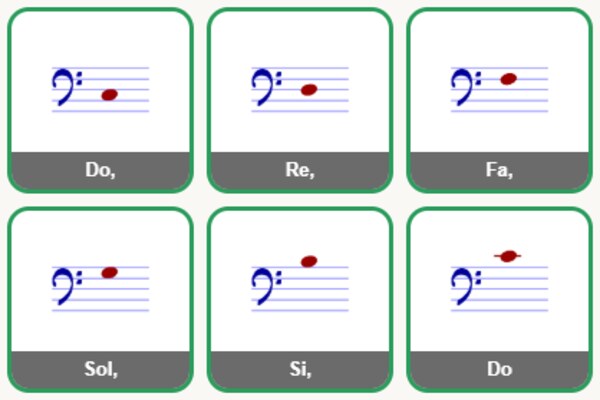
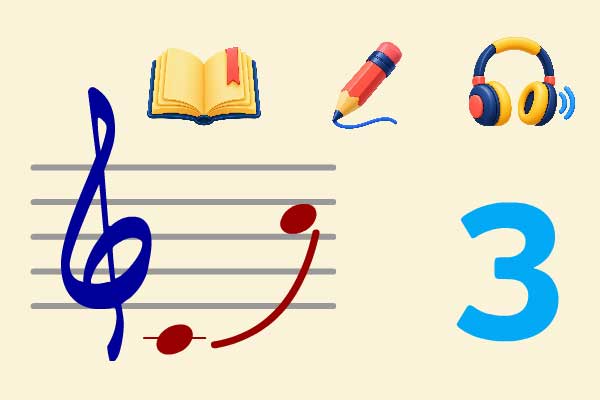
A memory (pairs) game that introduces reading in the bass clef, the clef used by instruments such as the cello or the left hand of the piano. Matching each note with its name is a fun way to take your first steps in this new clef.
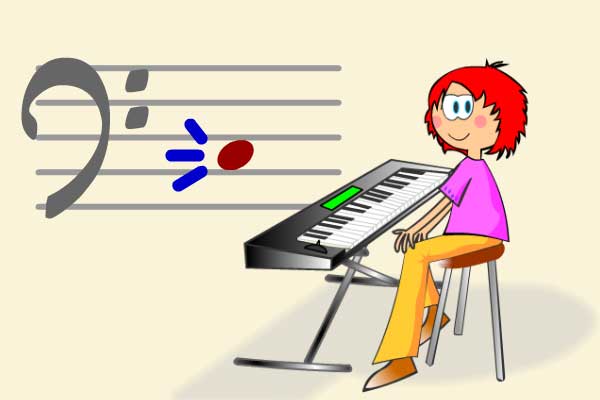
Una variante de Atrapa las notas centrada en la clave de Fa: hay que identificar y atrapar la nota correcta entre varias que caen por la pantalla, igual que en el juego original pero leyendo en la clave que usan instrumentos como el violonchelo o la mano izquierda del piano. Pensado para el nivel avanzado, cuando ya se domina la lectura en clave de Sol.
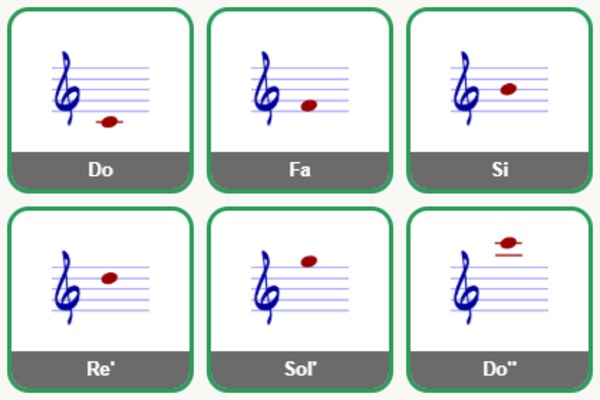
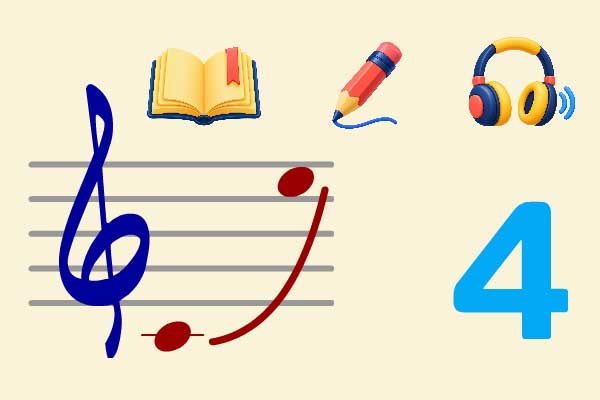
A memory (pairs) game that extends the practice to all the high notes in the treble clef. Matching each note with its name helps consolidate reading the full high register, designed for the advanced level.
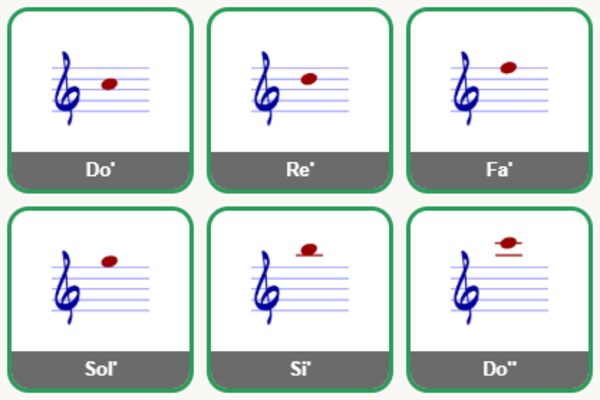
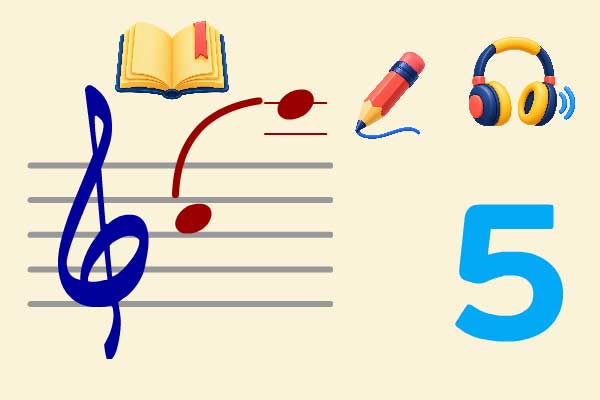
A memory (pairs) game focused on the first high notes, the ones that appear above the staff in the treble clef. Matching each note with its name helps you get comfortable with ledger lines and keep widening your reading range.
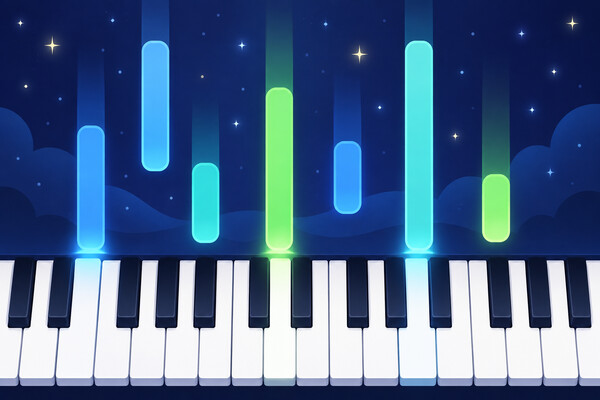
Un teclado virtual interactivo para explorar libremente cómo suenan las notas y experimentar con melodías propias. Pensado para el nivel avanzado, es un espacio de práctica libre que complementa a los juegos de Melody Maestro con canciones concretas.
Un juego de teclado virtual que enseña a tocar canciones sencillas nota a nota, mostrando qué tecla hay que pulsar en cada momento. Ideal para practicar la coordinación y la lectura musical aplicada directamente al teclado.
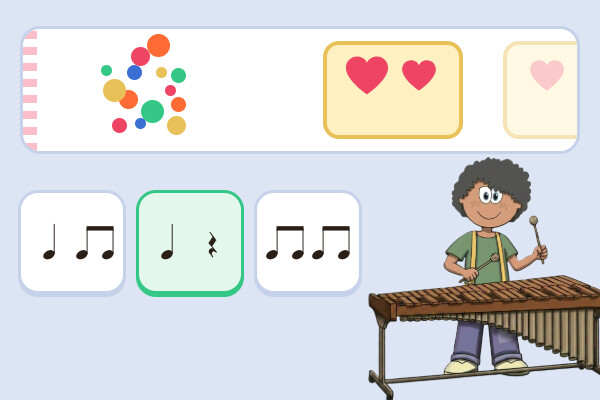
In this game, a two-beat rhythmic combination crosses the screen from side to side and you have to press the button that matches it. The two hearts on the rectangle mark the pulse. Five levels introduce the rhythm patterns little by little: quarter note, quarter rest and pair of eighths; four sixteenths; un-ti; syncopation and tai-ti; and combinations of eighth and sixteenth notes. You can also choose four patterns to practise exactly what you want. Three speeds and an optional metronome.
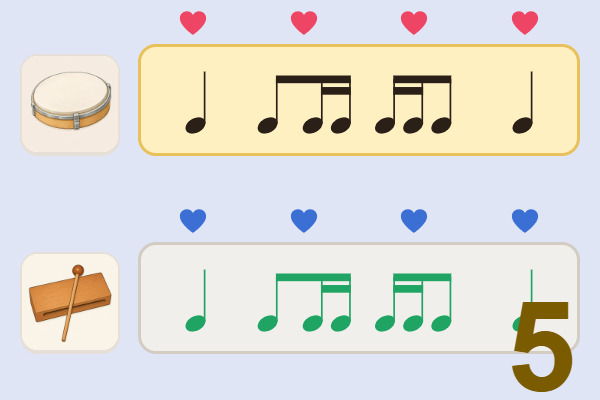
A rhythm echo game: the hand drum plays a four-beat rhythm written on the screen, and it is your turn to repeat it on the woodblock, tapping every figure, with the same rhythm in grey as a guide. Ten rounds per game, from easier to harder, with three speeds and an optional metronome. At this level you practise combinations of eighth and sixteenth notes.
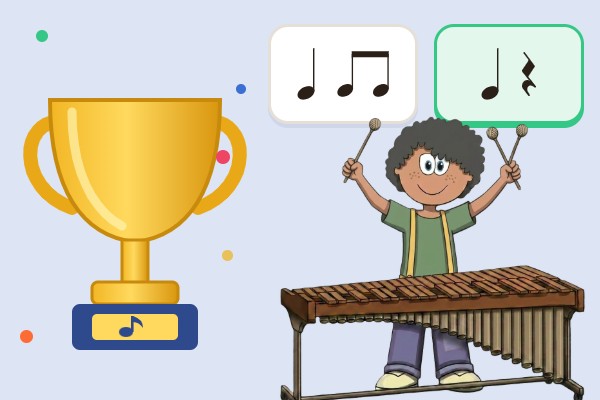
A turn-based version of Catch the rhythms for an interactive whiteboard or any shared screen in class. Two players pass the device over 3 rounds of rising difficulty; whoever scores the most hits recognising by ear the rhythm that plays wins. It includes a quick tournament (already calibrated levels) and a custom tournament (you choose the level of each round), with three speeds. Free, with no limit on games.
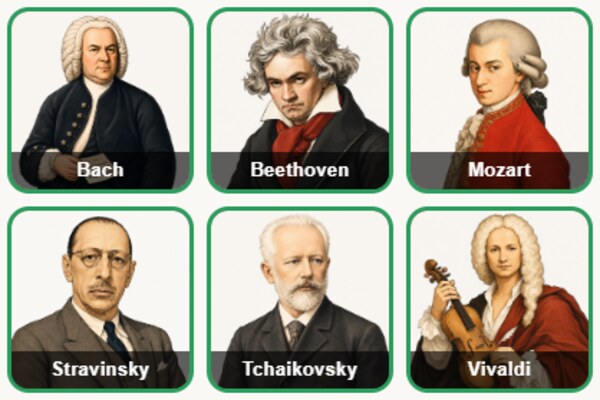
A memory (pairs) game to learn to recognise some of the great composers in the history of music, matching their portrait with their name. A fun way to get familiar with key figures of musical culture.
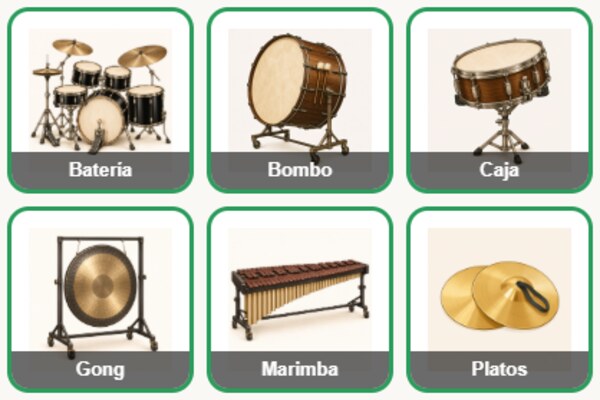
A classic memory (pairs) game focused on the best-known percussion instruments: drum kit, bass drum, snare drum, gong, marimba, cymbals, timpani and triangle. A fun way to learn to recognise them, also available in a mobile version.
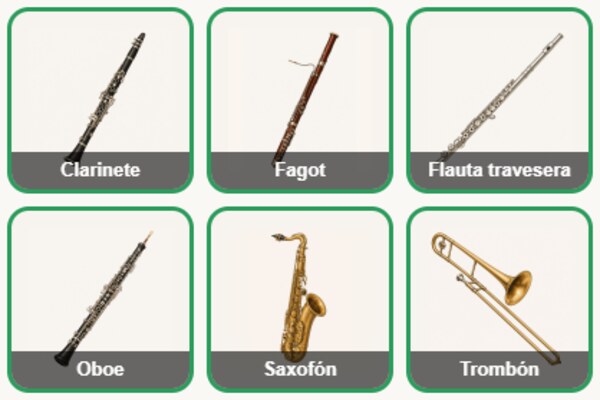
A classic memory (pairs) game focused on the best-known wind instruments: clarinet, bassoon, flute, oboe, saxophone, trombone, French horn, trumpet and tuba. A fun way to learn to recognise them, also available in a mobile version.
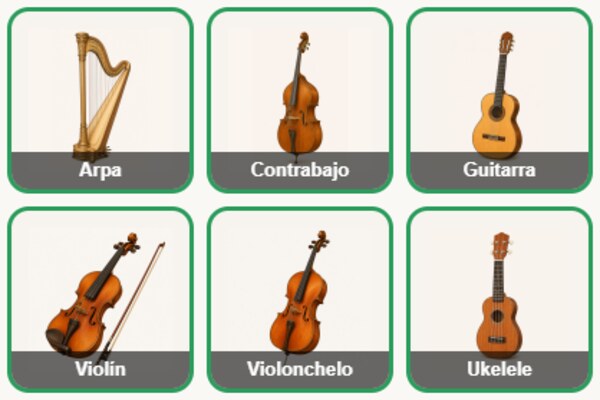
A classic memory (pairs) game focused on the best-known string instruments: harp, double bass, guitar, violin, cello, ukulele, electric guitar and piano. A fun way to learn to recognise them, also available in a mobile version.

Learn to play Twinkle, Little Star on the recorder. Listen to the song with its score and the finger positions, play by pressing the notes that light up, or play on your real recorder and let the microphone check every note. With lyrics, note names and adjustable speed, on recorder or keyboard.
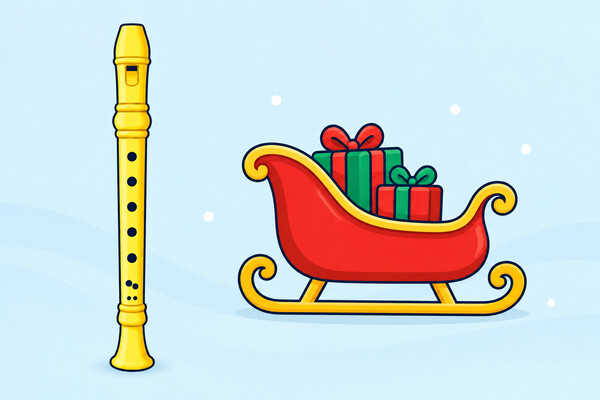
Learn to play the Jingle Bells chorus on the recorder. Listen to the song with its score, the English lyrics, the chords in G major and the finger positions, play by pressing the notes that light up, or play on your real recorder and let the microphone check every note. With note names and adjustable speed, on recorder or keyboard.
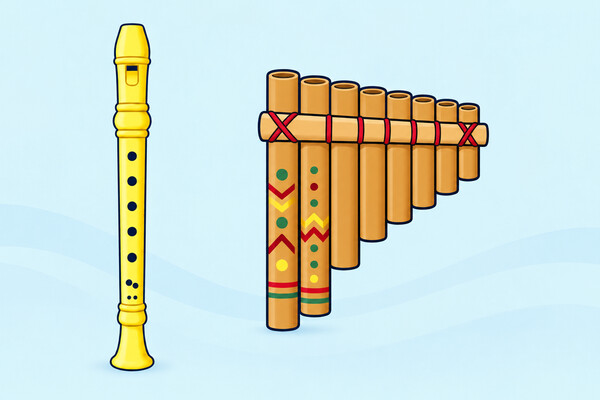
Learn to play Huahuanaca, a traditional Andean-style melody, on the recorder. Listen to the song with its score and the finger positions, play by pressing the notes that light up, or play on your real recorder and let the microphone check every note. With note names and adjustable speed, on recorder or keyboard.
Learn to play Jingle Bell Rock, the rock version of the Christmas classic, on the recorder. Listen to the song with its score, the lyrics and the finger positions, play by pressing the notes that light up, or play on your real recorder and let the microphone check every note. With note names, adjustable speed and recorder or keyboard.
Aprende a tocar el Himno a la Alegría, el tema principal de la Novena Sinfonía de Beethoven, con la flauta dulce. El juego muestra la partitura y la posición de los dedos nota a nota, para practicar la digitación con una de las melodías más célebres de la música clásica.
Learn “Silent Night”, one of the best-known carols, on the recorder, in the school version in 3/4 time. Listen to the song with its score and the finger positions, play by pressing the notes that light up, play along with karaoke mode (with the classic harmonisation) or play on your real recorder and let the microphone check every note. With lyrics, note names and adjustable speed.
Learn to play Rudolph the Red-Nosed Reindeer, one of the most popular Christmas songs, on the recorder. Listen to the song with its score, lyrics, chords and the finger positions, play by pressing the notes that light up, or play on your real recorder and let the microphone check every note. With note names, adjustable speed, recorder or keyboard, and karaoke to sing along with accompaniment.
A classic memory (pairs) game focused on the best-known percussion instruments: drum kit, bass drum, snare drum, gong, marimba, cymbals, timpani and triangle. A fun way to learn to recognise them, also available in a mobile version.
A classic memory (pairs) game focused on the best-known wind instruments: clarinet, bassoon, flute, oboe, saxophone, trombone, French horn, trumpet and tuba. A fun way to learn to recognise them, also available in a mobile version.
A classic memory (pairs) game focused on the best-known string instruments: harp, double bass, guitar, violin, cello, ukulele, electric guitar and piano. A fun way to learn to recognise them, also available in a mobile version.
A memory (pairs) game to learn to recognise some of the great composers in the history of music, matching their portrait with their name. A fun way to get familiar with key figures of musical culture.
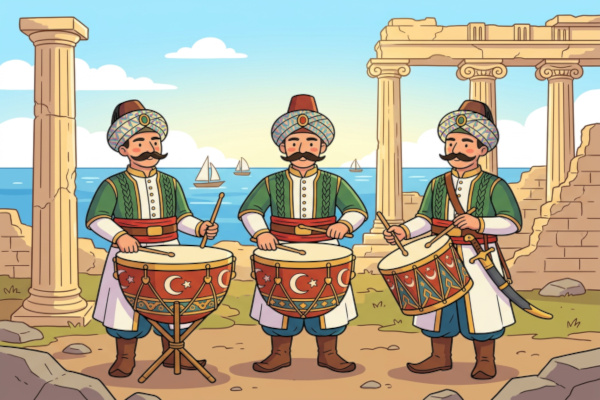
An interactive musicogram based on Beethoven's The Ruins of Athens, letting you follow the piece's structure visually as it plays. An engaging way to approach active listening and the understanding of musical form through a classical piece widely used in the classroom.
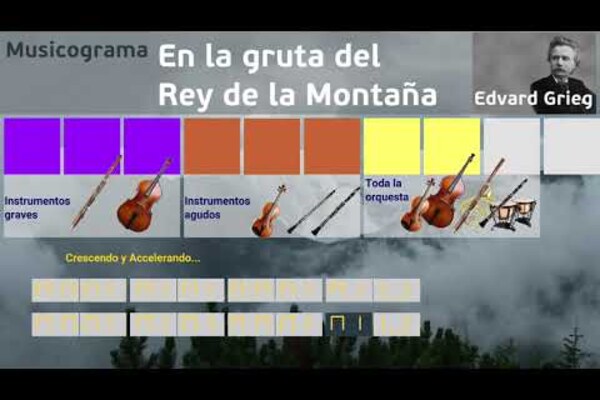
A musicogram based on In the Hall of the Mountain King, by Edvard Grieg, which shows with colours and instruments how the same theme moves from the low instruments to the high ones and then to the whole orchestra, while the music grows louder and faster. Ideal for working on active listening, timbre and changes in dynamics and speed.

A musicogram based on the Triumphal March from Giuseppe Verdi's opera Aida, visually representing the piece's A-A'-B-A' structure as it plays. Ideal for working on active listening and the understanding of musical form with a very well-known piece, even outside the music classroom.
Aprende a tocar Hot Cross Buns, una de las melodías más utilizadas para iniciarse en cualquier instrumento, con el teclado virtual de Melody Maestro. Un paso natural tras dominar las primeras notas sueltas, antes de pasar a canciones más largas.
Una variante navideña de Melody Maestro, con villancicos populares para tocar nota a nota en el teclado virtual. Una forma divertida de practicar en la época de Navidad mientras se consolida la lectura musical aplicada al teclado.
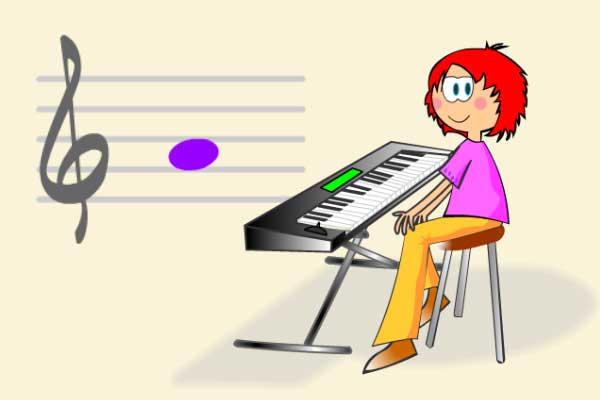
A note-recognition game on the staff where you have to identify and catch the correct note among several falling down the screen. Includes different difficulty levels (3, 4, 5, 6, 8 notes...) to suit everyone from beginners to those who already master the full scale. Also available in a mobile version.
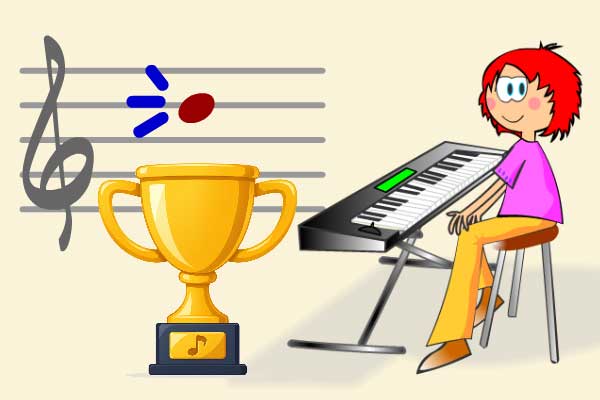
Turn-based version of Catch the Notes for the digital whiteboard or any shared classroom screen. Two players pass the device over 3 rounds of increasing difficulty; whoever scores the most hits reading the notes on the staff wins. Includes a quick tournament (already calibrated levels) and a custom tournament (you choose the notes for each round). Free, with no limit on games.