Here you'll find activities to practise musical rhythm, organised by level.
Un juego de dictado rítmico centrado en la figura negra y su silencio: escuchas un ritmo y tienes que identificarlo entre varias opciones de partitura. Perfecto para consolidar la relación entre el silencio y su duración, uno de los conceptos que más cuesta interiorizar al empezar a leer ritmos.
Empieza por aquí. Práctica del ritmo más sencillo: el de negras y su silencio. En el juego se presentan esquemas de cuatro pulsos con solo estas dos figuras. En el primero escuchas y presionas el botón correspondiente. En el segundo has de averiguar cual de tres modelos sonoros es el que está representado. Muy fácil.
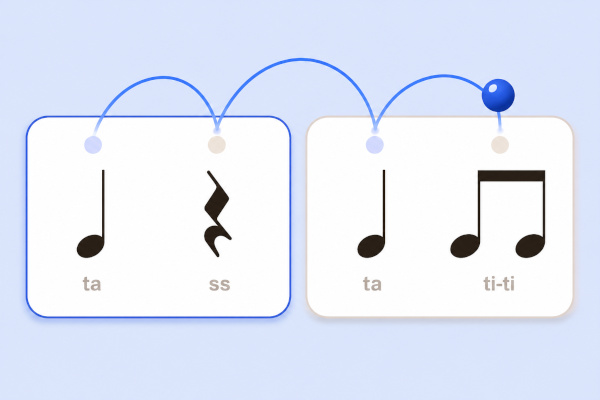
A game to build rhythm-reading fluency. Three cards are shown with rhythmic combinations of quarter notes, quarter rests and pairs of eighth notes. A metronome keeps a steady tempo while a blue ball jumps from beat to beat. You have to play the marked rhythm correctly on the tambourine, in rounds of ten cards in a row. The game has 8 difficulty levels (challenges), with the cards shown getting more complex and the tempo getting faster.
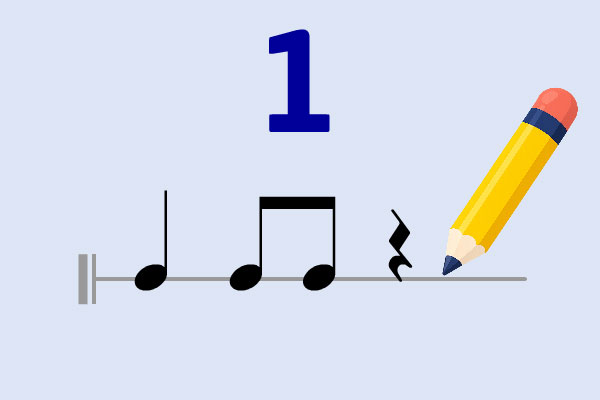
Dictado rítmico clásico y primer nivel de dificultad de dictados rítmicos. Frases de 4 compases en 2/4 utilizando las figuras de negra, silencio de negra y pareja de corcheas. Se escucha un esquema rítmico y hay que presionar los botones correspondientes al ritmo escuchado.
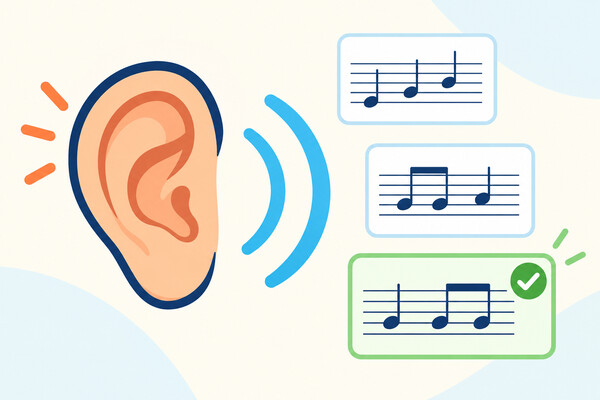
Ejercicio de dictado rítmico sencillo, para descubrir gradualmente las nuevas células rítmicas, en este caso la pareja de corcheas. El juego sube progresivamente de dificultad y prepara para actividades de reconocimiento rítmico más difíciles
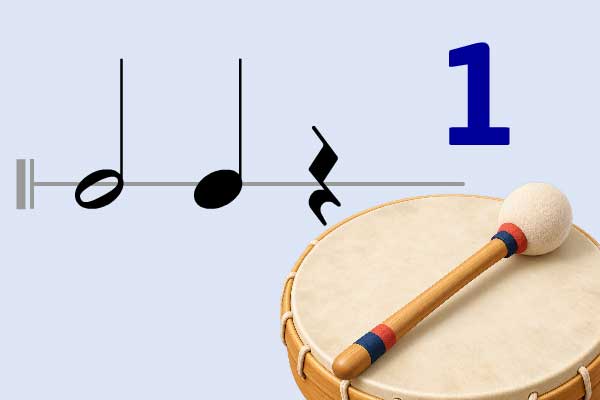
Un ejercicio interactivo para entrenar el ritmo con las figuras blanca y negra, tocando o marcando el pulso en el momento justo. Ideal para trabajar la coordinación y la precisión rítmica antes de pasar a ejercicios de dictado más complejos.
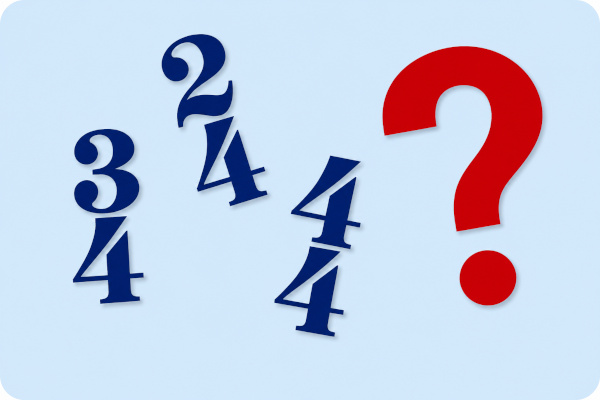
La actividad presenta diferentes combinaciones de figuras rítmicas en un solo compás. Según la combinación presentada, debe contestarse si es un compás de 2/4, 3/4 o 4/4. La actividad tiene dos niveles, según la complejidad de las células rítmicas que aparecen.
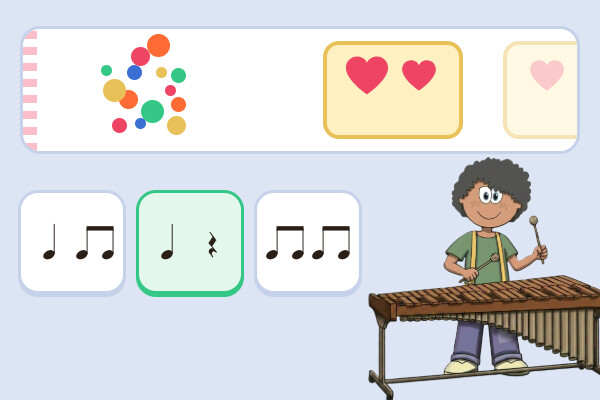
In this game, a two-beat rhythmic combination crosses the screen from side to side and you have to press the button that matches it. The two hearts on the rectangle mark the pulse. Five levels introduce the rhythm patterns little by little: quarter note, quarter rest and pair of eighths; four sixteenths; un-ti; syncopation and tai-ti; and combinations of eighth and sixteenth notes. You can also choose four patterns to practise exactly what you want. Three speeds and an optional metronome.
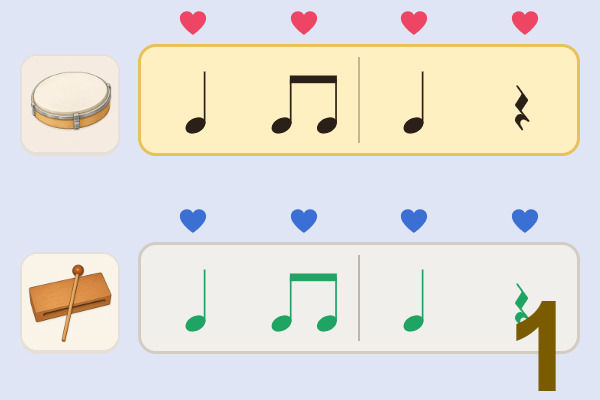
A rhythm echo game: the hand drum plays a four-beat rhythm written on the screen, and it is your turn to repeat it on the woodblock, tapping every figure, with the same rhythm in grey as a guide. Ten rounds per game, from easier to harder, with three speeds and an optional metronome. At this level you practise the quarter note, the quarter rest and the pair of eighths.
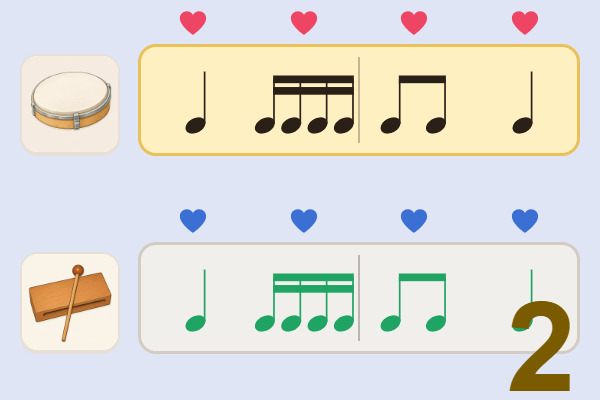
A rhythm echo game: the hand drum plays a four-beat rhythm written on the screen, and it is your turn to repeat it on the woodblock, tapping every figure, with the same rhythm in grey as a guide. Ten rounds per game, from easier to harder, with three speeds and an optional metronome. At this level you practise the four sixteenths.

A turn-based version of Catch the rhythms for an interactive whiteboard or any shared screen in class. Two players pass the device over 3 rounds of rising difficulty; whoever scores the most hits recognising by ear the rhythm that plays wins. It includes a quick tournament (already calibrated levels) and a custom tournament (you choose the level of each round), with three speeds. Free, with no limit on games.
La actividad presenta diferentes combinaciones de figuras rítmicas en un solo compás. Según la combinación presentada, debe contestarse si es un compás de 2/4, 3/4 o 4/4. La actividad tiene dos niveles, según la complejidad de las células rítmicas que aparecen.
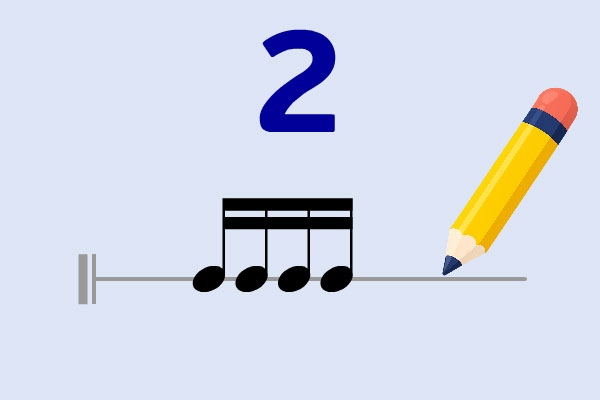
Segundo nivel de dificultad de dictados rítmicos. Frases de 4 compases en 2/4 utilizando las figuras del primer nivel al que añadimos el grupo de 4 semicorcheas (ti-ri-ti-ri). Se escucha un esquema rítmico y hay que presionar los botones correspondientes.
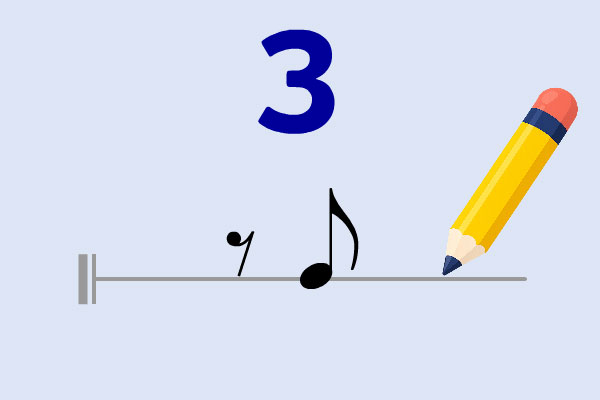
Tercer nivel de dificultad de dictados rítmicos. Frases de 4 compases en 2/4 con ancrusa utilizando "un-ti", silencio de corchea y corchea. Se escucha un esquema rítmico y hay que presionar los botones correspondientes.
In this game, a two-beat rhythmic combination crosses the screen from side to side and you have to press the button that matches it. The two hearts on the rectangle mark the pulse. Five levels introduce the rhythm patterns little by little: quarter note, quarter rest and pair of eighths; four sixteenths; un-ti; syncopation and tai-ti; and combinations of eighth and sixteenth notes. You can also choose four patterns to practise exactly what you want. Three speeds and an optional metronome.
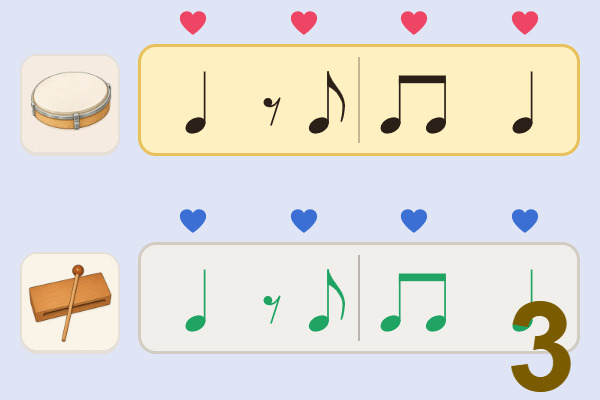
A rhythm echo game: the hand drum plays a four-beat rhythm written on the screen, and it is your turn to repeat it on the woodblock, tapping every figure, with the same rhythm in grey as a guide. Ten rounds per game, from easier to harder, with three speeds and an optional metronome. At this level you practise the un-ti (eighth rest and eighth note).
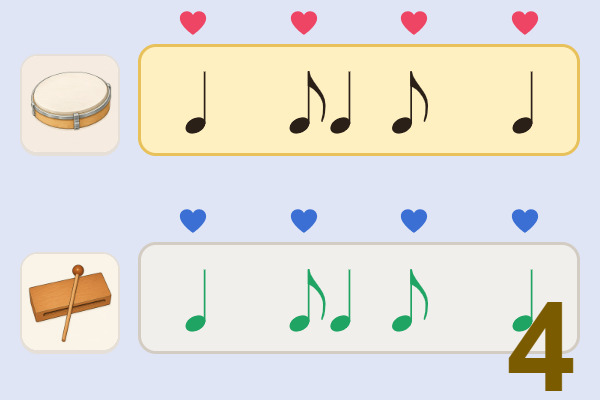
A rhythm echo game: the hand drum plays a four-beat rhythm written on the screen, and it is your turn to repeat it on the woodblock, tapping every figure, with the same rhythm in grey as a guide. Ten rounds per game, from easier to harder, with three speeds and an optional metronome. At this level you practise syncopation and the tai-ti.
A turn-based version of Catch the rhythms for an interactive whiteboard or any shared screen in class. Two players pass the device over 3 rounds of rising difficulty; whoever scores the most hits recognising by ear the rhythm that plays wins. It includes a quick tournament (already calibrated levels) and a custom tournament (you choose the level of each round), with three speeds. Free, with no limit on games.
In this game, a two-beat rhythmic combination crosses the screen from side to side and you have to press the button that matches it. The two hearts on the rectangle mark the pulse. Five levels introduce the rhythm patterns little by little: quarter note, quarter rest and pair of eighths; four sixteenths; un-ti; syncopation and tai-ti; and combinations of eighth and sixteenth notes. You can also choose four patterns to practise exactly what you want. Three speeds and an optional metronome.
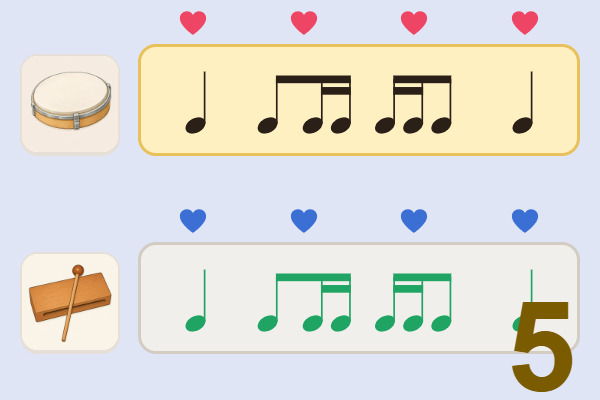
A rhythm echo game: the hand drum plays a four-beat rhythm written on the screen, and it is your turn to repeat it on the woodblock, tapping every figure, with the same rhythm in grey as a guide. Ten rounds per game, from easier to harder, with three speeds and an optional metronome. At this level you practise combinations of eighth and sixteenth notes.
A turn-based version of Catch the rhythms for an interactive whiteboard or any shared screen in class. Two players pass the device over 3 rounds of rising difficulty; whoever scores the most hits recognising by ear the rhythm that plays wins. It includes a quick tournament (already calibrated levels) and a custom tournament (you choose the level of each round), with three speeds. Free, with no limit on games.
