Activities to reinforce content already started and keep progressing in music theory by topic.
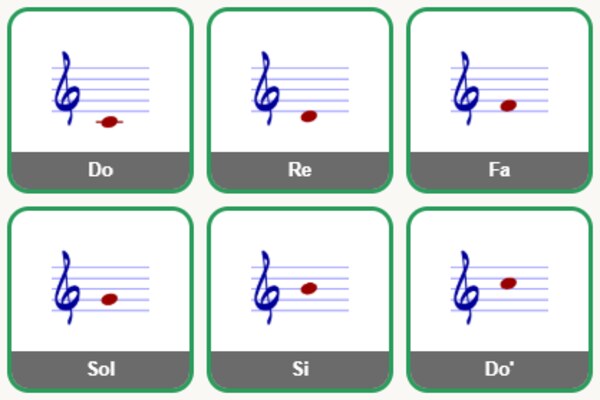
A memory (pairs) game focused on the full C major scale: C, D, E, F, G, A, B, C. Matching each note on the staff with its name helps consolidate reading the whole scale in a visual and fun way.
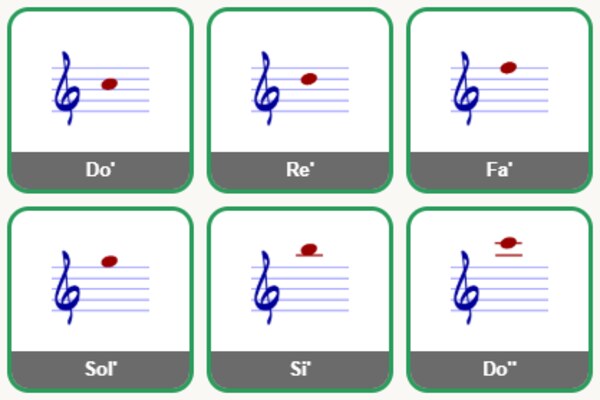
A memory (pairs) game focused on the first high notes, the ones that appear above the staff in the treble clef. Matching each note with its name helps you get comfortable with ledger lines and keep widening your reading range.
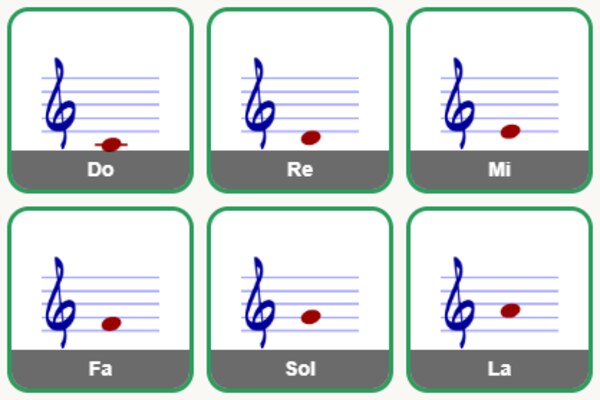
A memory game to practise the notes C, D, E, F, G and A. Match each note with its name. You can also play with a friend, taking turns on the same device.
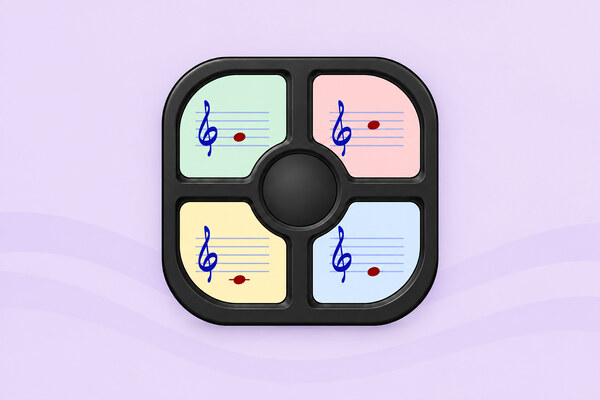
Listen and repeat on the note wheel
Musical Simon trains auditory memory and note reading on the staff using a wheel with the real structure of the game. Listen to the sequence as it plays and repeat it by tapping the notes on the wheel; each round adds one more note. Choose between three note groups and two speeds, play solo or take turns between two players, and earn a Bravo with more than 11 notes in a row.
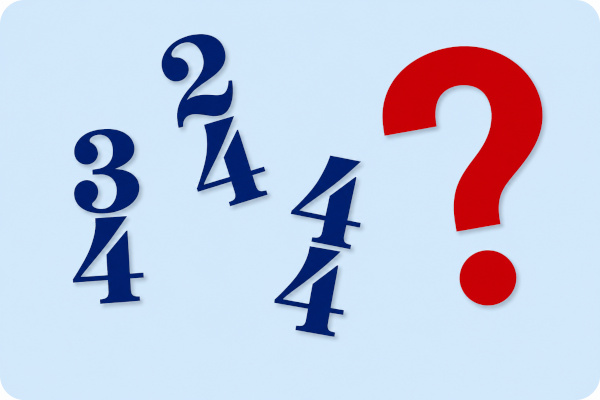
La actividad presenta diferentes combinaciones de figuras rítmicas en un solo compás. Según la combinación presentada, debe contestarse si es un compás de 2/4, 3/4 o 4/4. La actividad tiene dos niveles, según la complejidad de las células rítmicas que aparecen.
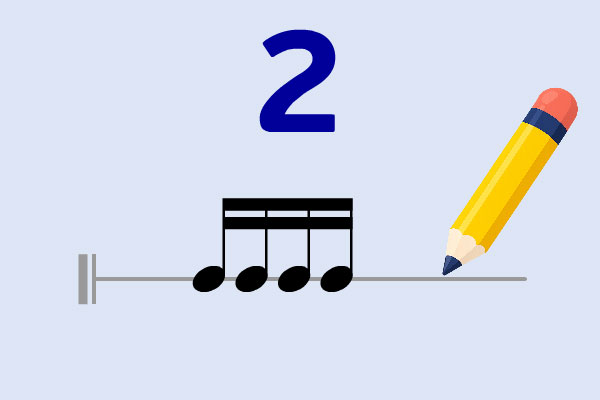
Segundo nivel de dificultad de dictados rítmicos. Frases de 4 compases en 2/4 utilizando las figuras del primer nivel al que añadimos el grupo de 4 semicorcheas (ti-ri-ti-ri). Se escucha un esquema rítmico y hay que presionar los botones correspondientes.
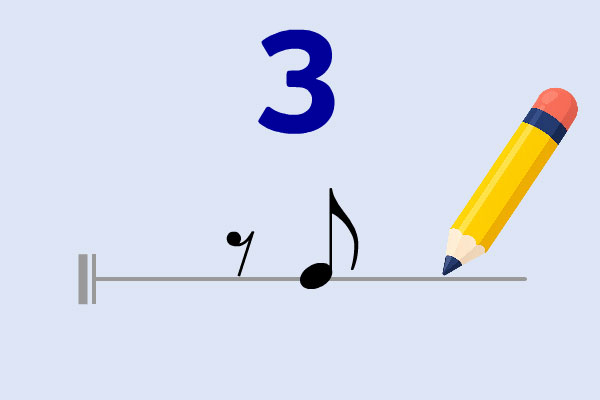
Tercer nivel de dificultad de dictados rítmicos. Frases de 4 compases en 2/4 con ancrusa utilizando "un-ti", silencio de corchea y corchea. Se escucha un esquema rítmico y hay que presionar los botones correspondientes.
La actividad presenta diferentes combinaciones de figuras rítmicas en un solo compás. Según la combinación presentada, debe contestarse si es un compás de 2/4, 3/4 o 4/4. La actividad tiene dos niveles, según la complejidad de las células rítmicas que aparecen.
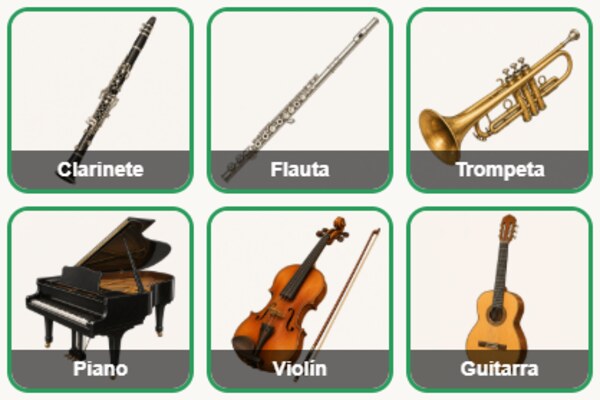
A classic memory (pairs) game in which you have to find each musical instrument and match it with its name: clarinet, flute, trumpet, piano and many more. A fun way to learn to recognise instruments, also available in a mobile version.
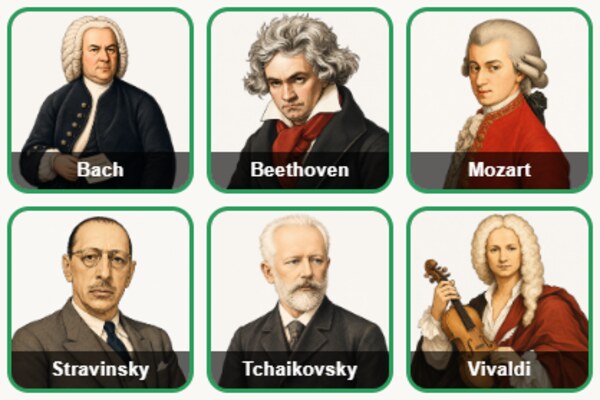
A memory (pairs) game to learn to recognise some of the great composers in the history of music, matching their portrait with their name. A fun way to get familiar with key figures of musical culture.
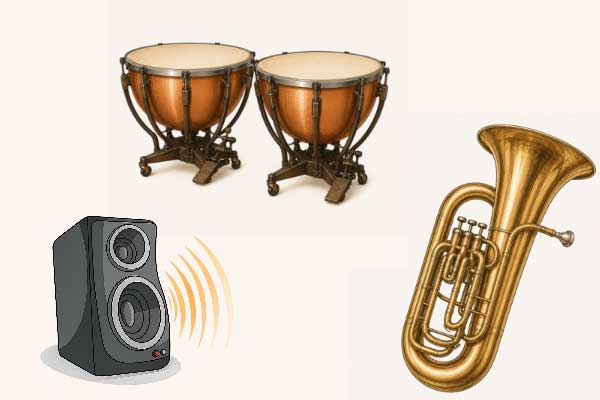
Un quiz de reconocimiento auditivo en el que hay que identificar de oído qué instrumento está sonando entre varias opciones. Una forma entretenida de entrenar el oído y de familiarizarse con el timbre característico de cada instrumento.
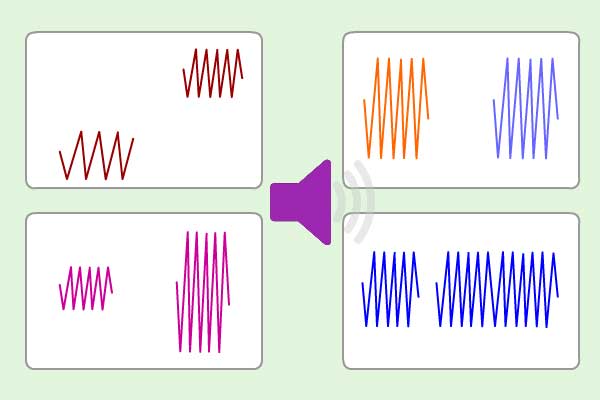
In this quiz you'll review the four qualities of sound: intensity, duration, pitch and timbre. There's a short review of the concepts, followed by three games of increasing difficulty where you have to spot the differences between two sounds. In the first level the sounds differ in only one quality, in the second in two, and finally you have to recognise sounds that only have one quality in common.
A classic memory (pairs) game in which you have to find each musical instrument and match it with its name: clarinet, flute, trumpet, piano and many more. A fun way to learn to recognise instruments, also available in a mobile version.
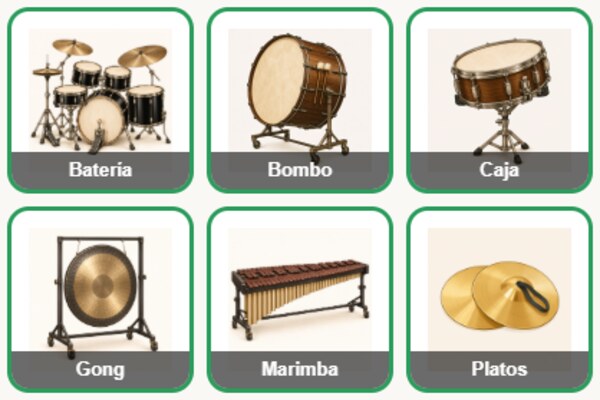
A classic memory (pairs) game focused on the best-known percussion instruments: drum kit, bass drum, snare drum, gong, marimba, cymbals, timpani and triangle. A fun way to learn to recognise them, also available in a mobile version.
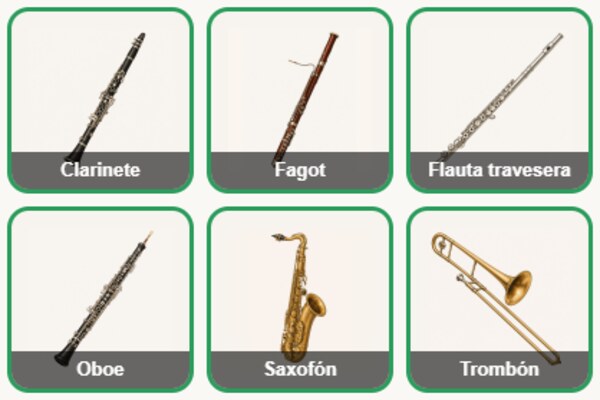
A classic memory (pairs) game focused on the best-known wind instruments: clarinet, bassoon, flute, oboe, saxophone, trombone, French horn, trumpet and tuba. A fun way to learn to recognise them, also available in a mobile version.
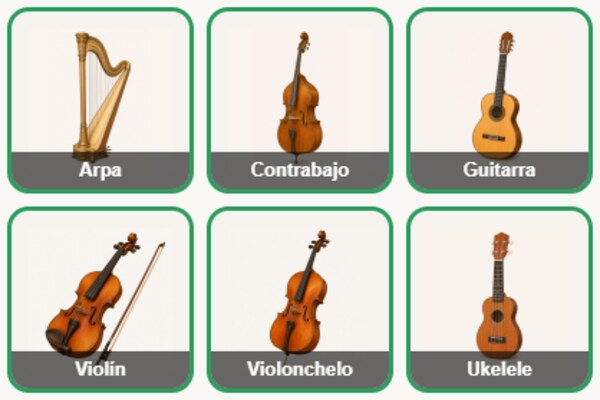
A classic memory (pairs) game focused on the best-known string instruments: harp, double bass, guitar, violin, cello, ukulele, electric guitar and piano. A fun way to learn to recognise them, also available in a mobile version.
Un quiz de reconocimiento auditivo en el que hay que identificar de oído qué instrumento está sonando entre varias opciones. Una forma entretenida de entrenar el oído y de familiarizarse con el timbre característico de cada instrumento.
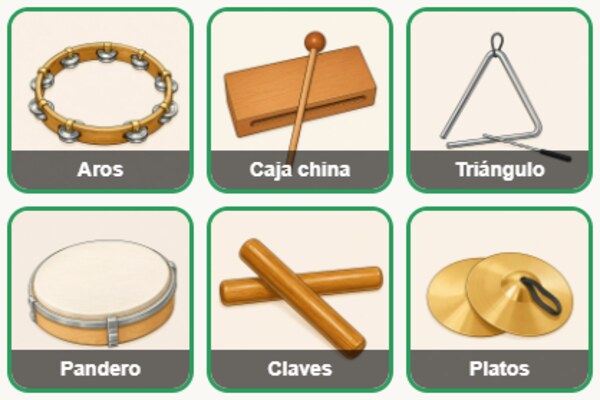
A classic memory (pairs) game focused on the small percussion instruments most commonly used in the classroom: jingle hoop, wood block, triangle, tambourine, claves, cymbals and maracas. A fun way to learn to recognise them, also available in a mobile version.
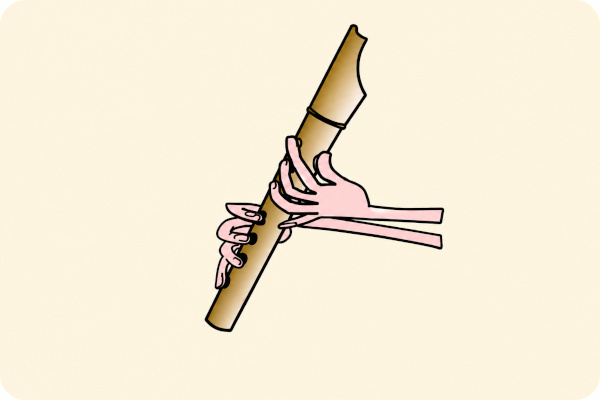
Este juego permite visualizar la digitación de la flauta dulce con dos posibilidades. En la primera solamente las notas de mayor uso en el ámbito escolar. En la segunda puede consultarse la digitación en toda la extensión del instrumento, incluyendo las alteraciones. Su uso principal es facilitar al alumno practicar las posiciones de una forma más gráfica que con los habituales esquemas, y asociar la representación de la nota en el pentagrama y su sonido con la posición de los dedos sobre el instrumento. Un botón permite saltar a la página de canciones para practicar directamente con la flauta dulce.
Aprende a tocar el villancico Jingle Bells con la flauta dulce. El juego muestra la partitura y la posición de los dedos nota a nota, para que puedas seguir la melodía mientras practicas la digitación. Una forma entretenida de consolidar las posiciones aprendidas tocando una canción real y muy conocida.
Aprende a tocar Twinkle, Little Star (la conocida melodía de "Estrellita, ¿dónde estás?") con la flauta dulce. El juego te guía nota a nota mostrando la partitura y la posición de los dedos, para que practiques la digitación mientras tocas una melodía sencilla y muy popular entre los más pequeños.
Aprende a tocar Jingle Bell Rock con la flauta dulce. El juego te guía nota a nota mostrando la partitura y la posición de los dedos, para practicar la digitación con esta popular versión rockera del clásico villancico navideño.
Aprende a tocar Gently Sleep, una nana suave y de tempo tranquilo, con la flauta dulce. El juego muestra la partitura y la posición de los dedos nota a nota, ideal para practicar el fraseo y la digitación con una melodía pausada tras las canciones más rítmicas.
Aprende a tocar O When the Saints (When the Saints Go Marching In), un clásico del jazz y el gospel, con la flauta dulce. El juego te guía nota a nota mostrando la partitura y la posición de los dedos, para practicar la digitación con una melodía animada y muy reconocible.
Aprende a tocar el Himno a la Alegría, el tema principal de la Novena Sinfonía de Beethoven, con la flauta dulce. El juego muestra la partitura y la posición de los dedos nota a nota, para practicar la digitación con una de las melodías más célebres de la música clásica.
Aprende a tocar Antón Pirulero, la popular canción tradicional infantil, con la flauta dulce. El juego muestra la partitura y la posición de los dedos nota a nota, ideal para quien empieza a practicar canciones completas después de aprender las posiciones básicas.
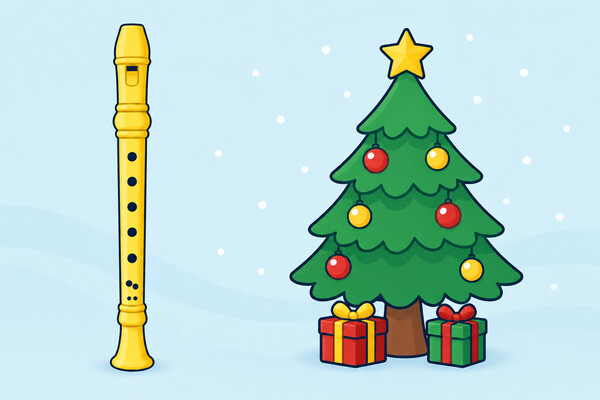
Aprende a tocar Noche de Paz, uno de los villancicos más conocidos y entrañables, con la flauta dulce. El juego muestra la partitura y la posición de los dedos nota a nota, perfecto para practicar en la época navideña con una melodía pausada y muy reconocible.
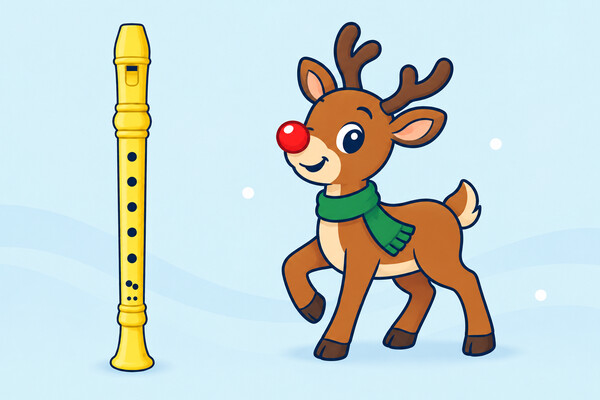
Aprende a tocar Rodolfo el Reno (Rudolph the Red-Nosed Reindeer), uno de los villancicos más populares, con la flauta dulce. El juego muestra la partitura y la posición de los dedos nota a nota, ideal para practicar en Navidad con una melodía alegre y muy conocida.
A classic memory (pairs) game in which you have to find each musical instrument and match it with its name: clarinet, flute, trumpet, piano and many more. A fun way to learn to recognise instruments, also available in a mobile version.
A classic memory (pairs) game focused on the best-known percussion instruments: drum kit, bass drum, snare drum, gong, marimba, cymbals, timpani and triangle. A fun way to learn to recognise them, also available in a mobile version.
A classic memory (pairs) game focused on the best-known wind instruments: clarinet, bassoon, flute, oboe, saxophone, trombone, French horn, trumpet and tuba. A fun way to learn to recognise them, also available in a mobile version.
A classic memory (pairs) game focused on the best-known string instruments: harp, double bass, guitar, violin, cello, ukulele, electric guitar and piano. A fun way to learn to recognise them, also available in a mobile version.
A memory (pairs) game to learn to recognise some of the great composers in the history of music, matching their portrait with their name. A fun way to get familiar with key figures of musical culture.
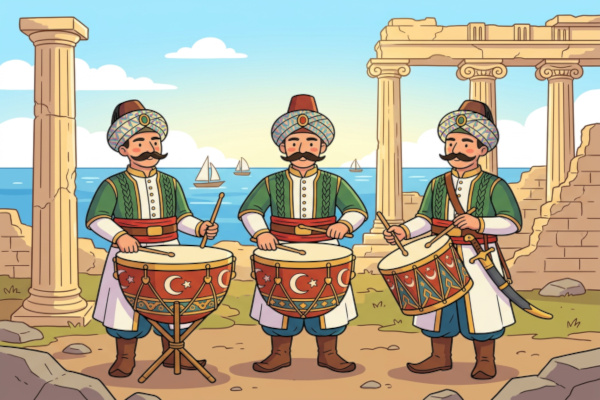
An interactive musicogram based on Beethoven's The Ruins of Athens, letting you follow the piece's structure visually as it plays. An engaging way to approach active listening and the understanding of musical form through a classical piece widely used in the classroom.

A musicogram based on the Triumphal March from Giuseppe Verdi's opera Aida, visually representing the piece's A-A'-B-A' structure as it plays. Ideal for working on active listening and the understanding of musical form with a very well-known piece, even outside the music classroom.
A classic memory (pairs) game focused on the small percussion instruments most commonly used in the classroom: jingle hoop, wood block, triangle, tambourine, claves, cymbals and maracas. A fun way to learn to recognise them, also available in a mobile version.
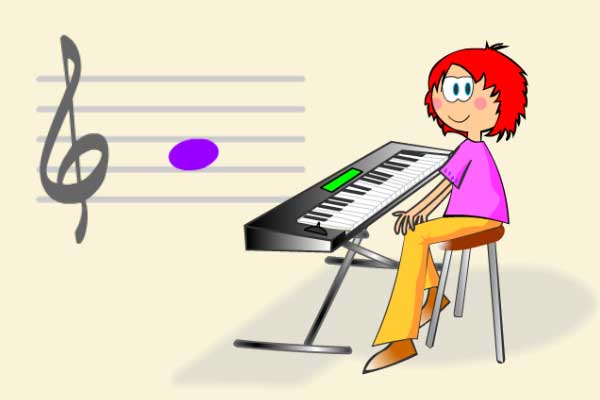
A note-recognition game on the staff where you have to identify and catch the correct note among several falling down the screen. Includes different difficulty levels (3, 4, 5, 6, 8 notes...) to suit everyone from beginners to those who already master the full scale. Also available in a mobile version.

A question-and-answer game about musical language, designed to review and consolidate knowledge in a fun way. Students answer multiple-choice questions about notes, rhythm, theory, instruments, listening and musical culture. This level reviews the Beginner 1 contents, with questions adapted to the basics of musical language. It is designed to be used in class as a review activity or informal assessment. The trivia format encourages motivation and participation, and can be used individually or in groups (up to 2 players).
Second instalment of Music Trivia, with harder questions for students with intermediate knowledge of musical language. It covers wider contents: notes and rests, time signatures, orchestral instruments and general musical culture. Suitable for the middle and upper primary years or the start of secondary school. Like level 1, it can be used in class as a review activity, assessment or competition between groups. The trivia format keeps motivation high and lets students review a lot of content in an enjoyable way.
Versión por equipos de AtrapaNotas para pizarra digital o cualquier pantalla compartida en clase. Dos equipos se turnan pasando el dispositivo en 3 rondas de dificultad creciente; gana quien acumule más aciertos leyendo las notas en el pentagrama. Incluye torneo rápido (niveles ya calibrados) y torneo personalizado (el profesor elige el nivel de cada ronda). Gratis, sin límite de partidas.
This page is being translated into English. You'll find games not translated yet, marked with a label warning about it. If you'd still like to continue on the old page, it's available from the language selector, top right.