Here you'll find activities to reinforce concepts of music theory and notation.
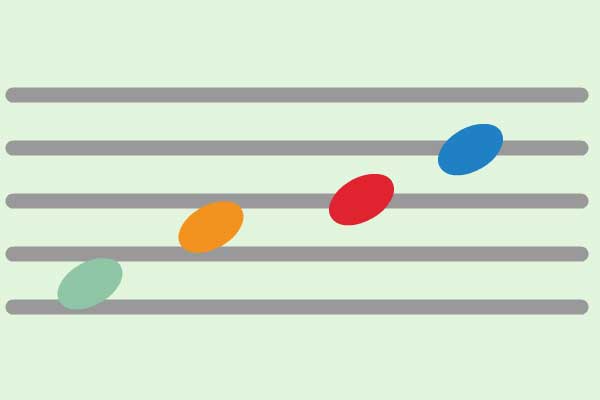
Se presenta un pentagrama y se pide al usuario que pulse en sus líneas y espacios siguiendo las indicaciones dadas. El objetivo de la actividad es familiarizarse con el orden de las líneas y los espacios, paso previo a la colocación de las notas.
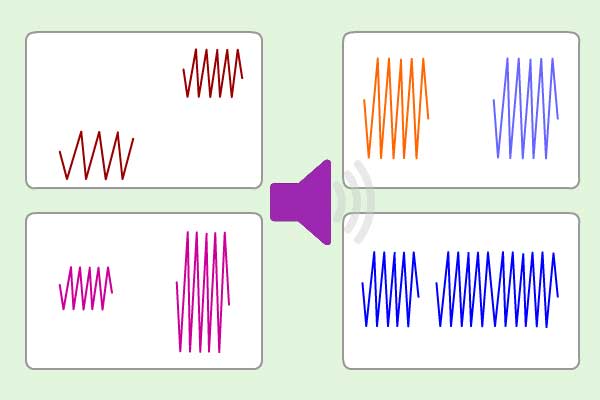
In this game you'll review the four qualities of sound: intensity, duration, pitch and timbre. After a short review of the concepts, there are three challenges of increasing difficulty in which a well-known tune plays twice, in two different ways, and you have to recognise what has changed. In the first the tunes differ in only one quality; in the second, in two; and in the third you have to find the only quality they have in common.
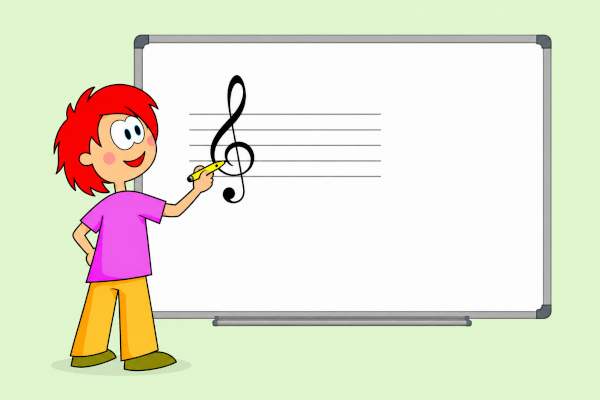
Un juego que enseña a dibujar la clave de Sol trazo a trazo, mostrando el recorrido correcto que hay que seguir. Pensado para quien empieza a familiarizarse con el pentagrama y quiere aprender a reconocer y reproducir este símbolo fundamental de la notación musical.
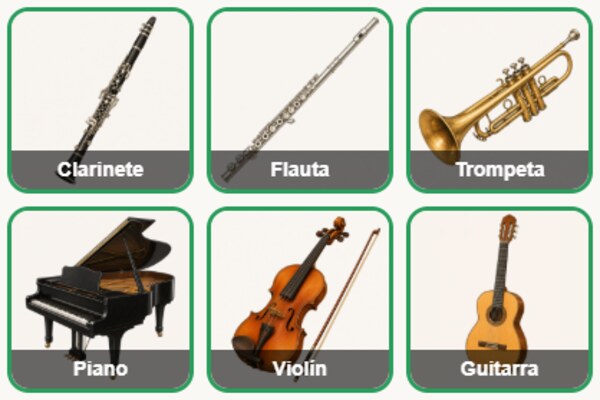
A classic memory (pairs) game in which you have to find each musical instrument and match it with its name: clarinet, flute, trumpet, piano and many more. A fun way to learn to recognise instruments, also available in a mobile version.
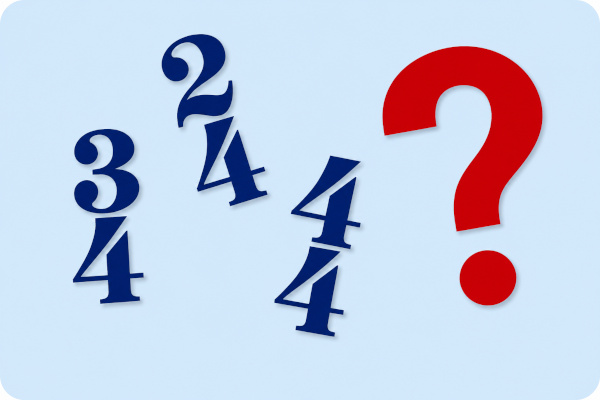
La actividad presenta diferentes combinaciones de figuras rítmicas en un solo compás. Según la combinación presentada, debe contestarse si es un compás de 2/4, 3/4 o 4/4. La actividad tiene dos niveles, según la complejidad de las células rítmicas que aparecen.
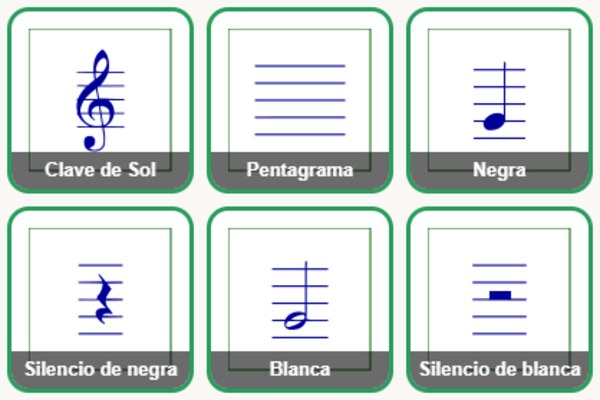
A memory (pairs) game focused on basic musical symbols: clefs, note values, rests and other symbols of musical notation. Matching each symbol with its name helps you memorise them in a visual and fun way.
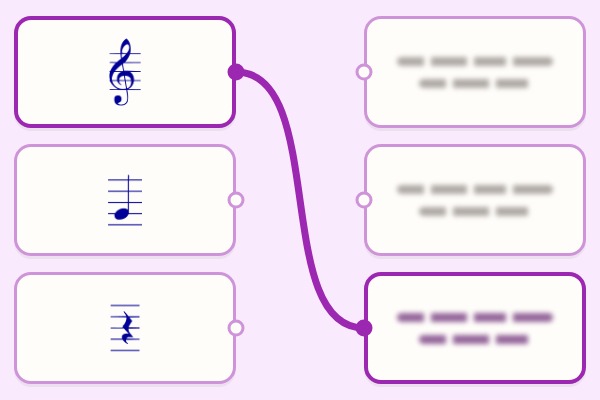
Match images, names and explanations for the 11 concepts from the Aprendo-Kit study card on musical symbols: staff, treble clef, 2/4 time signature, bar line, final barline, repeat signs, quarter note, quarter rest, pair of eighth notes, half note and half rest. Complete 15 pairs per round, with four pairs visible on desktop and three on mobile. Answers can be retried, and the result shows how many pairs you got right on the first try.
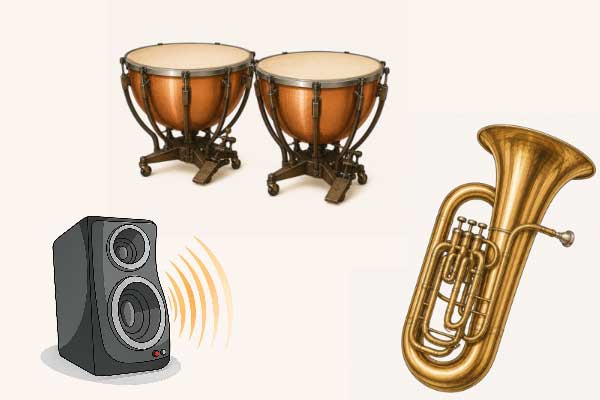
An ear-training quiz in which you have to identify by ear which instrument is playing among several options. A fun way to train your ear and get to know the characteristic timbre of each instrument.
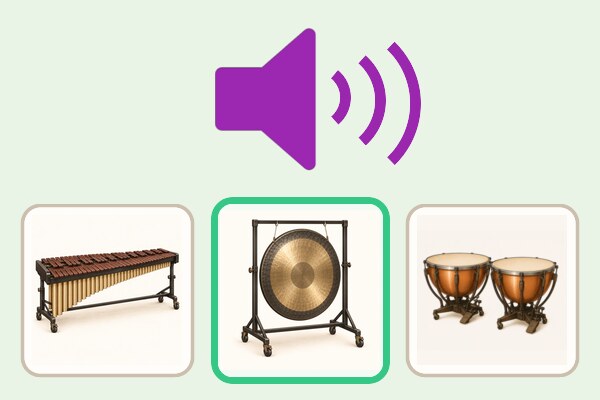
An ear-training quiz with nine percussion instruments: drum kit, bass drum, snare drum, tubular bells, gong, marimba, cymbals, timpani and triangle. An instrument plays and you choose it from three pictures; each instrument has several recordings, so a different one can play each time. Play alone or take turns with another person.
La actividad presenta diferentes combinaciones de figuras rítmicas en un solo compás. Según la combinación presentada, debe contestarse si es un compás de 2/4, 3/4 o 4/4. La actividad tiene dos niveles, según la complejidad de las células rítmicas que aparecen.
A classic memory (pairs) game in which you have to find each musical instrument and match it with its name: clarinet, flute, trumpet, piano and many more. A fun way to learn to recognise instruments, also available in a mobile version.
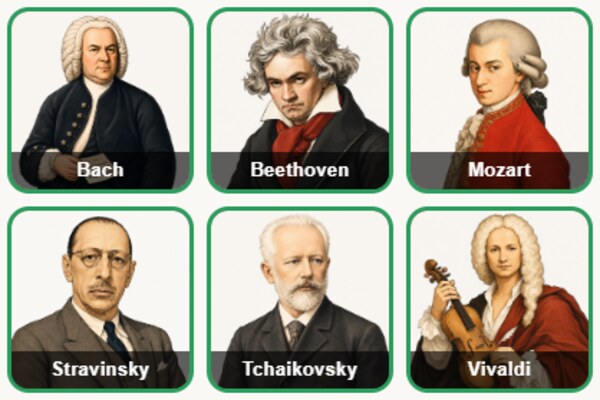
A memory (pairs) game to learn to recognise some of the great composers in the history of music, matching their portrait with their name. A fun way to get familiar with key figures of musical culture.
An ear-training quiz in which you have to identify by ear which instrument is playing among several options. A fun way to train your ear and get to know the characteristic timbre of each instrument.
In this game you'll review the four qualities of sound: intensity, duration, pitch and timbre. After a short review of the concepts, there are three challenges of increasing difficulty in which a well-known tune plays twice, in two different ways, and you have to recognise what has changed. In the first the tunes differ in only one quality; in the second, in two; and in the third you have to find the only quality they have in common.
An ear-training quiz with nine percussion instruments: drum kit, bass drum, snare drum, tubular bells, gong, marimba, cymbals, timpani and triangle. An instrument plays and you choose it from three pictures; each instrument has several recordings, so a different one can play each time. Play alone or take turns with another person.
A memory (pairs) game to learn to recognise some of the great composers in the history of music, matching their portrait with their name. A fun way to get familiar with key figures of musical culture.
