Music theory, or musical language, is the system of writing and reading that lets us represent music on paper — and understand it. Learning it means knowing how to read notes on the staff, recognise rhythmic figures, understand time signatures and tell apart the basic elements of a score.
Some games are still being translated and open in Spanish.
Music theory is divided into several blocks that are learned progressively:
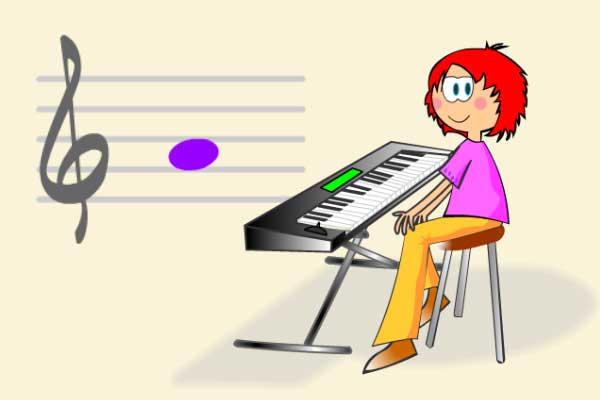
Musical notes (C, D, E, F, G, A, B) are written on the staff according to their pitch. The position on the lines and spaces tells you which note it is. The clef — usually the treble clef — gives the reference point for reading them.
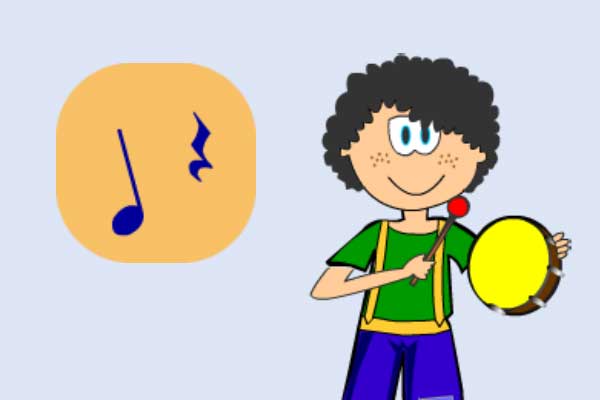
Each note value has a different duration: the whole note lasts four beats, the half note two, the quarter note one and the eighth note half a beat. Rests are the same durations but without sound.
Time signatures organise time into groups of beats. 4/4 has four beats per bar; 3/4, three; 2/4, two. The top number indicates the beats and the bottom one the note value that counts as one beat.
When pitches and durations are combined you get a melody that can be read, sung or played on an instrument. Melody is the result of joining the two previous elements.
These games are organised by blocks of music theory:
More than thirty games organised by area and difficulty level.
See all the games →Repetition is the key to automating music reading — just as in any language. Games make that repetition motivating: every round is a solfège exercise disguised as a challenge.
Several music pedagogy studies agree that playful practice improves retention and reduces frustration in the early levels. Students practise for longer without realising it, because the game gives immediate feedback and a sense of progress.