The quarter rest is the most widely used rest in beginner-level musical language: it lasts the same as a quarter note — one beat — but instead of sounding, you rest. Recognising it and using it well is essential for reading and writing rhythms correctly.
What is the quarter rest?
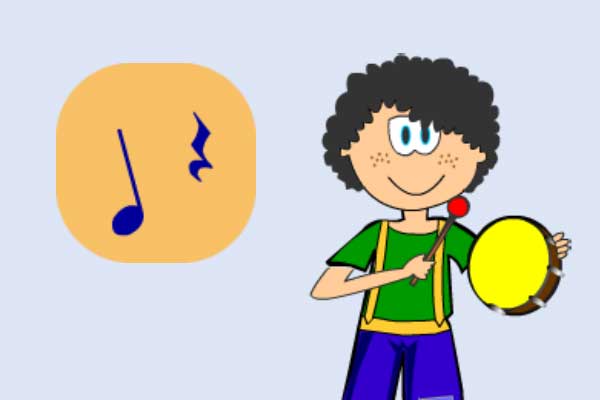
In music, a rest indicates that there is no sound for a given length of time. The quarter rest lasts one beat — just like the quarter note — and is written with a hook- or zigzag-shaped symbol on the middle line of the staff.
It is the silent equivalent of the quarter note: if the quarter note sounds for one beat, the quarter rest is silent for that same beat.
How long does it last?
Note values are related to each other by their duration:
The longest value at beginner level. Its rest also lasts four beats.
Half of a whole note. Its rest is likewise worth two beats.
The reference value in most time signatures. Its rest takes up exactly the same time.
Half of a quarter note. They are used in pairs to fill one beat.
In a 4/4 bar there is room for four quarter notes or four quarter rests — or any combination of both.
How it is written
The quarter rest symbol is a zigzag stroke that falls from the third line of the staff. It is sometimes described as a “z” or an angular hook.
Unlike the half rest (a rectangle hanging from the fourth line) or the whole rest (a rectangle sitting on the third), the quarter rest has a shape of its own that is easy to recognise once you have seen it a few times.
Practise with the game
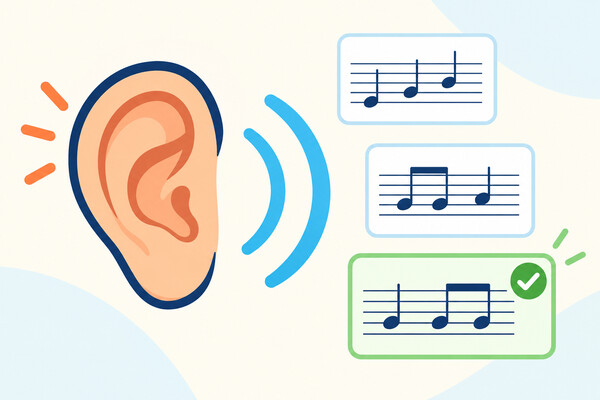
In the game Quarter note and quarter rest a four-beat rhythm made of quarter notes and quarter rests plays. You have to decide which beats sound (quarter note) and which are silent (rest) — an elementary rhythm dictation exercise, perfect for reinforcing the difference between sound and silence before moving on to more complex values.
Note: the game is still only available in Spanish.