
You can download the complete worksheet as a PDF to print and use in class: Worksheet — Triumphal March from Aida (PDF, in Spanish)
The story is set in ancient Egypt and tells of the unhappy love between the Egyptian general Radamès and a beautiful slave who is in fact the daughter of the King of Ethiopia. They love each other, yet they are kept apart by the war between their two countries.
Aida is a highly spectacular opera, with hundreds of actors and singers and impressive sets. It premiered in Cairo on Christmas Eve 1871, although Verdi considered its true premiere to be the one held shortly afterwards in Italy — he did not travel to Egypt, but he was personally involved in every detail of the Italian production.
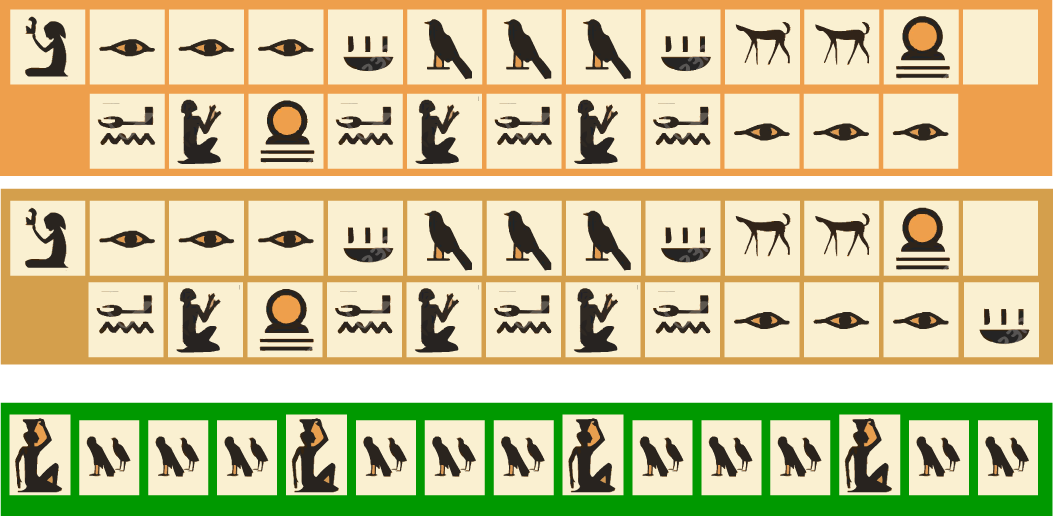
The musicogram
Follow the musicogram while the music plays to recognise the structure of the piece: notice how the rows of hieroglyphs repeat following the A-A'-B-A' pattern. You can project it in class or open it yourself beforehand to prepare.
The Triumphal March and its trumpets

The Triumphal March is heard in Act Two, as Radamès makes his victorious entrance. To stage it, Verdi was not content with the orchestra's usual trumpets: he had six straight Egyptian-style trumpets made especially for the work — three tuned in A-flat and three in B natural —, a metre and a half long, with a single valve and a very characteristic martial sound. The idea came from recent archaeological finds of the time: ancient Egyptian horns, without valves, which Verdi wanted to evoke with as much historical fidelity as an opera allows.
With hardly any valves, each set of trumpets can only play the notes of its own key — which is why two different sets are needed. The theme is heard first in A-flat, and then repeated transposed to B natural, a change of key so sudden that it is impossible not to notice it by ear. At the end of the march, both groups play together: one keeps the main melody while the other accompanies it with fast triplets — the moment of greatest sonic splendour in the whole piece.
What to listen for: the A-A'-B-A' structure
Here we hear the opening theme played by the fanfare, which sounds twice in two different keys. First time: A-flat.
- A — first half-phrase of the theme, played by the trumpets in A-flat. You can hear the suspended ending.
- A' — the second half-phrase, this time conclusive.
- B — contrasting section, with a different character from the previous two.
- Final A' — the first half-phrase returns, to conclude the theme.
Second time: now the trumpets in B natural come in. The A-A'-B-A' structure is kept, but the theme now sounds three semitones above the original key — the effect is grandiose.
In the musicogram, both structures are shown slightly misaligned: the second, higher than the first, suggests the jump in pitch.
Asking students to identify the change of key between the presentation of the theme and its repetition by ear alone, without looking at the score or the musicogram, is a good ear-training exercise — the jump is marked enough for even someone with no previous musical training to notice it.
Ideas for the classroom
- Before projecting anything, work on the musicogram on paper (download the worksheet as a PDF). Each student follows the pulse with a finger on their own printed copy while the music plays — the on-screen projection only helps to show it big to everyone at once; the real activity is physical, not dependent on any screen.
- Split the class into two groups, one for each trumpet key (A and A'): each group mimics playing the trumpet with their arms when it is “their” theme, and both groups “play” at the same time in the final recapitulation.
- In section B, switch to body percussion (clapping or stamping) to mark the contrast with the trumpet sections.
- Comparative listening: let students try to sing or hum the jump from A to A' before they know it is a change of key — then explain what happened technically.
Questions to research (with the answers)
- Which other Verdi operas are among the most performed today? Answer: La Traviata and Rigoletto top almost any current ranking (in the 2017/18 season, for example, they were performed 861 and 437 times respectively worldwide); Il Trovatore and Aida itself also always appear in the leading group. The ranking changes from one season to another, so it is worth looking up the latest data with your students.
- The opera premiered in Cairo. But which Italian city hosted its second performance, and what is its famous opera house called? Answer: Milan, at the Teatro alla Scala (La Scala), on 8 February 1872 — barely a month and a half after Cairo.
- The “chorus of the slaves” is another of Verdi's well-known melodies. Which opera does it belong to? Answer: Nabucco (1842) — it is called “Va, pensiero” and is the chorus of the Hebrew slaves, probably the most popular melody in all of Verdi.
- Could you identify Verdi among these three composers? The other two are also famous 19th-century musicians.
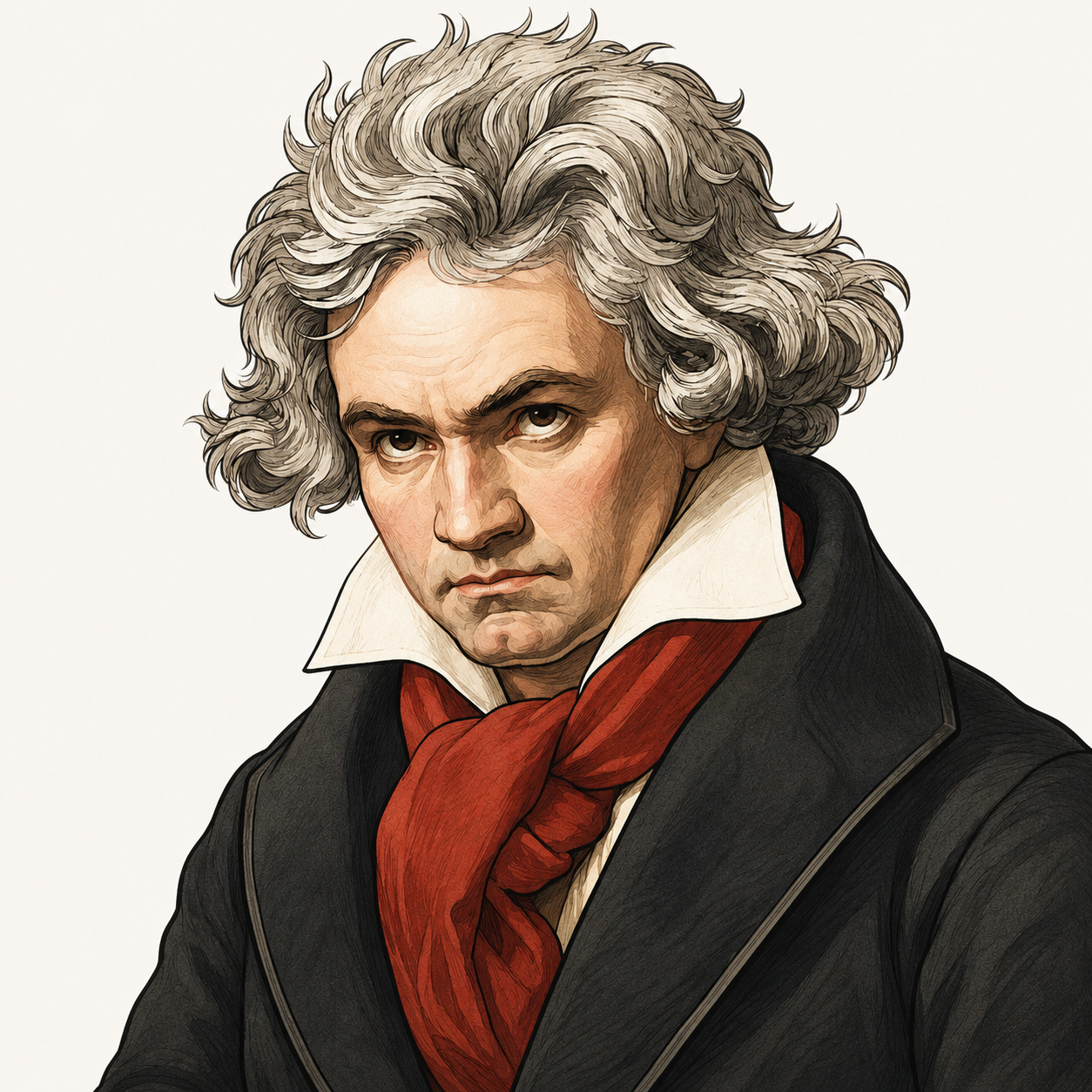
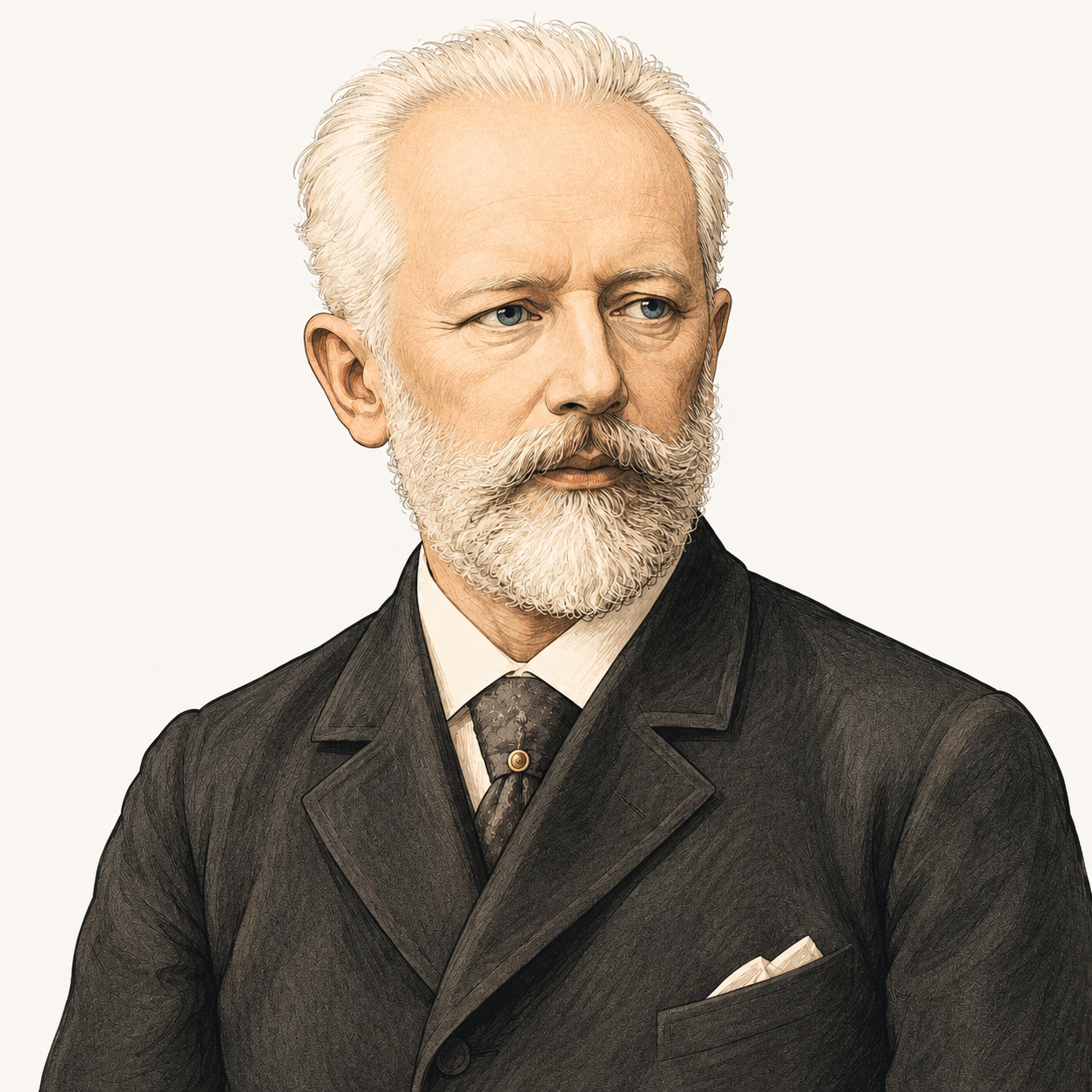
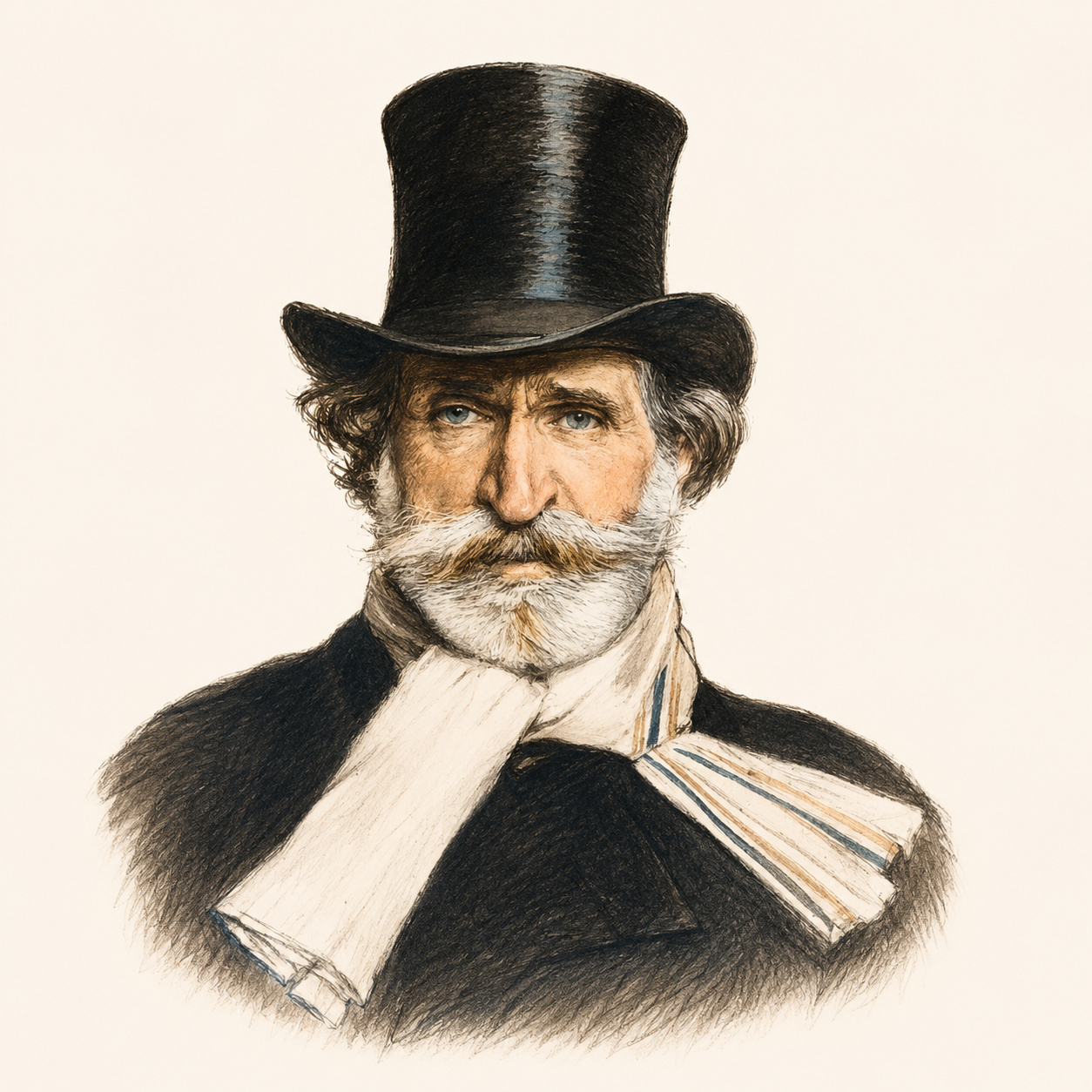
Answer: Verdi is the third portrait — with the moustache and top hat. The first is Beethoven and the second Tchaikovsky.